
USC President Kim Faces Financial, Political, and Athletic Tests at Investiture
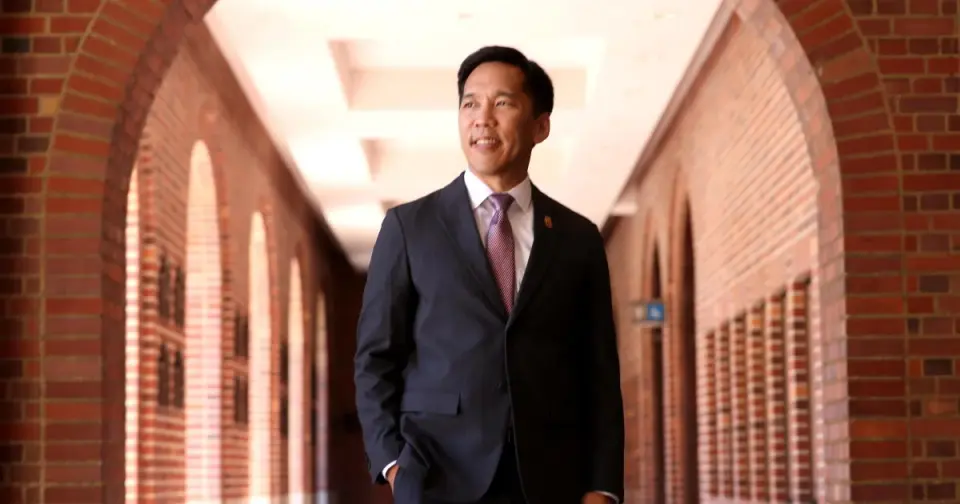
Beong-Soo Kim was formally installed as the 13th president of the University of Southern California on October 16, 2026. He faces a $200 million deficit, recent layoffs of over 1,000 staff, and pressure to restore public trust. Kim announced a major overhaul of undergraduate general education and emphasized AI integration, while declining to comment on potential changes to the football coaching staff.
Key points
- Kim was unanimously elected by the Board of Trustees in February 2026 after serving as interim president since July 2025, succeeding Carol Folt.
- The university is addressing a budget deficit exceeding $200 million through significant layoffs and cost-saving measures, with Kim forecasting a surplus by the end of the fiscal year.
- Kim announced the first comprehensive redesign of USC’s undergraduate general education requirements in decades, aiming to enhance interdisciplinary learning and industry partnerships.
- The president acknowledged declining public trust in higher education and highlighted the Open Dialogue Project as a tool to foster free expression and address controversial topics.
- Kim maintained that USC will continue to consider family legacy in admissions despite state bans, arguing it supports holistic and transparent admissions practices.
Background
Kim’s appointment followed a period of significant controversy for USC, including the Varsity Blues admissions scandal and a $1.1 billion settlement for sexual abuse allegations. The university also faced federal scrutiny from the Trump administration regarding campus antisemitism and diversity initiatives. Kim’s background as a former federal prosecutor and USC general counsel positioned him to manage these legal and reputational challenges before his formal installation.
How outlets are covering it
The Los Angeles Times emphasizes the financial and reputational stakes, noting Kim’s efforts to cut costs and restore trust. The Los Angeles Daily News highlights the academic focus, specifically the general education overhaul and industry partnerships. Annenberg Media focuses on the ceremonial aspects, including performances by alumni Aloe Blacc and Allen Stone. The Daily Trojan presents a more skeptical view, with students and faculty questioning the effectiveness of the Open Dialogue Project and the university’s stance on faculty unionization. Some faculty members, such as Sanjay Madhav, argue that the university undervalues staff compared to donors, while others, like Tim Kobza, oppose unionization efforts. Kim’s refusal to comment on the firing of football coach Lincoln Riley, despite fan protests and recent losses, remains a point of contention among stakeholders.
Why it matters
Kim’s leadership is critical for USC’s financial stability and national reputation. His decisions on admissions, faculty relations, and AI integration will shape the university’s future in a competitive higher education landscape. Additionally, the 2028 Olympics at the Los Angeles Memorial Coliseum, operated by USC, adds a high-profile dimension to his tenure, requiring the university to project a positive image to a global audience.
What to watch
USC will implement the new general education requirements and continue cost-saving measures to eliminate the deficit. The university is expected to finalize its stance on standardized testing for admissions, particularly for STEM majors. Kim will also oversee the 2028 Olympic preparations and navigate ongoing labor disputes with the United Faculty-UAW. The performance of the football team and the university’s ability to restore public trust will be key indicators of his presidency’s success.
- New USC President Beong-Soo Kim faces high stakes: Trust, Trump and Trojan football Los Angeles Times
- Kim installed as USC president, announces general education overhaul Los Angeles Daily News
- Aloe Blacc, Allen Stone to perform at USC presidential investiture Annenberg Media
- A year into his presidency, USC doesn’t yet have read on Beong-Soo Kim Daily Trojan
- Beong-Soo Kim Installed as the University of Southern California's 13th President PR Newswire
Want the full story? Read the original reporting
Read on Los Angeles Times