
Carney Defends China Trade Pivot as U.S. Talks Stall
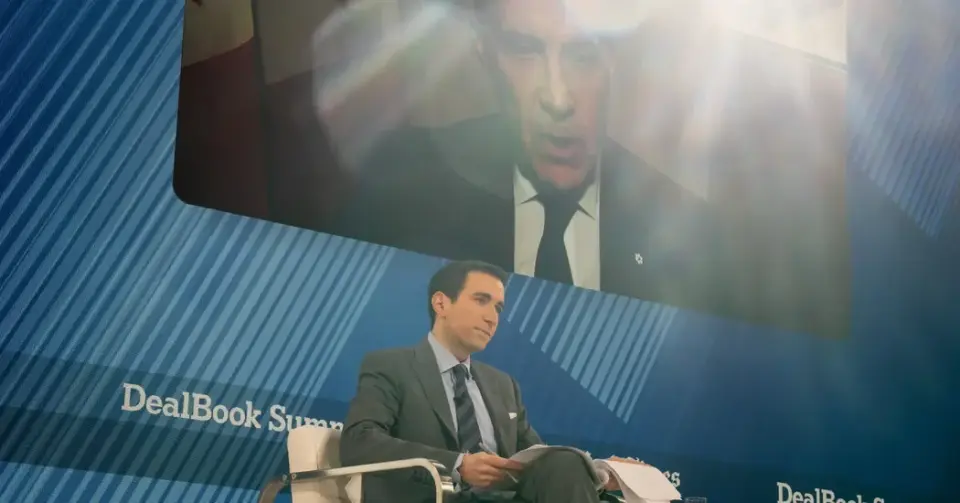
Canadian Prime Minister Mark Carney stated that Canada will not concede in trade disputes with the United States, while highlighting successful negotiations with China. Speaking at the DealBook Summit, Carney noted that talks with Beijing are progressing well, including new tariff relief on Canadian exports. He contrasted this with stalled U.S. negotiations, emphasizing that any final deal must protect Canada's auto sector. Carney dismissed concerns about Chinese influence, arguing that Canada exports commodities rather than sensitive technology to Beijing.
Key points
- Carney stated Canada will not back down in trade talks with the U.S., insisting any agreement must benefit Canadians and protect the auto sector.
- Canada and China agreed to additional tariff cuts, with Beijing reducing duties on $400 million in Canadian pork and seafood exports.
- In return, Canada extended tariff exemptions for certain Chinese steel and aluminum products by two years.
- Carney claimed U.S. President Donald Trump does not view Canada's growing ties with China as a top priority, noting the trade involves commodities like canola and oil, not advanced semiconductors.
- White House trade adviser Peter Navarro criticized Carney, calling the potential pivot to Chinese automakers 'offensive' and warning of Chinese economic dominance.
Background
This development follows weeks of strained relations between Ottawa and Washington, where U.S. tariffs on Canadian goods reached 50% after negotiations collapsed in August. Recent archive coverage indicates Carney has been actively diversifying trade through deals with the Philippines and ASEAN to reduce reliance on the U.S. market. The current tensions also stem from U.S. accusations that Canada serves as a backdoor for Chinese imports, particularly steel and aluminum.
How outlets are covering it
The New York Times focused on Carney's firm stance against U.S. pressure and his positive assessment of Chinese negotiations. AP News highlighted Carney's argument that China is not a top concern for Trump due to the commodity nature of the trade, while also detailing the specific tariff relief agreements. The Globe and Mail emphasized the contrast between the 'professional' nature of Chinese talks and the elusive U.S. deal, noting Carney's defense of reducing dependence on U.S. technology like Starlink. All sources reported on Peter Navarro's sharp criticism of Carney's strategy, though the Globe and Mail provided more detail on the specific tariffs and the 20-minute meeting between Carney and Trump in Shenzhen.
Why it matters
The outcome of these trade negotiations will determine the future of North American auto manufacturing and Canada's economic independence. If U.S. talks fail, Canada's pivot to Chinese or other Asian manufacturers could reshape global supply chains and alter the geopolitical balance between the U.S., Canada, and China. The dispute also highlights broader tensions over technology reliance and national sovereignty in the Western alliance.
What to watch
Carney and Trump are expected to continue discussions at the APEC summit in Shenzhen. The next critical step is whether a bilateral deal can be reached that satisfies Canada's demand for a viable auto sector. If talks fail, Canada may accelerate its integration with Chinese or European automakers, potentially triggering further retaliatory measures from Washington.
- Mark Carney Says Canada Will Not Back Down in Trade Talks With U.S. The New York Times
- Carney and Trump Hold Unscheduled Trade Meeting at Asia Summit The New York Times
- 'If the U.S. doesn't want to do a deal, we're busy,' Carney says of ongoing trade talks CBC
- Carney says Canada’s growing trade ties with China are not a top concern for Trump AP News
- Carney contrasts ‘very professional’ Chinese trade talks with still-elusive U.S. deal The Globe and Mail
Want the full story? Read the original reporting
Read on The New York Times