
US-Canada Trade War Reignites After Failed Deal on Autos and Liquor
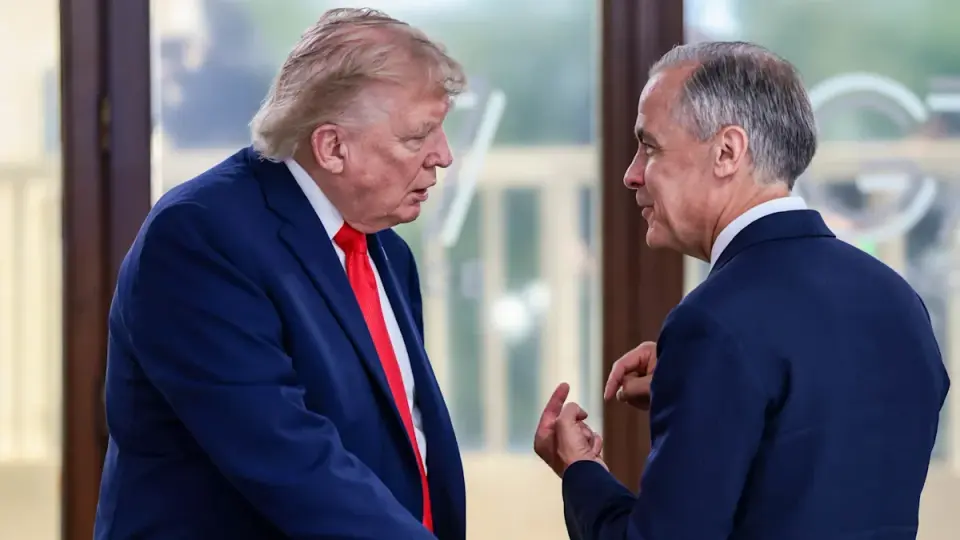
The US and Canada failed to finalize a trade deal, leading to the collapse of negotiations and the imposition of 50% tariffs on $20 billion in Canadian goods. Canadian PM Mark Carney announced retaliatory tariffs effective September 8, citing US demands as 'uneconomic.' While Trump claimed a deal was 'pretty much' struck, US Trade Representative Jamieson Greer stated Canada walked back commitments. The standoff follows months of stalled talks, with the US leveraging Section 338 of the Smoot-Hawley Act to pressure Canada on autos, dairy, and alcohol.
Key points
- US and Canada failed to finalize a trade deal, leading to the collapse of negotiations and the imposition of 50% tariffs on $20 billion in Canadian goods.
- Canadian PM Mark Carney announced retaliatory tariffs effective September 8, citing US demands as 'uneconomic' and 'unfair.'
- US Trade Representative Jamieson Greer stated Canada walked back commitments on steel, aluminum, autos, and lumber, upending the 'careful balance' reached.
- The US is using Section 338 of the Smoot-Hawley Tariff Act, a 1930s law never used for tariffs, to impose duties that could remain indefinitely.
- The tariffs cover about 5% of US imports from Canada, targeting steel, dairy, appliances, and electronics, but sparing energy and critical minerals.
Background
The US and Canada had been in direct contact for weeks after Trump granted a three-day delay to tariffs, with a midnight deadline looming. Earlier coverage indicated a tentative deal to pause $20 billion in 50% tariffs, with hints of reviving Keystone XL and reducing auto tariffs. Canada had offered concessions, including removing retaliatory measures and returning US alcohol to Canadian shops, but the US did not agree to 'sensible economic terms' for core industries like automotives.
How outlets are covering it
CNN reports that Carney vowed 'dollar-for-dollar' tariffs, stating the US 'asked too much, and offered too little.' Greer countered that Canada 'walked back' commitments, upending the deal. Politico frames the collapse as a failure of Trump's maximalist tactic, noting that while the threat unstuck stalled talks, it did not lead to a final agreement. Trump claimed a deal was 'pretty much' struck, but Greer and Carney both indicated the deal was not finalized. The US is using Section 338 of the Smoot-Hawley Act, a 1930s law never used for tariffs, to impose duties that could remain indefinitely, while Canada faces a 5% import impact but broader economic risks.
Why it matters
The collapse of the US-Canada trade deal reignites a trade war, with 50% tariffs on $20 billion in Canadian goods and retaliatory measures from Canada. The use of Section 338 of the Smoot-Hawley Act, a 1930s law never used for tariffs, could set a precedent for indefinite tariffs. The standoff affects autos, dairy, and alcohol, with Canada facing a 5% import impact but broader economic risks. The failure to finalize a deal could delay trilateral USMCA discussions with Mexico and impact swing-state economies ahead of midterms.
What to watch
Canada's retaliatory tariffs take effect September 8, targeting steel, dairy, appliances, agricultural equipment, pulp, paper, and electronics. The US may move forward with countermeasures after Canada's retaliation, as stated by Greer. The US could face legal challenges to Section 338 tariffs, but they could remain indefinitely unless removed by Trump or a future president. The standoff could delay trilateral USMCA discussions with Mexico and impact swing-state economies ahead of midterms.
- Negotiators say a tariff deal with Canada is ‘very close’ with concessions already in evidence from autos to liquor Yahoo Finance
- Canada-U.S. Tariff Talks Continue as Trump’s Midnight Deadline Looms The New York Times
- Trump’s Canada trade deadline is hours away. Here’s what to know CNN
- Trump backed down from 50 percent tariffs on Canada. It’s not a TACO. Politico
- Midnight tariff deadline less than an hour away with no trade deal finalized CBC
Want the full story? Read the original reporting
Read on Yahoo Finance