
Curtis Flowers, Exonerated After 23 Years in Mississippi Prison, Dies at 56
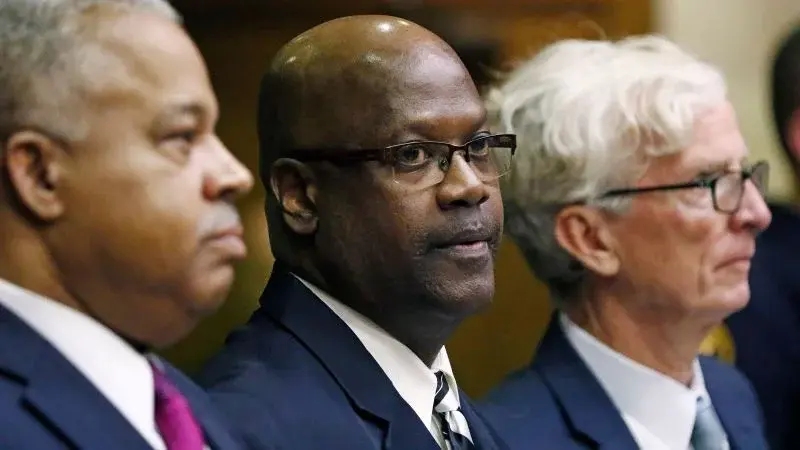
Curtis Flowers, a Black man who spent nearly 23 years in prison for a 1996 murder he did not commit, has died at age 56. His death was confirmed by his family and attorney Rob McDuff, with no cause of death provided. Flowers was exonerated in 2019 after the U.S. Supreme Court overturned his conviction due to racial bias in jury selection. He had been tried six times by the same prosecutor, Doug Evans, before his release in December 2019. Mississippi dropped all charges against him in September 2020, and he received $500,000 in compensation for wrongful imprisonment in 2021.
Key points
- Curtis Flowers died at his home in Winona, Mississippi, on Wednesday, October 7, 2026, at age 56. His family confirmed the death to attorney Rob McDuff, who stated no cause of death was given.
- Flowers was arrested in January 1997 for the July 1996 shooting deaths of four people at Tardy Furniture in Winona. He had no prior criminal history and was briefly employed at the store before being fired.
- He was tried six times by Montgomery County District Attorney Doug Evans. The first three convictions were overturned due to prosecutorial misconduct and racial discrimination in jury selection. Two trials ended in mistrials, and the sixth trial in 2010 resulted in a death sentence.
- In 2019, the U.S. Supreme Court ruled 7-2 that Evans and Mississippi violated Flowers' constitutional rights by systematically excluding Black jurors. Justice Brett Kavanaugh noted a 'relentless, determined effort to rid the jury of Black individuals.'
- Flowers was released on bail in December 2019 after 23 years in prison. Mississippi Attorney General Lynn Fitch dropped all charges in September 2020, citing exculpatory evidence and lack of clear prosecution witnesses.
- A Montgomery County court ordered Mississippi to pay Flowers $500,000 for wrongful imprisonment in March 2021. Flowers later sued Evans and other officials, but the case was dismissed in federal court.
Background
Curtis Flowers' case became a national symbol of racial injustice in the American legal system. His story was highlighted by investigative journalism, including the podcast 'In the Dark,' which revealed Evans' pattern of excluding Black jurors. The Supreme Court's 2019 decision emphasized the systemic bias in jury selection, with 41 of 42 Black prospective jurors removed across the six trials. Flowers' release in 2019 marked a significant moment in criminal justice reform, and his death in 2026 closes a chapter in a case that spanned nearly three decades.
How outlets are covering it
CNN reported the death as a significant loss for the justice reform movement, emphasizing the Supreme Court's role in overturning the conviction. The Guardian focused on the 22-year imprisonment and the family's confirmation of his death, highlighting the lack of a stated cause. CBS News detailed the six trials and the role of the podcast 'In the Dark' in exposing prosecutorial misconduct, noting the absence of DNA or fingerprint evidence linking Flowers to the crime. The Mississippi Free Press provided extensive background, including the $500,000 compensation and the dismissal of Flowers' lawsuit against Evans, while also noting the exculpatory evidence cited by Attorney General Lynn Fitch. All sources agree on the core facts of his death and exoneration but differ in emphasis: CNN and The Guardian focus on the human impact, CBS News on the investigative process, and the Mississippi Free Press on the legal and financial aftermath.
Why it matters
Curtis Flowers' death underscores the long-term consequences of wrongful convictions and racial bias in the justice system. His case highlighted the need for reforms in jury selection and prosecutorial accountability. The Supreme Court's 2019 decision set a precedent for challenging systemic discrimination in trials, and his exoneration led to significant legal and financial consequences for Mississippi. His story continues to influence discussions on criminal justice reform and the importance of independent journalism in exposing misconduct.
What to watch
The Montgomery County coroner is investigating the cause of Flowers' death, though no immediate legal actions are expected. His family, including his wife Marlena Wright and daughter Crystal, are mourning his passing. The case may continue to serve as a reference in discussions about racial bias in the justice system, and his legacy may influence future reforms in jury selection and prosecutorial oversight. No new legal proceedings are anticipated, but his story remains a key example in criminal justice advocacy.
- Curtis Flowers, a Black man whose death sentence was tossed by Supreme Court, dies in Mississippi CNN
- Curtis Flowers Has Died at 56. His Case Became a Symbol of Racial Bias. The New York Times
- Curtis Flowers, US man wrongfully imprisoned for 22 years, dies aged 56 The Guardian
- Curtis Flowers, Mississippi man wrongfully convicted after being tried for the same killings 6 times, dies at 56 CBS News
- Curtis Flowers, Wrongfully Imprisoned on Murder Charges for 23 Years, Dies at 56 Mississippi Free Press
Want the full story? Read the original reporting
Read on CNN