
Court filings reveal ICE agents used slurs during Los Angeles immigration raids
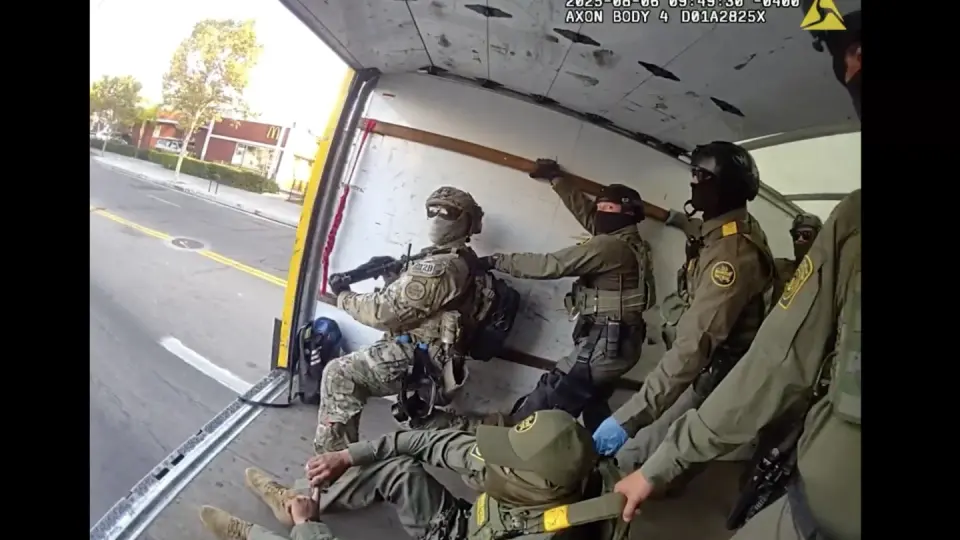
The ACLU and other advocacy groups filed a motion for a preliminary injunction in federal court, alleging that immigration agents in Los Angeles used racial slurs and engaged in discriminatory profiling during mass-deportation operations last summer. Body camera footage and text messages submitted as evidence show agents using derogatory terms like 'tonk' and 'wet' to refer to Latinos. The filing seeks to stop agents from detaining individuals based solely on their perceived ethnicity or socioeconomic status, arguing these actions violate the Fourth and Fifth Amendments. While the Department of Homeland Security dismissed the claims as 'performative outrage,' plaintiffs argue the evidence proves a systemic pattern of race-based profiling rather than targeted enforcement.
Key points
- The ACLU, Public Counsel, and other organizations filed a motion on Monday seeking a preliminary injunction to stop federal immigration agents from using a person's apparent Latino status or low-income background to conduct detentive stops in the Central District of California.
- Evidence submitted includes body camera footage from June to September 2025 and forensically recovered text messages, showing agents using slurs such as 'tonk' (referring to the sound of a flashlight hitting a head) and 'wet' (a derogatory term for immigrants).
- Plaintiffs argue that the government's operations shifted from individualized investigations to 'roving patrols' and mass arrests of 'collaterals' (non-targets) based on demographic profiling, violating the Fourth and Fifth Amendments.
- A federal judge previously issued a temporary restraining order barring race-based stops, but the Supreme Court stayed that ruling in August 2025, allowing the government to continue operations while litigation proceeds.
- The Department of Homeland Security responded by stating agents are focused on protecting the public and not 'entertaining performative outrage,' while plaintiffs' attorneys noted that not all phone records have been turned over, suggesting further evidence may exist.
Background
This development follows a series of high-profile immigration enforcement actions in Los Angeles in 2025, which sparked widespread protests and led to the deployment of the National Guard. The current litigation, Vasquez Perdomo v. Noem, was filed in July 2025 by residents and advocacy groups alleging unconstitutional stops. The Supreme Court's recent stay of a lower court's restraining order allowed the government to continue its enforcement strategy while the case moves through discovery and injunction proceedings.
How outlets are covering it
The ACLU and plaintiff attorneys, including Mayra Joachin of the ACLU of Southern California, characterize the evidence as 'shocking' proof of flagrant legal violations and systemic racism, arguing that the operations are driven by racial sentiment rather than legitimate intelligence. In contrast, the Department of Homeland Security dismissed the filings as 'performative outrage' and emphasized that agents are focused on protecting the American people, ignoring questions about policy violations regarding slur usage. The Los Angeles Times and ABC News highlighted the shift from targeted investigations to mass 'collateral' arrests, while The Independent focused on the constitutional arguments regarding unreasonable searches and equal protection. All sources agree that the submitted evidence includes explicit racial slurs and indiscriminate detention tactics, but they differ in emphasis: advocacy groups focus on the moral and legal implications, while government representatives focus on the necessity of enforcement and dismiss the criticism as media-driven outrage.
Why it matters
This case tests the limits of immigration enforcement tactics in the United States, specifically regarding the use of racial profiling and derogatory language by federal agents. If the court grants the preliminary injunction, it could significantly restrict the government's ability to conduct 'roving patrols' and mass detentions based on appearance, setting a precedent for the Fourth Amendment rights of Latino and low-income communities. The outcome will also determine the extent of government transparency and accountability in immigration operations, as the discovery process has revealed internal communications that contradict official justifications for the raids.
What to watch
A hearing for the motion for a preliminary injunction is scheduled for September 24, 2026, before U.S. District Judge Maame Ewusi-Mensah Frimpong. The court will decide whether to block agents from relying on perceived Latino ethnicity for detentive stops. Additionally, the discovery process is ongoing, with plaintiffs arguing that not all phone records have been turned over, which could lead to further evidence of discriminatory practices. The Supreme Court's previous stay of the temporary restraining order means the government can continue its current operations unless the lower court issues a new injunction.
- Federal Immigration Agents Called Latinos Racial Slurs While Conducting Stops, Video Shows News of the United States - NOTUS
- ICE agents used racial slurs to refer to Latinos, videos and texts appear to show ABC News - Breaking News, Latest News and Videos
- Immigration agents used slurs when referring to Latinos in text messages, video obtained by ACLU Los Angeles Times
- ICE agents accused of racial profiling and using racist slurs in explosive court filing The Independent
- ICE agents used racial slurs during Los Angeles crackdown, court files show The Guardian
Want the full story? Read the original reporting
Read on News of the United States - NOTUS