
Massachusetts judge rejects Lindsay Clancy’s double jeopardy bid, paving way for 2027 retrial
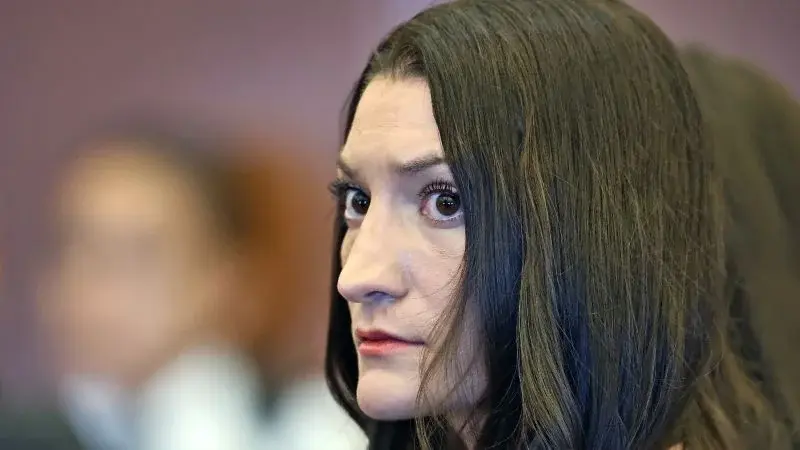
Judge William Sullivan denied Lindsay Clancy’s motion to dismiss her triple-murder charges, ruling that a retrial does not violate double jeopardy protections. Sullivan determined the September mistrial was justified by 'manifest necessity' due to a jury deadlock. A hearing is scheduled for November 16 to set a potential trial date in March 2027.
Key points
- Judge William Sullivan ruled that the September mistrial was necessary because the jury could not reach a unanimous verdict, satisfying the 'manifest necessity' standard required to avoid double jeopardy violations.
- Sullivan rejected the defense’s argument that he should have questioned or removed the holdout juror, stating that the juror’s notes did not indicate a refusal to follow the law or consider evidence.
- The judge denied the defense’s request to obtain records from the holdout juror, including cell phone logs and jury questionnaires, deeming them irrelevant to the dismissal motion.
- Sullivan also denied the prosecution’s request for a gag order, finding that defense statements did not currently pose a serious threat to jury selection, though he noted prosecutors could renew the request if circumstances change.
- A hearing is scheduled for November 16 to determine the timeline for a potential retrial, with Sullivan suggesting a March 2027 date.
Background
Lindsay Clancy is accused of strangling her three children, Cora, Dawson, and Callan, in January 2023 at their home in Duxbury, Massachusetts. Her first trial ended in a mistrial in September 2026 after the jury deadlocked 11-1. Defense attorneys have argued that Clancy suffered from postpartum psychosis and should be found not guilty by reason of insanity, while prosecutors allege the killings were intentional. Previous attempts to dismiss the charges were rejected in October 2026.
How outlets are covering it
CNN and ABC News focused on the legal ruling regarding double jeopardy and the scheduling of the next hearing. The Guardian provided additional context on the defense’s insanity plea and the potential consequences of a conviction, noting that a not-guilty-by-reason-of-insanity verdict would have led to commitment in a psychiatric hospital. All sources agreed that the judge’s decision clears the path for a retrial, though the Plymouth County District Attorney’s Office has not yet formally committed to retrying Clancy.
Why it matters
The ruling sets a precedent for how courts handle mistrials caused by jury deadlocks in high-profile cases. It determines whether Clancy will face a second trial, potentially resulting in a life sentence without parole if convicted, or a psychiatric commitment if found not guilty by reason of insanity.
What to watch
A hearing is scheduled for November 16 to finalize the trial date. Prosecutors must decide whether to proceed with the retrial, and the defense will likely continue to argue for dismissal or an insanity verdict.
- Judge denies Lindsay Clancy’s motion to dismiss murder charges, paving the way for potential retrial CNN
- Judge refuses to dismiss murder charges against Lindsay Clancy, or launch inquiry into holdout juror The Boston Globe
- Judge clears way for Lindsay Clancy to be retried on murder charges The Guardian
- Judge denies Lindsay Clancy's motion to dismiss case ABC News - Breaking News, Latest News and Videos
- Judge Denies Request to Throw Out Lindsay Clancy’s Murder Charges The New York Times
Want the full story? Read the original reporting
Read on CNN