
Texas High Court Ends Crystal Mason's Voting Case, Upholding Acquittal
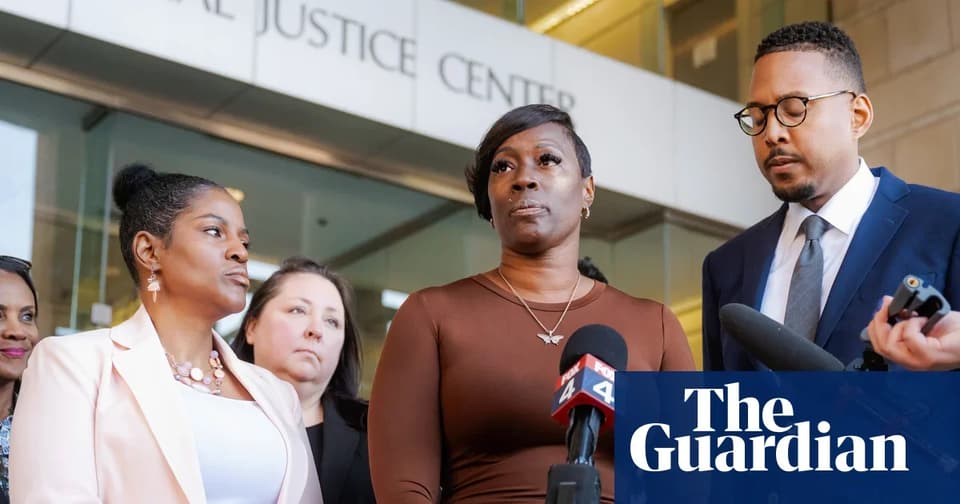
The Texas Court of Criminal Appeals has dismissed the state's attempt to overturn the acquittal of Crystal Mason, ending a nearly decade-long legal battle over her 2016 provisional ballot. Mason, a Black woman in Tarrant County, was originally sentenced to five years in prison for illegal voting while on supervised release for a federal tax felony. Although her provisional ballot was never counted, prosecutors argued she knowingly violated election laws by signing an affidavit stating she was eligible. In 2024, a lower court acquitted her, finding insufficient evidence that she understood her ineligibility. On Thursday, the state's highest criminal court declined to hear the prosecutor's appeal, letting the acquittal stand. The decision was 5-4, with dissenting judges arguing the evidence was sufficient to prove Mason knew she was ineligible. Mason, 51, expressed relief after years of litigation that impacted her family and housing. The ruling is seen as a victory for voting rights advocates, though the Tarrant County District Attorney's office maintained that illegal voting remains a crime and that they will continue to prosecute such cases when evidence supports it.
Key points
- The Texas Court of Criminal Appeals dismissed the state's petition to review Crystal Mason's 2024 acquittal in a 5-4 decision, allowing the lower court's ruling to stand.
- Mason was originally convicted in 2018 and sentenced to five years for casting a provisional ballot in 2016 while on supervised release for a federal tax felony.
- The core legal dispute centered on whether Mason 'actually knew' she was ineligible to vote, as required by a 2022 Texas law amendment and a 2022 court ruling.
- Four dissenting judges, including Lee Finley and Gina Parker, argued there was sufficient evidence to sustain the conviction, calling the case 'not close.'
- Mason's provisional ballot was never counted, but she was charged with illegal voting; she spent 10 months in federal prison after her conviction.
- The Tarrant County District Attorney, Phil Sorrells, stated that illegal voting remains a crime and that his office will continue to investigate and prosecute such cases.
Background
This case has been a focal point in debates over voting rights and election integrity in Texas for nearly a decade. Mason's conviction in 2018 drew national attention and was cited by then-President Donald Trump as an example of voter fraud, despite her ballot never being counted. The legal battle involved multiple appeals, including a 2022 ruling by the Texas Court of Criminal Appeals that required prosecutors to prove Mason 'actually realized' her ineligibility, not just that she was on supervised release. A 2024 lower court acquittal was then challenged by the state, leading to the current dismissal. The case is distinct from recent Texas efforts to prosecute noncitizen voting, which involved different legal standards and a broader investigation by state and federal agencies.
How outlets are covering it
The primary source, The Guardian, emphasizes the emotional and personal toll on Mason, highlighting her joy and the impact on her family, including her daughter and son. It frames the case as a fight for democratic participation and cites ACLU attorneys who view the ruling as a protection of voting rights. The secondary source, NBC 5 Dallas-Fort Worth, focuses more on the legal mechanics, detailing the 5-4 vote, the dissenting opinions, and the specific legal standard of 'actually knew' versus 'actually realized.' NBC 5 also notes the DA's office's stance that the ruling does not decide the merits of the evidence, only the procedural review. Both sources agree on the factual outcome but differ in emphasis: The Guardian centers on the human rights and civil liberties angle, while NBC 5 provides a more detailed breakdown of the judicial process and the dissenting views. The Guardian also notes the political context, including the DA's wife visiting Mason, while NBC 5 highlights the involvement of the Next Generation Action Network and the ACLU in the legal effort.
Why it matters
The ruling sets a precedent for how Texas courts will interpret the 'knowing' standard in illegal voting cases, particularly for individuals on supervised release. It reinforces the principle that voting rights should not be threatened by the fear of severe criminal penalties for procedural errors. The case also highlights the ongoing tension between election integrity efforts and voter access, a theme that has been prominent in Texas and nationally in recent years. For voters, it may serve as a reassurance that the legal system will scrutinize the evidence of intent in such cases, potentially deterring overzealous prosecutions. For the state, it may signal a need to adjust how provisional ballots and eligibility affidavits are handled to avoid similar disputes.
What to watch
Mason and her legal team are expected to hold a news conference on Friday to discuss the ruling. The Tarrant County District Attorney's office will likely continue to monitor and investigate potential illegal voting cases, as stated by Phil Sorrells. The case may also influence future legislative or judicial interpretations of election laws in Texas, particularly regarding the standard of proof for 'knowing' violations. Advocates may use the ruling to challenge other similar cases or to push for further reforms in how provisional ballots are processed and how eligibility is verified at polling places.
- Texas court ends case against woman sentenced to five years over voting error The Guardian
- Texas criminal appeals court upholds overturning Crystal Mason's conviction Dallas News
- Appeals court affirms Crystal Mason's acquittal in illegal voting case nbcdfw.com
- Texas’ highest criminal court leaves Crystal Mason’s acquittal in place; Tarrant County DA defends prosecution WFAA
Want the full story? Read the original reporting
Read on The Guardian