
Judge blocks Trump-era cap on foreign student stays in US
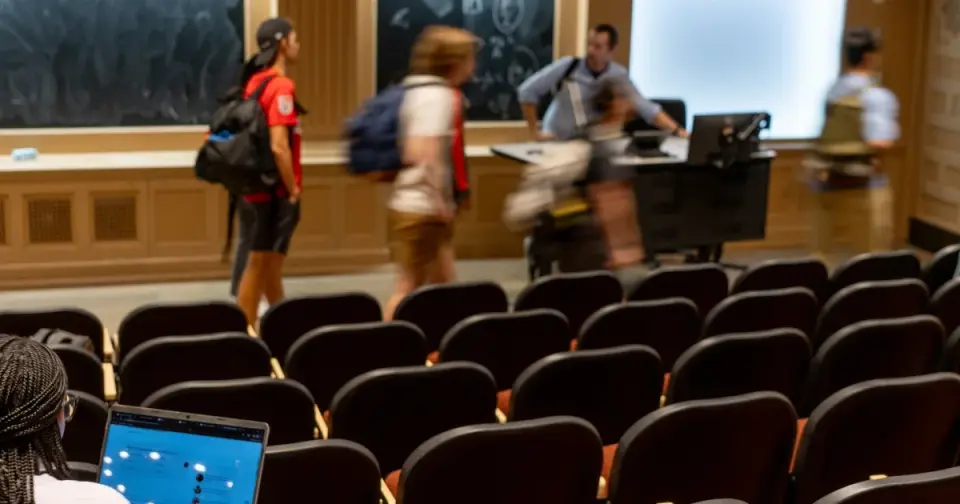
A federal judge in Massachusetts struck down a Department of Homeland Security rule that would have limited F-1 and J-1 visa holders to four years in the US. The ruling preserves the 'duration of status' framework, allowing students to remain as long as they make normal academic progress. The judge found the new cap lacked statutory authority and failed to consider less burdensome alternatives. The decision halts a policy that critics argued would disrupt degree programs and deter international enrollment.
Key points
- Judge F. Dennis Saylor of the US District Court for the District of Massachusetts set aside the DHS rule on November 16, 2026.
- The invalidated regulation would have replaced 'duration of status' with a strict four-year cap for F-1 students and J-1 exchange visitors.
- Under the blocked rule, students exceeding four years would have required discretionary extensions from DHS, regardless of their program length.
- Saylor ruled the regulation was contrary to statutory authority and failed to demonstrate a rational connection between the restrictions and the government's stated goals.
- The case, Presidents’ Alliance v. DHS, was brought by a coalition including the United Auto Workers and higher education groups.
- Plaintiffs argued the rule would create unnecessary disruptions and harm the ability of US institutions to attract international talent.
Background
The DHS issued the final rule in July 2026, replacing a decades-old framework that allowed international students to stay in the US while maintaining lawful status and making normal progress toward a degree. A coalition of education and labor groups challenged the rule in August 2026. Prior to this ruling, the administration had implemented other immigration restrictions, including changes to asylum seeker work authorization and student aid eligibility proofs for Native Americans, reflecting a broader policy shift toward tighter visa controls.
How outlets are covering it
Bloomberg Law emphasizes the legal deficiencies of the DHS rule, highlighting Judge Saylor's finding that the agency failed to consider less burdensome tools and that the new system was 'unreviewable' and 'completely discretionary.' The outlet notes the ruling prevents the 'immense costs' of abandoning the existing system. Politico focuses on the practical impact, noting that the rule would have capped stays at four years regardless of program length, forcing students, researchers, and professors to apply for extensions. Both outlets agree the rule was arbitrary, but Bloomberg Law places greater weight on the statutory and administrative law arguments, while Politico highlights the coalition's argument that the rule would discourage foreign students from studying in the US. Miriam Feldblum of the Presidents’ Alliance, cited by Bloomberg Law, noted that enrollment declines were already evident and that the rule would have further weakened the ability to attract international talent.
Why it matters
The ruling preserves the 'duration of status' system, which is critical for international students pursuing degrees that take longer than four years, such as in medicine, law, or certain engineering fields. It prevents a sudden disruption to the educational plans of thousands of students and maintains the US's competitiveness in attracting global talent. The decision also sets a precedent for challenging immigration regulations that lack a rational basis or statutory authority, potentially influencing future challenges to other visa restrictions.
What to watch
The DHS may appeal the ruling to a higher court, though the immediate effect is that the four-year cap will not take effect. The 'duration of status' framework remains in place, allowing F-1 and J-1 visa holders to stay in the US as long as they maintain lawful status and make normal progress. The administration may need to reconsider its approach to regulating international students, potentially focusing on other areas of immigration enforcement or seeking new legislative authority to impose stricter limits.
- DHS Limits on F-1 Foreign Students’ Stay in US Overturned (1) Bloomberg Law News
- Judge tosses DHS rule limiting how long foreign students can study in US Politico
- United States: Federal Court Vacates Fixed Terms of Admission for F, J, and I Nonimmigrants Fragomen
- Federal judge issues final ruling blocking U.S. plan to limit visa length for grad students, postdocs STAT
- Boston judge blocks Trump administration’s limits on international student visas The Boston Globe
Want the full story? Read the original reporting
Read on Bloomberg Law News