
National Park Service closes National Mall turf for five-month restoration
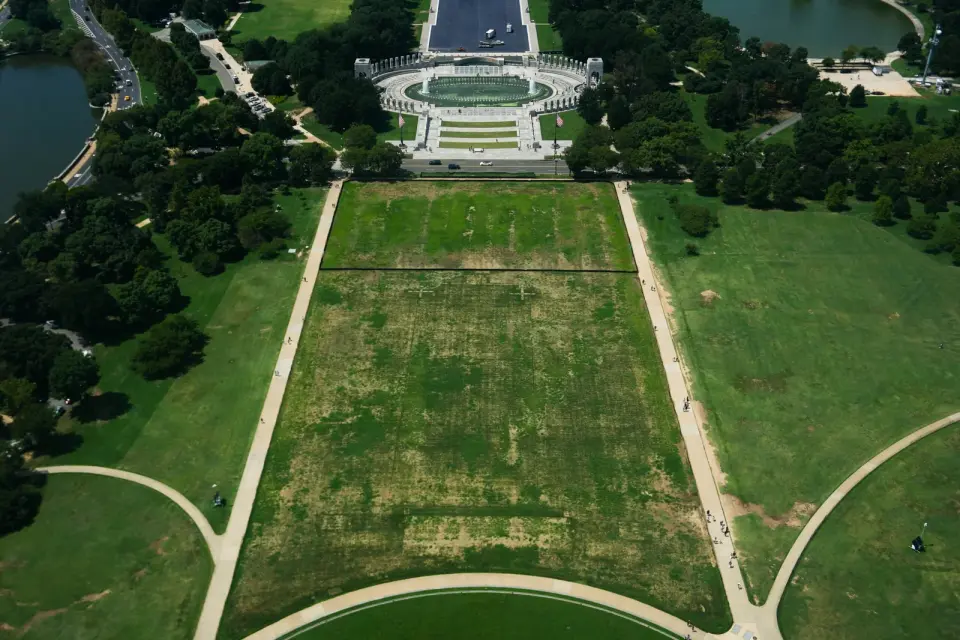
The National Park Service has closed a one-mile stretch of the National Mall between 3rd and 14th Streets until January 24, 2027, to repair turf damaged by high foot traffic and recent events. While the closures are necessary for soil recovery, they occur amid broader controversies over the Trump administration's rapid physical transformation of Washington, D.C., including White House renovations and new security infrastructure.
Key points
- Closures begin September 1, 2026, and are scheduled to last until January 24, 2027, affecting center and tree panels.
- The National Park Service cites soil compaction, turf loss, and damage from permitted events as the primary reasons for the shutdown.
- Pedestrians, demonstrations, and special events are prohibited in the fenced-off areas, though some walkways and grassy sections remain open.
- The closures coincide with the National Capital Planning Commission's review of a proposed fence around Lafayette Park and an underground security screening center.
- President Trump previously blamed vandals for dead grass near the World War II Memorial, though the current closure addresses broader wear from public use.
Background
This turf restoration follows a series of high-impact events on the National Mall, including the Freedom 250 IndyCar race and a July 4th celebration hosted by President Trump. In August 2026, a federal indictment was issued against a woman for vandalizing the World War II Memorial, highlighting tensions between public access and preservation. The current closures are part of a larger pattern of physical changes to Washington, D.C., under the Trump administration, which includes White House renovations and new security measures that have faced legal challenges and public debate.
How outlets are covering it
WTOP News and NBC4 Washington emphasize the practical necessity of the closures, citing the National Park Service's focus on soil compaction and turf recovery. NBC4 Washington highlights the specific damage from 'recent permitted events' and 'sustained high levels of public use,' while WTOP notes the temporary nature of the restrictions. In contrast, the Substack analysis by Dan Diamond frames the National Mall changes within the broader context of the Trump administration's aggressive physical transformation of Washington, D.C. Diamond points to the administration's use of executive authority to bypass traditional review processes, noting that federal panels have been stocked with loyalists to expedite projects. While the turf closure is a maintenance issue, Diamond suggests it reflects a larger trend of rapid, often controversial, changes to the nation's capital, including the White House ballroom and Lafayette Park fencing, which have faced legal challenges and public opposition.
Why it matters
The closure of the National Mall's central turf underscores the strain that high-profile events and public use place on historic public spaces. It also highlights the tension between maintenance needs and the administration's broader agenda to reshape Washington, D.C., which has led to legal battles and public debate over the pace and legality of these changes. For visitors and residents, the closures signal a shift in access to one of the country's most iconic public spaces, while for policymakers, they reflect the challenges of balancing preservation with political and security priorities.
What to watch
The National Park Service plans to lift closures as soon as possible, with the goal of restoring access by January 24, 2027. The National Capital Planning Commission is expected to review the Lafayette Park fence and underground security screening center, though votes are not anticipated. Legal challenges to other Trump administration projects, including the White House ballroom, may continue, with the Supreme Court's recent ruling on standing potentially influencing future cases. The administration is expected to proceed with its physical transformation plans, despite opposition from preservationists and some legal experts.
- Parts of National Mall closed to visitors until late January WTOP News
- Large portion of National Mall and Memorial Park closed until 2027 WUSA9
- Milelong stretch of National Mall grass to be closed until January NBC4 Washington
- Construction, closures persist amid President Trump's DC makeover FOX 5 DC
- “How can Trump do this?” An FAQ on how he’s transforming Washington Substack
Want the full story? Read the original reporting
Read on WTOP News