
St. Paul clears Pig’s Eye Park encampment amid protests and political friction
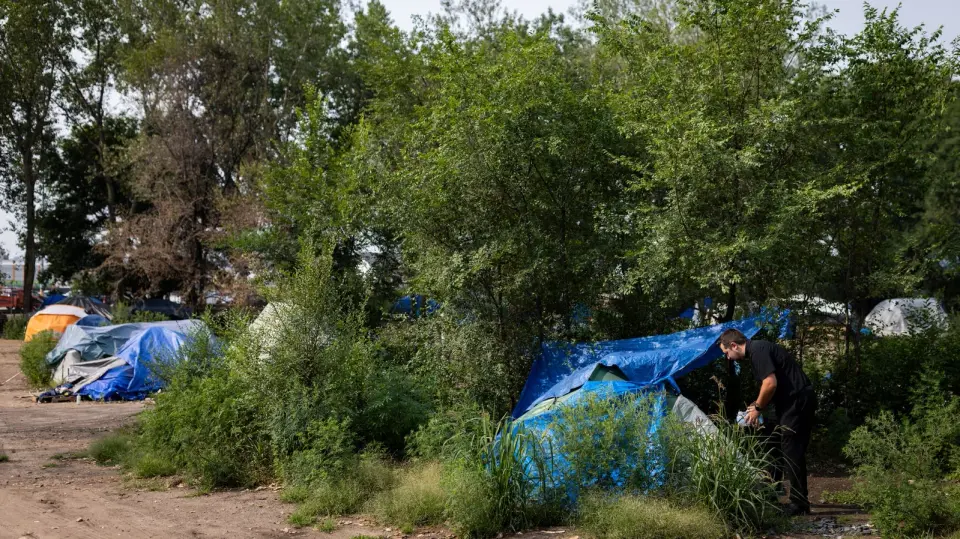
St. Paul cleared its largest homeless encampment at Pig’s Eye Park on Wednesday, displacing an estimated 100 to 200 residents. While city officials cited safety concerns and offered transitional services, volunteers and residents reported that many were simply moved to other camps rather than permanent housing. The action followed a contentious internal meeting where Mayor Kaohly Her clashed with state legislators over the timeline, with critics arguing the city lacked a concrete plan for long-term support.
Key points
- The closure of the Pig’s Eye Park (Fish Hatchery) encampment began Wednesday morning, displacing an estimated 100-200 people, though some estimates suggest up to 200.
- Mayor Kaohly Her’s office cited worsening health and safety issues, including fires and overdoses, as the primary reason for the closure, which was announced in July.
- Residents and volunteers reported that many individuals were relocated to other encampments, such as the site on Randolph Avenue, rather than being placed in permanent housing or shelters.
- A private meeting between the mayor and state legislators ended in conflict, with Her refusing to delay the sweep despite requests from officials who argued for more time to secure resources.
- City officials established a 'transitional hub' downtown for two weeks to connect residents with services, but critics noted that the housing waitlist remains over 1,400 families deep.
Background
This action is part of a broader regional trend in addressing homelessness through encampment clearances, similar to recent actions in Madison, Wisconsin, where officials cleared a site linked to a police shooting. In St. Paul, the closure follows months of debate and a July announcement by the mayor to address three major camps, with Pig’s Eye being the first. The city has faced criticism for a 'whack-a-mole' approach, where clearing one site leads to overcrowding at others, such as the Randolph Avenue camp, which swelled with newcomers immediately after the Pig’s Eye closure.
How outlets are covering it
MPR News and Pioneer Press highlighted the human impact, noting that residents like Ksenia Gabrielle Burgoyne and Gregory Schulz Jr. felt abandoned and were forced to move to other camps without stable housing. Volunteers expressed frustration that the city was not providing adequate long-term solutions. In contrast, the Mayor’s Office, via Assistant Mayor Cedrick Baker, emphasized that outreach efforts were ongoing and that the city was providing rides and storage for those who accepted shelter. 5 Eyewitness News reported that City Council President Rebecca Noecker supported the closure only if indoor options were guaranteed, while Axios detailed the political fallout, noting that Her’s aggressive stance in a private meeting damaged relationships with state legislators who had advocated for a delay. Critics like Safe City Project’s John Tolo argued that moving people to secluded areas like Randolph Avenue would worsen safety issues rather than resolve them.
Why it matters
The clearance of Pig’s Eye Park marks a significant escalation in St. Paul’s approach to homelessness, testing the limits of local resources and political alliances. The incident highlights the tension between immediate public safety concerns and the need for sustainable, long-term housing solutions. The political friction revealed by Axios suggests that the mayor’s strategy may face increased resistance from state legislators, potentially impacting future funding and support for homeless services in the city.
What to watch
The city has announced a two-week 'transitional hub' downtown to assist displaced residents with shelter and housing applications. Mayor Her has indicated that the city will eventually clear the remaining two major encampments on Randolph Avenue and near Maryland Avenue, but no specific dates have been set. The outcome of the state legislative relationships and the effectiveness of the transitional services will likely determine the city’s approach to future encampment clearances.
- ‘Difficult to say goodbye’: Residents, volunteers worry what’s next as St. Paul clears encampment MPR News
- St. Paul City Council president supports closing Pig's Eye Park encampment — but with conditions 5 EYEWITNESS NEWS
- St. Paul: Volunteers, city crews move people out of Pig’s Eye homeless camp Pioneer Press
- St. Paul begins clearing Pig's Eye Park encampment, leaving residents seeking shelter CBS News
- Scoop: St. Paul's homelessness meeting with top officials went off the rails Axios
Want the full story? Read the original reporting
Read on MPR News