
NPR Icon Noah Adams Dies at 84, Ending Era of Rural American Storytelling
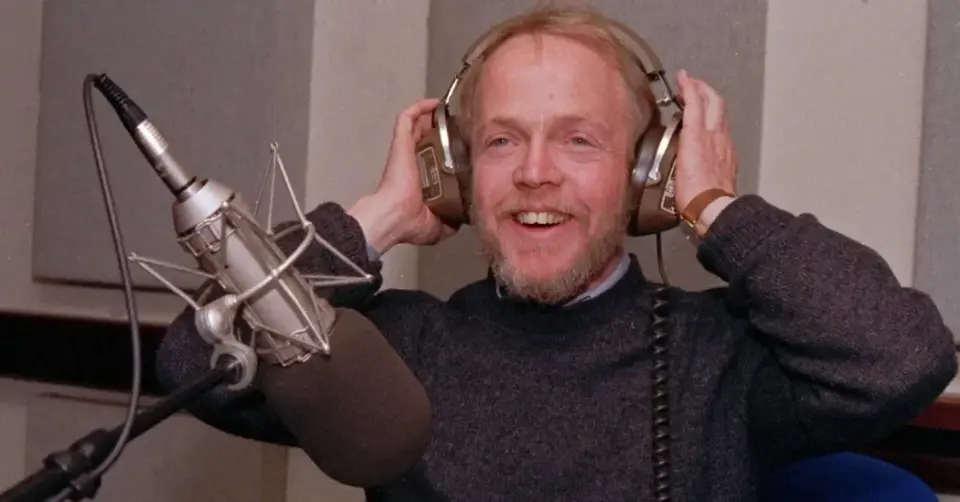
Noah Adams, the quiet and influential host of NPR’s 'All Things Considered,' died on October 16 in Yellow Springs, Ohio, at age 84. A Kentucky native who shaped the network’s sound for nearly two decades, Adams was known for his empathetic interviews with ordinary Americans and his refusal to rely on official Washington sources. His death marks the end of an era for public radio, with colleagues citing his unique ability to capture the 'character of a place' through vivid, simple language.
Key points
- Adams died on October 16 at his home in Yellow Springs, Ohio, due to complications from a benign brain tumor removed eight years prior.
- He joined NPR in 1975 as a production assistant and became a co-host of 'All Things Considered' by 1982, eventually hosting for 18 years.
- Adams was born in Kentucky to a postman and worked hard to erase his Appalachian accent, though he remained proud of his blue-collar roots.
- He won an Overseas Press Club award in 1994 for reporting on Serbian extremism and was noted for his coverage of the September 11 attacks in 2001.
- Adams authored five books, including 'Piano Lessons' and 'The Flyers: In Search of Wilbur & Orville Wright.'
- He is survived by his wife, Neenah Ellis, whom he married in 1987, and a brother.
Background
This news follows a broader trend of media industry consolidation and staff reductions seen in late 2026, such as the recent layoffs at IGN. While those cuts affected digital video hosts, Adams’ departure represents the loss of a foundational figure in traditional public radio. His career spanned the evolution of NPR from a new network in the 1970s to an established institution, providing a counterpoint to the rapid changes in digital media coverage.
How outlets are covering it
The New York Times emphasizes Adams’ personal journey, highlighting his struggle to shed his Appalachian accent while maintaining his roots, and notes his death was caused by complications from a brain tumor. KCCI provides a chronological overview of his career, detailing his start at the University of Kentucky station and his 1994 award for work in Serbia. NPR focuses on his professional impact, with colleagues like Ira Glass and Melissa Block praising his observational skills and his influence on the tone of 'This American Life.' The Daily Independent, based in Ashland, Kentucky, frames the story locally, identifying him as a 'radio legend' from the region, though it offers fewer specific details than the national outlets. While all sources agree on the cause of death and his age, NPR and the New York Times diverge in emphasis: the former highlights his experimental documentary work and influence on other producers, while the latter focuses on his personal background and the specific cause of his passing.
Why it matters
Adams’ death signals the end of a distinct era in American public broadcasting, where long-form, empathetic storytelling from rural areas was central to the network’s identity. His legacy influences current public radio standards, having inspired figures like Ira Glass and defined the 'voice' of NPR for a generation. His focus on non-elite voices and his innovative use of audio in documentaries like 'Father Cares' set precedents for journalistic integrity and creative storytelling that continue to shape media today.
What to watch
NPR is expected to honor Adams with special programming or tributes, given his status as a foundational figure. Colleagues and former hosts, including Susan Stamberg and Melissa Block, may share further anecdotes or archival recordings. The network may also revisit his classic documentaries, such as the 1981 'Father Cares' piece, to highlight his experimental approach to journalism. No immediate changes to the 'All Things Considered' format are expected, but his absence will be felt in the daily broadcast landscape.
- Noah Adams, Longtime Host of ‘All Things Considered,’ Has Died at 84 The New York Times
- NPR radio host Noah Adams dies at 84 KCCI
- Noah Adams, longtime host of NPR’s All Things Considered, has died NPR
- Radio legend from Ashland dies at 84 Daily Independent
- Remembering Noah Adams, longtime co-host of ‘All Things Considered Journal-News.com
Want the full story? Read the original reporting
Read on The New York Times