
USS Abraham Lincoln Returns to San Diego After 322-Day Iran War Deployment
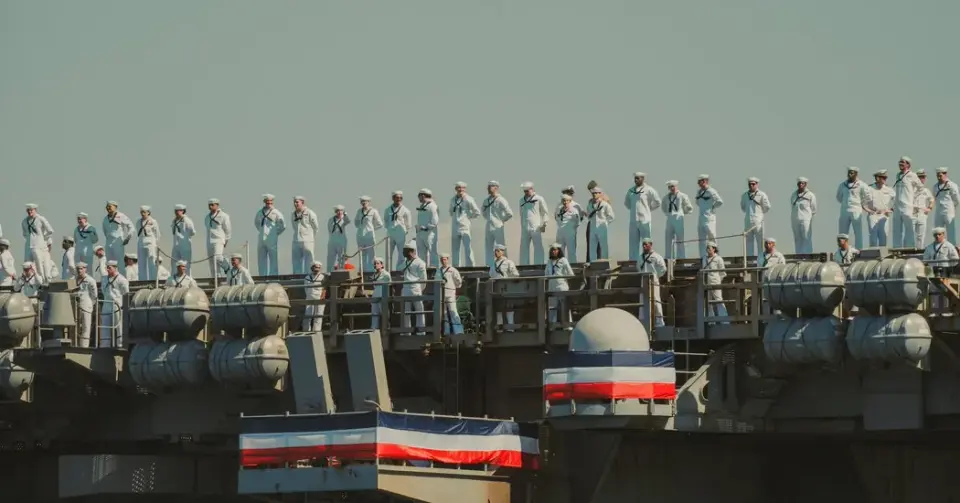
The U.S.S. Abraham Lincoln arrived in San Diego on Thursday after a 322-day deployment, the longest since the Vietnam War. The ship supported the U.S.-Iran conflict, enduring supply shortages and mental health crises. Defense Secretary Pete Hegseth awarded the crew the Presidential Unit Citation, while Democrats demand an investigation into the harsh conditions.
Key points
- The carrier returned to its home port in San Diego after 322 days at sea, nearly breaking the post-Vietnam War record of 327 days set by the U.S.S. Gerald R. Ford.
- The deployment began in November 2025 for the Indo-Pacific but was redirected to the Middle East in January 2026 to support the U.S.-Iran war, which began in late February.
- The crew faced severe logistical challenges, including food and fuel shortages, after Iran destroyed a key U.S. supply hub in Bahrain.
- The ship went 264 days without a port call due to missile threats in the Arabian Peninsula, leading to reports of deteriorating morale and eight suicide attempts.
- Defense Secretary Pete Hegseth visited the ship on Wednesday to present the Presidential Unit Citation, praising the crew's resilience and combat achievements.
Background
Earlier coverage in August and September highlighted the ship's return journey, including a stop in Thailand, and growing concerns over crew morale and supply shortages. The deployment was initially expected to be routine but extended significantly due to the escalation of the Iran conflict.
How outlets are covering it
The New York Times and The San Diego Union-Tribune emphasize the human toll, highlighting food shortages, mental health struggles, and the emotional homecoming for families. The Guardian notes the political divide, with Democrats demanding an investigation into the conditions and the Trump administration defending the mission's necessity. Hegseth dismissed reports of dysfunction, calling the deployment a 'righteous and historic mission,' while Democrats like Rep. Sara Jacobs called for accountability and an end to the war.
Why it matters
The deployment underscores the logistical and human costs of prolonged military operations, raising questions about the sustainability of long-term naval missions and the impact on service members' well-being. It also highlights the political tensions surrounding the Iran war and the U.S. military's operational capabilities in contested regions.
What to watch
The Navy will likely review the deployment's logistical failures and mental health impacts. Democrats may push for an Office of Inspector General investigation and a House Armed Services Committee hearing. The crew will undergo rest and recovery, while the Navy may adjust future deployment strategies to prevent similar crises.
- Long-Deployed Aircraft Carrier U.S.S. Abraham Lincoln Set for Homecoming The New York Times
- Hegseth greets USS Abraham Lincoln near the end of record long deployment ABC News - Breaking News, Latest News and Videos
- USS Abraham Lincoln scheduled to dock in San Diego after harrowing stretch at sea The Guardian
- Joy and relief consume crew of carrier USS Abraham Lincoln on eve of homecoming San Diego Union-Tribune
- Hegseth visits the long-deployed USS Lincoln to bestow a top award before the ship returns home Yahoo
Want the full story? Read the original reporting
Read on The New York Times