
Pentagon splits Iran war casualties to reset War Powers clock
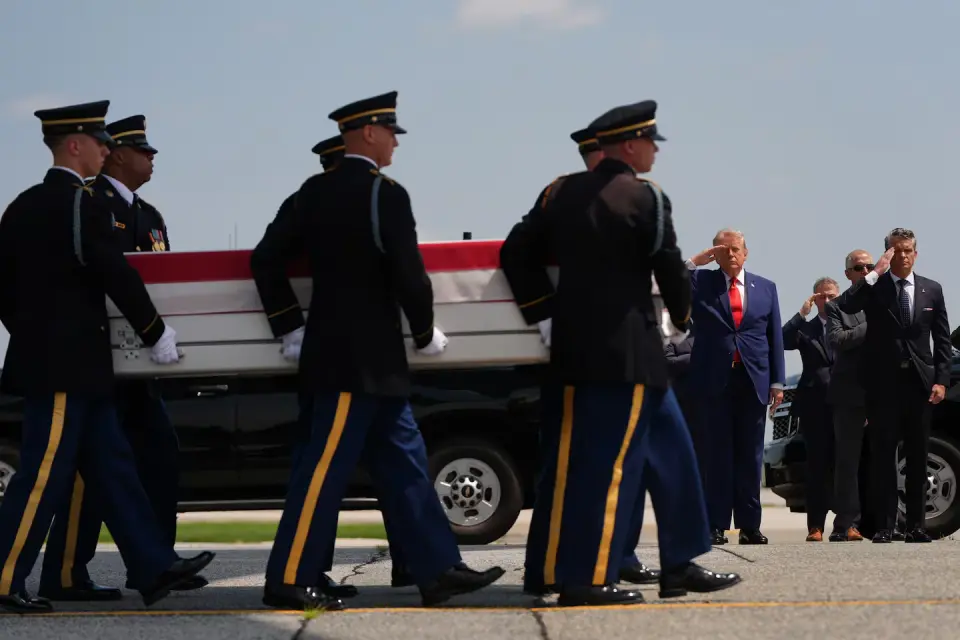
The Pentagon reclassified four U.S. service members killed in recent Iran hostilities into a new 'Overseas Operations' category, removing them from the official 'Operation Epic Fury' death toll. This move reduces the listed war deaths from 18 to 14, a change critics argue obscures the human cost of the conflict and may impact veterans' benefits. The reclassification aligns with the administration's interpretation of the War Powers Act, which treats the April ceasefire as pausing the 60-day limit on military operations without congressional authorization.
Key points
- The Defense Casualty Analysis System (DCAS) now lists 14 deaths and 420 wounded for Operation Epic Fury, while a new 'Overseas Operations' category lists 4 deaths and 207 wounded starting July 7.
- The four soldiers removed from the Epic Fury count died in July, including three in Jordan and one in Iraq, during renewed fighting after the collapse of the April ceasefire.
- The Trump administration argues the April ceasefire paused the War Powers Act clock, justifying a separate casualty count for post-July 7 operations.
- Veterans' advocates warn that separating casualties could complicate access to medical care and benefits for survivors and families.
- Pentagon officials initially described the data changes as 'temporary disruptions' but have not provided a formal explanation for the new category.
Background
This development follows a series of transparency issues under the Trump administration, including the Minab school bombing investigation and previous discrepancies in casualty reporting. The conflict began on February 28, 2026, with the U.S. and Israel launching strikes on Iran. A ceasefire was reached in April, followed by an interim deal in June, but fighting resumed in July after Iran attacked merchant vessels in the Strait of Hormuz.
How outlets are covering it
The Washington Post and AP News emphasize the potential impact on veterans' benefits and the lack of transparency in casualty reporting. The Guardian highlights the legal implications under the War Powers Act, noting that lawmakers from both parties, including Republican Thomas Massie, argue the administration is breaking the law by exceeding the 60-day limit without congressional authorization. WBAL-TV focuses on the confusion caused by conflicting figures, noting that President Trump publicly cited 18 deaths while the Pentagon's database now shows 14. All sources agree that the reclassification is unprecedented and raises questions about the administration's intent to minimize the perceived cost of the war.
Why it matters
The reclassification of casualties could have long-term implications for veterans' benefits and the legal standing of the U.S. military presence in Iran. It also highlights the tension between the executive branch's interpretation of the War Powers Act and congressional oversight, potentially setting a precedent for future conflicts.
What to watch
Congress is expected to continue challenging the administration's interpretation of the War Powers Act, and veterans' advocates may push for clarity on how the new category affects benefits. The Pentagon may face further scrutiny over its casualty reporting and transparency practices as the conflict continues.
- Pentagon relabels U.S. casualties caused by Iran amid scrutiny of wartime transparency The Washington Post
- Pentagon reports more than 600 Iran war casualties in quiet database update The Guardian
- Pentagon reclassifies US soldier deaths, raising questions about Iran War toll WBAL-TV
- Pentagon’s official Iran war death toll no longer lists 4 troops killed during renewed fighting AP News
- Iran war casualty count eclipses 600 as Pentagon quietly changes accounting CNN
Want the full story? Read the original reporting
Read on The Washington Post