
Dolores Huerta, UFW Co-Founder and Civil Rights Icon, Dies at 96
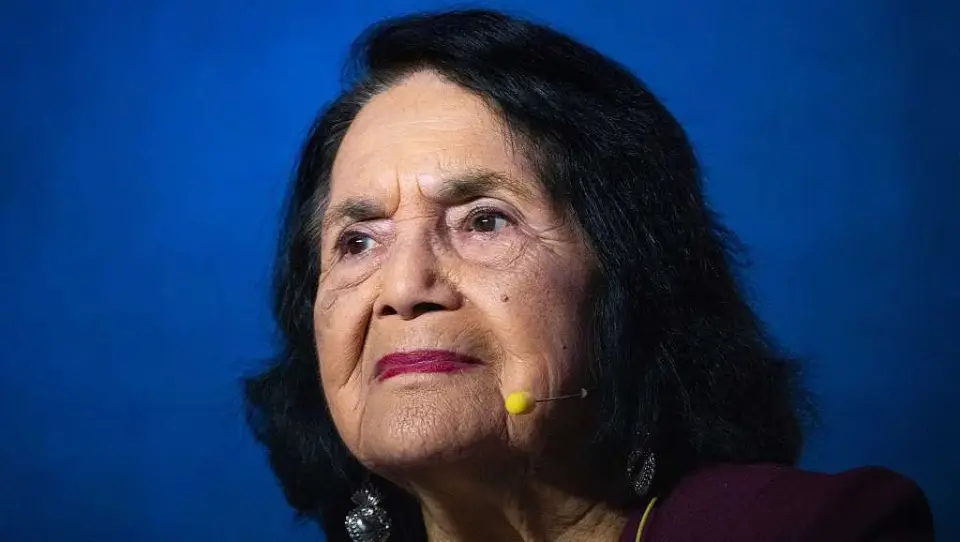
Dolores Huerta, the co-founder of the United Farm Workers and creator of the slogan 'Sí, se puede,' has died at age 96. Her passing marks the end of a decades-long career advocating for farmworkers, civil rights, and immigration reform, though her legacy is complicated by her 2026 revelations of sexual abuse by her longtime partner, Cesar Chavez.
Key points
- Dolores Huerta died at 96 at her home in Bakersfield, California, surrounded by family, according to her family and the Dolores Huerta Foundation.
- She co-founded the United Farm Workers (UFW) with Cesar Chavez in the 1960s and served as its vice president for nearly four decades.
- Huerta coined the rallying cry 'Sí, se puede' (Yes, we can), which became a central motto for the UFW and broader labor movements.
- In 2026, Huerta revealed that Chavez had sexually abused her, resulting in two secret pregnancies; this revelation complicated her legacy shortly before her death.
- California Governor Gavin Newsom ordered flags flown at half-staff in her honor, and she was inducted into the California Hall of Fame in 2013.
Background
Dolores Huerta began her career as a school teacher in Stockton, California, before transitioning to community organizing after noticing the poverty affecting farmworkers' children. She founded the Stockton Community Service organization at age 25. Her activism extended beyond labor rights to include immigration reform, voting rights, and gender equality. The UFW credits her with helping end the Bracero Program and negotiating the 1986 Immigration Reform Act. Her 2026 disclosures regarding Chavez's abuse, which followed a New York Times investigation, added a layer of complexity to her historical narrative, though she continued her activism through her foundation until her death.
How outlets are covering it
KCRA emphasizes Huerta's role as a civil rights giant and feminist, highlighting tributes from California political leaders like Governor Newsom and Assembly Speaker Robert Rivas, who praised her for giving voice to the voiceless. BBC focuses on her labor legacy alongside Chavez and the UFW's official tribute, noting her contributions to immigration and voting issues. Both sources acknowledge the 2026 revelations regarding Chavez's abuse, but KCRA frames it as a recent complication, while BBC presents it as part of the broader context of her life's work. The UFW statement, cited by BBC, emphasizes her empowerment of the Latino community and civic engagement, contrasting with the personal trauma she disclosed.
Why it matters
Huerta's death marks the end of an era for the UFW and the broader civil rights movement. Her advocacy for farmworkers, immigrants, and women's rights shaped labor laws and social policies in the US. Her complex legacy, including her 2026 revelations, highlights the intersection of personal trauma and public activism. Her slogan 'Sí, se puede' remains a symbol of resilience and collective action, influencing movements beyond labor rights.
What to watch
The Dolores Huerta Foundation and her family have requested privacy as they grieve, with plans to announce how her legacy will be celebrated. The UFW and other organizations are expected to hold memorial events or tributes. Her influence on labor and civil rights will continue to be studied and referenced in discussions about social justice and activism.
- Dolores Huerta, activist and labor leader who advocated for farmworkers, dies at 96 KCRA
- US civil rights leader Dolores Huerta dies aged 96 BBC
- Tributes pour in for labor leader Dolores Huerta: ‘Fought for farm workers to the very end’ The Guardian
- Huerta Is Remembered as a Labor Champion With a Multidimensional Legacy The New York Times
- Longtime Labor Organizer Dolores Huerta Dies at 96 WSJ
Want the full story? Read the original reporting
Read on KCRA