
ICE rejects GAO push for auto-activating body cameras amid accountability disputes
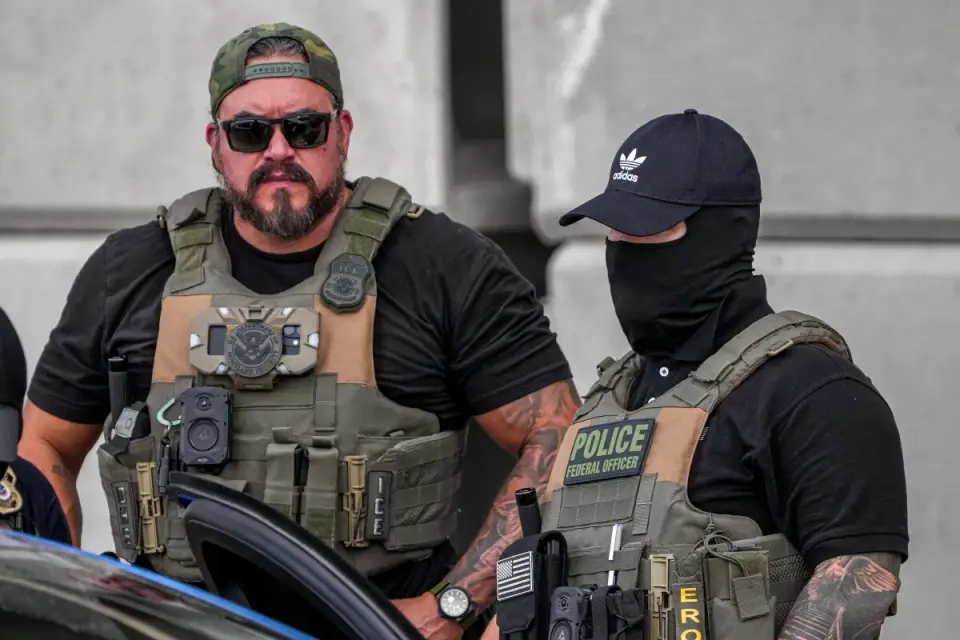
The Department of Homeland Security (DHS) has rejected a Government Accountability Office (GAO) recommendation requiring Immigration and Customs Enforcement (ICE) agents to use body cameras that automatically activate during use-of-force incidents. While Customs and Border Protection (CBP) employs this technology, ICE relies on manual activation, leading to inconsistent recording. The GAO report highlights that neither agency has updated camera deployment plans since 2022 and 2024, respectively, and notes that agents often lack clear guidance on when to record. DHS argues that automatic activation poses privacy risks, potentially capturing sensitive interactions with informants or victims, while the GAO maintains that manual controls fail to ensure compliance during critical encounters. This dispute occurs amid growing public scrutiny over ICE accountability, with multiple fatal shootings and allegations of excessive force reported since the start of the current administration.
Key points
- DHS rejected the GAO’s recommendation for automatic body camera activation, citing operational risks and privacy concerns regarding sensitive interactions.
- The GAO report found that ICE and CBP have not updated their body-camera deployment plans since 2022 and 2024, respectively, leaving them unprepared for funding changes and expanded operations.
- ICE relies on manual camera activation, whereas CBP uses technology that triggers recording when weapons are drawn or emergency lights are activated.
- Agents at six of ten reviewed locations reported uncertainty about when to turn on cameras, with some stating usage is 'up to interpretation' or has 'gray areas.'
- ICE issued no written reprimands for camera policy violations from the program’s launch through September 2025, compared to just one issued by CBP.
- DHS stated that all ICE offices received body cameras by August 5, 2026, but training on their use remains ongoing and is expected to be completed soon.
Background
This dispute follows a series of high-profile incidents involving ICE agents, including the fatal shootings of Renee Good and Alex Pretti in Minneapolis in January 2026, and the shooting of Oscar Belgal in New York City in October 2026. In several cases, video footage contradicted government accounts of the events, leading to federal charges against agents for false statements. Additionally, the shooting of Venezuelan delivery driver Wilber Rafael Garces Perez in Austin in September 2026 highlighted the lack of body camera usage, as the officer involved did not wear one. These incidents have intensified calls for transparency and accountability within ICE, with Democrats in Congress previously delaying DHS funding to push for reforms.
How outlets are covering it
The GAO emphasizes the need for automatic activation to ensure that critical incidents involving force are recorded, arguing that manual controls lead to inconsistent compliance and potential loss of evidence. DHS, on the other hand, contends that automatic activation poses significant operational risks, including the inadvertent recording of sensitive interactions with informants or victims, as well as potential violations of First Amendment activities. Axios notes that while DHS accepted six other GAO recommendations, it rejected the one regarding automatic camera activation, highlighting a central flashpoint in the review. Al Jazeera points out that the Trump administration faces public pressure to improve transparency during immigration raids, with critics arguing that better recording procedures could help clarify events in incidents where government accounts have been disputed. The AP News source, while primarily a paywall page, confirms the rejection of the recommendation and the ongoing training for body camera use across ICE offices.
Why it matters
The rejection of automatic body camera activation by ICE raises significant concerns about accountability and transparency in immigration enforcement. Without consistent recording, there is a risk that critical incidents involving the use of force may go undocumented, making it difficult to verify the actions of agents and the circumstances surrounding them. This lack of transparency has already led to public distrust and legal challenges, as seen in cases where video footage contradicted government statements. The dispute also highlights broader issues within ICE and CBP, including outdated deployment plans and inconsistent training, which may undermine the effectiveness of body camera programs in improving public trust and officer safety. As the administration faces increasing scrutiny over its immigration policies, the decision to reject automatic activation could have long-term implications for the agency's credibility and the rights of those involved in immigration operations.
What to watch
DHS expects to complete training for body camera use across all ICE offices soon, though the timeline for implementing automatic activation remains unclear. The GAO may continue to monitor the situation and potentially revisit its recommendations if compliance issues persist. Public and political pressure for transparency may also influence future policy decisions, particularly if additional incidents involving ICE agents occur. Congress may also revisit funding for DHS if reforms are not implemented, as seen in earlier delays tied to excessive force concerns.
- ICE rejects suggestion that its officers wear body cameras that automatically activate AP News
- US rejects recommendation for ICE body cams to be automatically activated Reuters
- ICE says no to automatic body-cams Axios
- DHS rejects watchdog’s call for ICE to use auto-activated body cameras The Washington Post
- ICE rejects recommendation for body cameras that automatically record Al Jazeera
Want the full story? Read the original reporting
Read on AP News