
Vance Orders Labor Dept. to Subpoena Nine Universities Over J-1 Visa Allegations
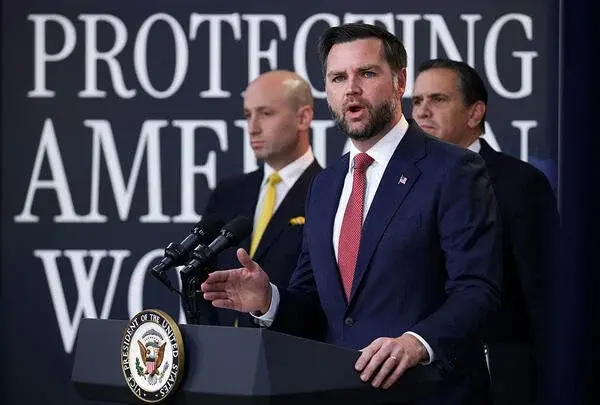
Vice President JD Vance announced that the Department of Labor is investigating nine major universities for alleged J-1 visa fraud, claiming they use these visas to undercut American wages. The targeted institutions include Harvard, Yale, Stanford, MIT, Brown, Caltech, Arizona State, UC Davis, and the University of Pittsburgh. While Vance asserts these schools use foreign postdocs at a rate of 61% versus a national average of 38%, critics argue the move undermines U.S. scientific leadership and benefits China. The administration has also suspended tech giants like Microsoft from visa programs, sparking legal and economic backlash.
Key points
- Vance announced investigations into nine universities for alleged misuse of J-1 visas, which are primarily used by international postdoctoral researchers.
- The Department of Labor’s inspector general, Anthony D’Esposito, confirmed that subpoenas have been issued to the targeted schools to investigate potential foreign influence or visa abuse.
- Vance claimed the universities employ J-1 visa holders at a 61% rate compared to a 38% national average, a statistic the White House did not immediately clarify regarding its source.
- The administration simultaneously suspended Microsoft and Adobe from the H-1B program, with Vance stating he supports eliminating the visa category entirely.
- University spokespeople, including those from MIT and Stanford, confirmed receipt of subpoenas and stated they are in full compliance with federal visa laws.
Background
This action follows a series of recent immigration restrictions by the Trump administration, including a proposed $70,000 fee for international student work programs and attempts to cap the duration of foreign graduate stays. In early October, the administration also suspended Microsoft and Adobe from the Permanent Labor Certification program, citing alleged fraud in replacing American workers with foreign hires. These moves follow earlier proposals to institute a $100,000 fee for H-1B visas, which have faced legal challenges.
How outlets are covering it
STAT reported that the administration’s claims regarding visa usage rates lack immediate public evidence, noting that National Science Foundation data shows nearly 60% of postdocs in science and health are temporary visa holders. STAT highlighted that immigration attorney Elizabeth Goss described the actions as 'self-owns' that signal international scientists are no longer valued. MS NOW framed the crackdown as a strategic error that plays into China’s hands, arguing that the U.S. historically dominated innovation by importing global talent. MS NOW noted that China has responded to these restrictions by creating its own visa programs to attract the talent the U.S. is rejecting. Inside Higher Ed focused on the procedural aspect, noting that the universities are reviewing the subpoenas and asserting their compliance with existing laws.
Why it matters
The investigation targets the core of the U.S. biomedical and research workforce, potentially disrupting federally funded projects. If the restrictions succeed in deterring international scholars, the U.S. risks losing its competitive edge in artificial intelligence and biotechnology to rival nations like China. The legal and economic fallout could take decades to repair, according to immigration experts, while the immediate impact includes uncertainty for thousands of postdoctoral researchers and their institutions.
What to watch
The Department of Labor’s inspector general will review the subpoenaed documents to determine if the universities violated visa laws or compromised research through foreign influence. The targeted universities are expected to respond to the subpoenas, potentially leading to legal challenges. The administration may proceed with the proposed fees for H-1B and student work programs, though these have faced temporary legal blocks. The long-term impact on U.S. scientific leadership and international recruitment will depend on the outcome of these investigations and subsequent court rulings.
- 9 Universities Accused of J-1 Visa Fraud Inside Higher Ed
- Opinion | JD Vance claims foreign students are undercutting America. The opposite is true. MS NOW
- JD Vance Attacks Companies And Immigration Forbes
- Trump administration investigates 9 universities for alleged visa fraud STAT
- Vance says 9 universities will be investigated over foreign visas The Hill
Want the full story? Read the original reporting
Read on Inside Higher Ed