
2026 Midterms Mark Largest Democratic House Gain Since 1974, Sweeping Statewide Offices
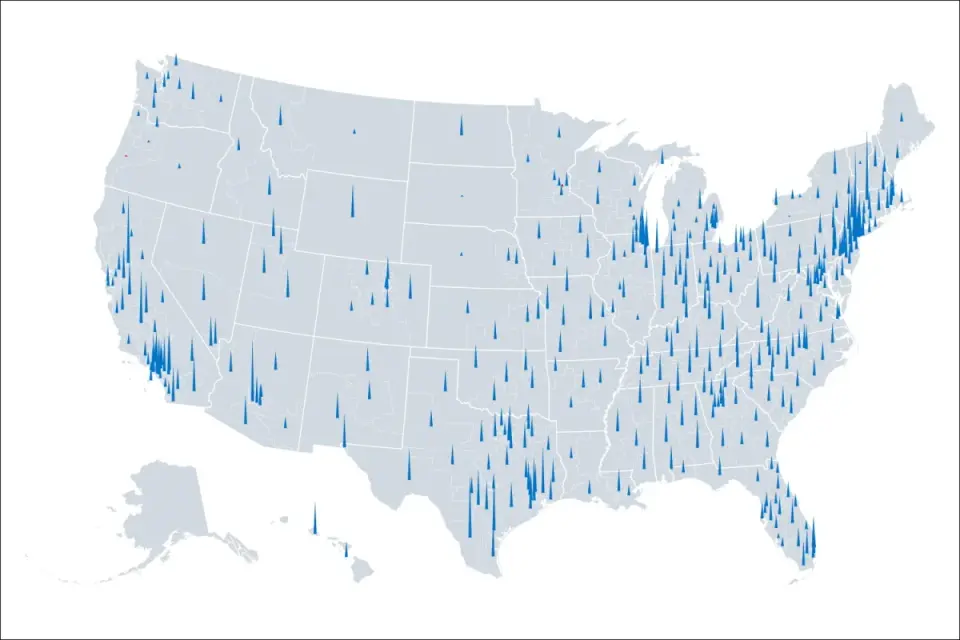
Democrats achieved their largest House seat gain since 1974, adding 44 seats to take control of Congress. The party also swept 28 statewide offices, including in deep-red states like Texas and Indiana, marking a historic shift in power.
Key points
- Democrats gained 44 House seats, surpassing the 43-seat gain in 1974 but falling short of the 48-seat gain in 1958.
- The party won at least 259 House seats, its highest total since 1990, while Republicans face a potential low of 176 seats.
- Democrats captured 28 statewide offices, breaking decades-long Republican streaks in states like Indiana and Texas.
- The national House popular vote margin favored Democrats by 14 percentage points, the widest since the 1974 post-Watergate elections.
- Democrats secured governing trifectas in nearly half of all states, including Texas, Georgia, and Iowa.
Background
Prior coverage indicated Democrats were poised to seize the House despite Republican redistricting efforts, with early projections suggesting a 20-30 seat gain. The 2026 results exceeded these initial estimates, mirroring the 2006 wave election where the president's party lost both chambers of Congress.
How outlets are covering it
The AP emphasizes the historical magnitude of the House seat gains and popular vote margins, comparing 2026 to past wave elections like 1974 and 1958. The New York Times highlights the breadth of the victory, noting that Democrats flipped 28 statewide offices and secured governing trifectas in nearly half of all states, including deep-red states. The Guardian focuses on the long-term implications of winning downballot races, such as attorney general and treasurer positions, which provide Democrats with a 'bench' for future higher-office runs and policy influence in states like Texas and Indiana. All sources agree on the scale of the Democratic victory but differ in emphasis: AP on historical metrics, NYT on state-level power, and Guardian on future political infrastructure.
Why it matters
The 2026 midterms represent a significant shift in political power, with Democrats gaining control of Congress and numerous state governments. This could lead to increased checks on the Trump administration and the implementation of Democratic policies in states where they previously had little influence. The historical nature of the gains suggests a potential long-term impact on the political landscape, though history shows that such waves can be reversed in subsequent elections.
What to watch
Democrats will assume control of Congress in January, with the potential to enact legislation and oversee federal agencies. The party's gains in statewide offices may lead to changes in state policies, such as abortion access and election administration. The 2028 presidential election will be influenced by the political environment created by the 2026 midterms, with history suggesting that presidents' parties that lose 30 or more seats in a second-term midterm often lose the White House two years later.
- Measuring Democrats’ House wave AP News
- Visualized: how Democrats swept downballot races and tipped the balance of power in the US The Guardian
- See How Much Democrats Gained, From Congress to State Races The New York Times
- Democrats will struggle with a state-level revolution The Economist
- Go Local Or Go Home: Can Dems Take ‘State by State’ Doctrine Into 2028? Newsweek
Want the full story? Read the original reporting
Read on AP News