
2026 Midterms: Polling Trust, Senate Toss-Ups, and the 2028 Horizon
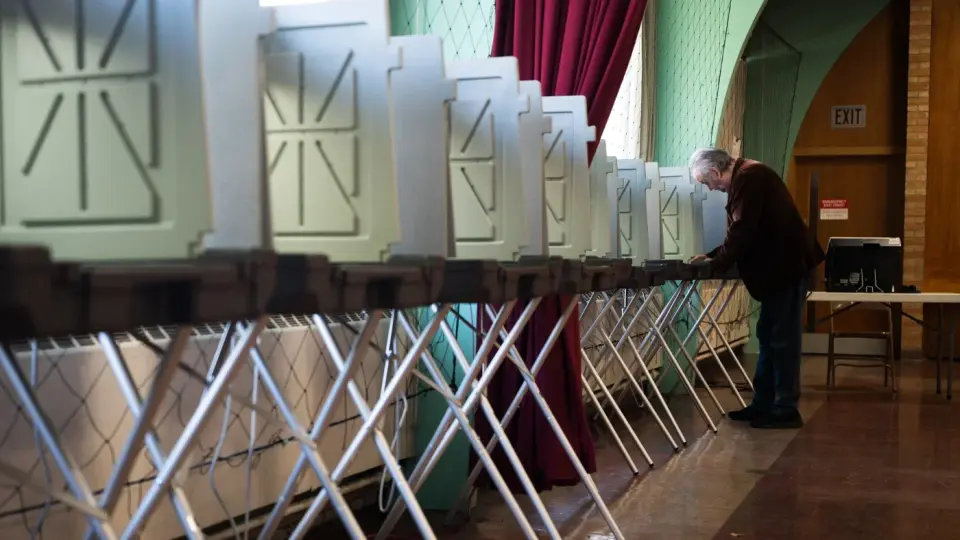
With Election Day approaching, analysts debate the reliability of polls amid a tight Senate race. Democrats appear poised to retake the House and potentially the Senate, but seven competitive states remain in play. While public trust in polling has dropped to 25%, experts argue that trends and voter motivation matter more than precise margins. The outcome will also signal early dynamics for the 2028 presidential cycle.
Key points
- Democrats are favored to retake the House and are competitive for the Senate, though seven key races remain within the margin of error.
- Only 25% of Americans trust political polls, according to a Politico survey, amid concerns about nonresponse bias and fake data.
- NPR reporters emphasize that midterms offer more intimate coverage opportunities than presidential years, with candidates accessible in local settings.
- A Democratic victory in either chamber could lead to increased oversight and investigations of the current administration, potentially including impeachment debates.
- The 2026 results may indicate early trends for 2028, particularly regarding the performance of progressive versus moderate Democrats and post-Trump Republican strategy.
Background
Recent archive coverage highlights the volatility of the 2026 cycle, including a shift in Georgia where former Trump supporters are defecting, and Trump’s erratic rally strategy in Kansas and Iowa. The current Senate race is described as hinging on seven toss-up states, with Democrats needing a net gain of four seats to secure control. This follows a pattern where the president’s party typically loses ground in midterms, a trend amplified by low approval ratings and economic dissatisfaction.
How outlets are covering it
NPR’s Domenico Montanaro and Sam Gringlas argue that while polls have margins of error, they remain useful for tracking trends and voter motivation rather than predicting exact outcomes. They note that local journalism decline has led to fewer rigorous state-level polls, but national horse-race polling has been relatively accurate. Becca Siegel of MS NOW agrees that polls are better at identifying voter desires than predicting close outcomes, citing improved methods like vote recall and online panels, though she warns of nonresponse bias and AI-generated fake data. The Washington Post highlights that Democrats are underestimated in key Senate races, similar to past cycles, while Politico notes a significant drop in public trust in polling accuracy. All sources agree that the 2026 midterms are closely contested, with the Senate outcome dependent on turnout in red states like Texas and Ohio.
Why it matters
The 2026 midterms will determine the balance of power in Congress, potentially leading to a split government that could stall legislation or trigger oversight investigations. The results will also provide early indicators for the 2028 presidential race, particularly regarding the viability of progressive candidates and the post-Trump direction of the Republican Party. Additionally, the debate over polling accuracy reflects broader concerns about the integrity of democratic processes and the reliability of data in an era of AI-generated misinformation.
What to watch
Election Day is on November 3, 2026. Key races to watch include the Senate contests in Texas, Ohio, and Alaska, as well as the House races in South Florida and South Texas. Ballot measures in Maryland, Colorado, Missouri, and Alaska will also be closely monitored for their impact on redistricting and voting systems. Post-election analysis will focus on the performance of progressive versus moderate Democrats and the strategic direction of the Republican Party in the weeks following the vote.
- Can I trust the polls? And other questions from listeners about the 2026 midterms NPR
- 4 ways the polls could be wrong — or right — about who will win the Senate The Washington Post
- Opinion | I oversaw polling for Biden and Harris. Here’s how I’m reading the midterm polls. MS NOW
- Are Trump Voters Refusing to Take Polls? And Other Polling Risks. The New York Times
- Poll: Americans don’t trust polls Politico
Want the full story? Read the original reporting
Read on NPR