
Alaska’s 2026 Midterm: Preliminary Data Shows Close Races and Voter Confusion
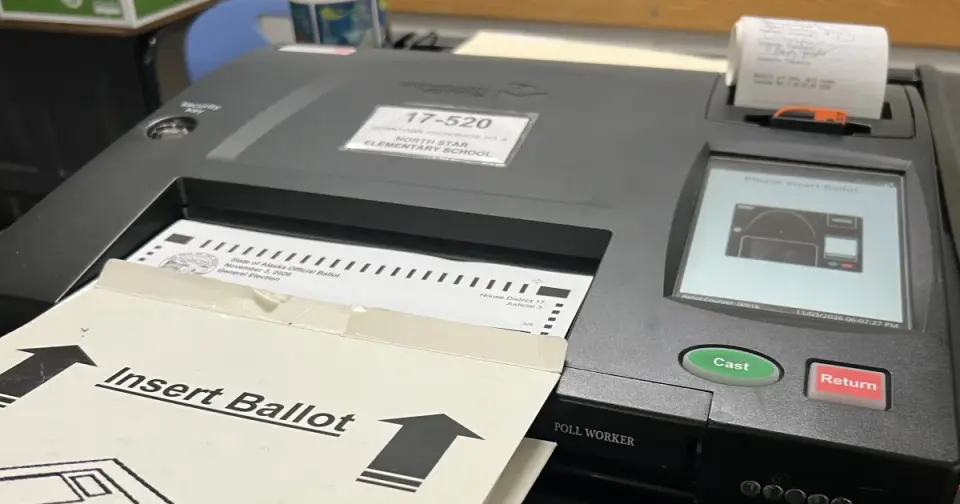
Alaska’s 2026 midterm results remain pending as officials count remaining ballots. Preliminary data shows a razor-thin Senate race, a likely Democratic governor win, and significant voter confusion involving a namesake candidate. Ballot measures to repeal ranked choice voting and require citizenship for voting both passed.
Key points
- Only 74% of ballots have been counted; final results are expected by November 18 for ranked choice tabulation.
- Senate race is nearly tied, with incumbent Dan Sullivan and Democrat Mary Peltola separated by a narrow margin.
- Governor Jonathan Kreiss-Tomkins leads the three Republican candidates in preliminary tallies.
- Ballot Measure 2 to repeal ranked choice voting and Measure 3 to require citizenship for voting both passed.
- Data suggests some voters confused incumbent Dan Sullivan with challenger Daniel J. Sullivan Jr. of Petersburg.
Background
Alaska uses ranked choice voting (RCV) for statewide elections, requiring a majority of first-choice votes to win outright. If no candidate reaches 50%, an instant runoff process eliminates the lowest candidate and redistributes votes. This system has historically delayed results, particularly in rural areas where ballots are counted by hand. Recent months saw federal investigations into the recruitment of Daniel J. Sullivan Jr., a candidate with the same name as incumbent Senator Dan S. Sullivan, raising concerns about ballot confusion.
How outlets are covering it
Alaska Public Media highlights that nearly 30,000 voters ranked Democrat Mary Peltola first and Daniel J. Sullivan Jr. second, suggesting some voters viewed them as allies. MIT Election Lab’s Charles Stewart notes this may indicate protest voting rather than deliberate confusion. The New York Times provides live data showing Peltola leading Sullivan by 0.3% in the Senate race and Kreiss-Tomkins leading by 20% in the governor’s race. FairVote analyzes that late-arriving ballots, which tend to favor Democrats, could shift the Senate race to Peltola. Anchorage Daily News confirms the passage of Ballot Measures 2 and 3, noting that 73% of voters supported repealing RCV and requiring citizenship for voting.
Why it matters
The outcome of Alaska’s Senate race could influence the balance of power in the U.S. Senate, while the governor’s race determines state policy direction. The passage of Ballot Measure 2 signals a potential shift away from ranked choice voting, which could alter future election dynamics. Voter confusion and federal investigations highlight the complexities of RCV systems and the risks of namesake candidates.
What to watch
Alaska’s Division of Elections will release more votes on November 10 and 11. Ranked choice tabulation is scheduled for November 18, with final results certified by November 25. The Senate race may require a runoff if no candidate reaches 50% after tabulation.
- 4 interesting things we’ve learned from Alaska ballot data Alaska Public Media
- Alaska Election Results The New York Times
- How will remaining ballots affect Alaska’s statewide elections? FairVote
- First Alaska election results to come Tuesday evening, final unofficial results in 2 weeks Alaska Beacon
- Preliminary results from Alaska’s 2026 general election Anchorage Daily News
Want the full story? Read the original reporting
Read on Alaska Public Media