
Analysis: Trump Arch Would Cast Shadows on Arlington Cemetery for 284 Days
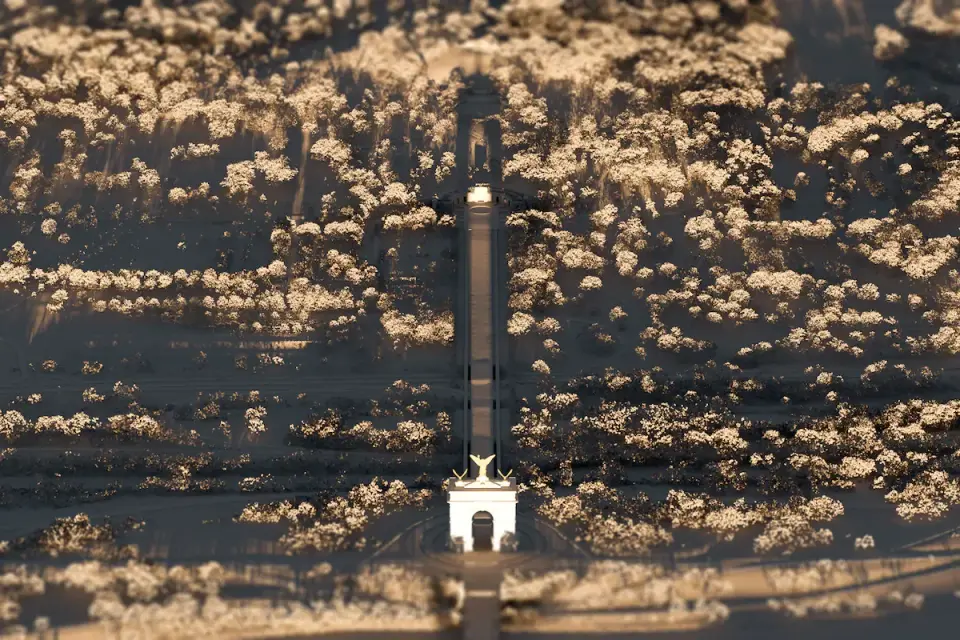
A Washington Post 3D model analysis reveals that President Trump’s proposed 250-foot triumphal arch would cast shadows on Arlington National Cemetery for 284 days annually, affecting over 75,000 graves. While the White House claims the impact is minimal, critics argue the monument disrupts the capital’s historic sight lines and symbolism. Construction is slated to begin November 5, 2026, following a National Capital Planning Commission vote, despite ongoing federal lawsuits from veterans and preservationists challenging the project’s legal authorization.
Key points
- The Washington Post’s digital model indicates the arch’s shadow will cover Arlington National Cemetery for over an hour on 284 days, impacting more than 75,000 graves, including those of WWII and Vietnam veterans.
- The shadow would briefly cover the JFK Memorial’s eternal flame on 18 days and the Military Women’s Memorial on 109 days, with the shadow lingering past the cemetery’s 8 a.m. opening on 26 days.
- The Trump administration argues the arch fulfills a century-old congressional mandate from 1925, while opponents contend the project lacks current legislative approval and violates preservation laws.
- Construction is expected to begin November 5, 2026, immediately after the National Capital Planning Commission votes, with a two-to-three-year timeline that will cause significant traffic disruptions in the area.
- The administration is also pushing to relax federal height restrictions in Washington, D.C., currently capped at 130 feet, to facilitate the arch’s 250-foot height.
Background
The project has faced intense scrutiny since 2025, with public opposition exceeding 50% in April surveys. Legal challenges have intensified as the administration accelerated the timeline to coincide with the November 5 vote, bypassing standard environmental and historical reviews. Previous coverage highlighted discrepancies between the administration’s initial claims of military utility and later descriptions of the structure as a ceremonial gateway.
How outlets are covering it
The Washington Post and USA Today emphasize the physical and symbolic impact of the arch, with the Post’s analysis highlighting the shadow’s reach across historic monuments and graves. ABC News focuses on the legal maneuvering, noting the administration’s reliance on a 1925 law to justify construction without new congressional approval. The New York Times provides historical context, tracing the arch’s origins to a 1930 proposal for columns on the Arlington Memorial Bridge, which the administration now claims to be fulfilling. Critics, including historians and veterans, argue the project disrupts the capital’s deliberate geometry, while the White House and Interior Department maintain the arch will enhance the visitor experience and that shadow impacts are negligible and distorted by tree cover.
Why it matters
The arch represents a significant shift in Washington’s urban landscape and a test of federal authority over historic preservation. Its construction could set a precedent for bypassing congressional oversight for major monuments, while the shadow analysis raises questions about the balance between commemorative projects and the dignity of national burial grounds. The legal battle may also influence future federal construction projects in the capital.
What to watch
The National Capital Planning Commission is expected to vote on the project on November 5, 2026. If approved, construction will begin immediately, with a two-to-three-year timeline. The federal judge, Tanya Chutkan, is weighing a preliminary injunction request from veterans and preservationists. The administration is also lobbying to relax federal height restrictions in Washington, D.C., to ensure the arch’s 250-foot height is permitted.
- Trump’s arch would cast shadow on Arlington Cemetery The Washington Post
- Veterans ask federal judge to block Trump's arch unless Congress approves it ABC News - Breaking News, Latest News and Videos
- What traffic disruptions could construction of Trump's arch bring? USA Today
- Does Congress Need to Approve the Arch? Trump Says It Did 100 Years Ago. The New York Times
- The Week Ahead Civil Discourse with Joyce Vance
Want the full story? Read the original reporting
Read on The Washington Post