
Army Secretary Driscoll Resigns After Escalating Clash With Hegseth Over Military Purges
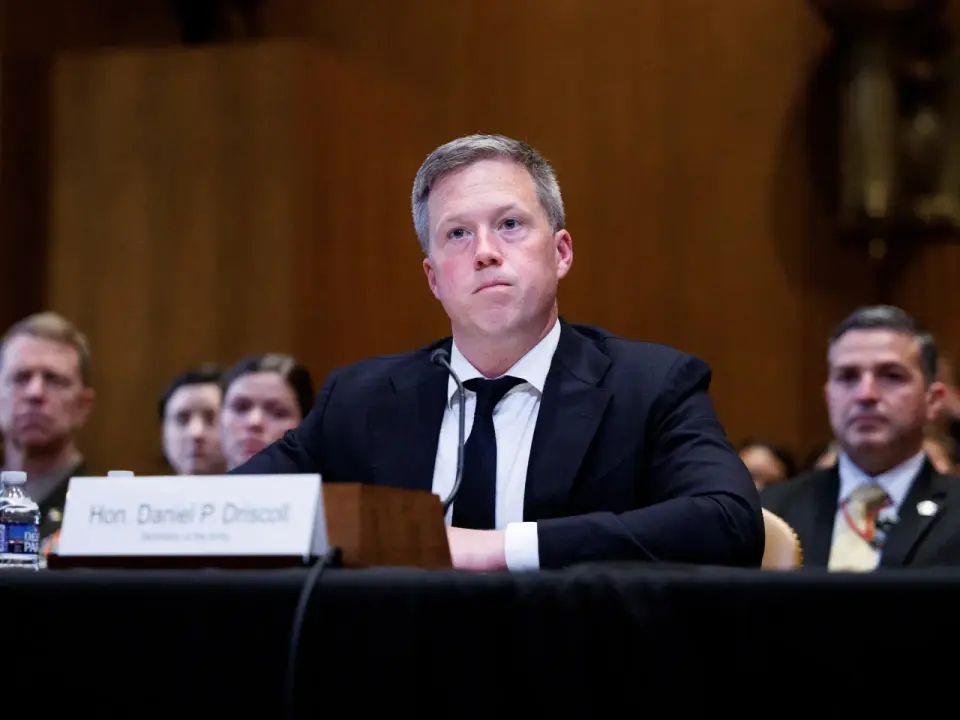
US Army Secretary Daniel Driscoll has submitted his resignation to President Donald Trump, marking the latest high-profile departure from the Pentagon under Defense Secretary Pete Hegseth. The move follows months of intense friction between the two officials, primarily centered on Hegseth’s aggressive removal of senior military leaders. While the White House praised Driscoll’s contributions to military readiness and Ukraine diplomacy, sources indicate he directly appealed to the President regarding the negative impact of these purges on the Army’s transformation and readiness. The resignation leaves the US Army without a confirmed civilian secretary, top general, or European commander, raising concerns about the service's stability.
Key points
- Driscoll submitted his resignation to President Trump, though the White House has not yet formally accepted it.
- The resignation follows months of tension with Defense Secretary Pete Hegseth, who fired several senior Army leaders, including Chief of Staff Randy George.
- Driscoll recently met with Trump to express concerns about the Army's inability to transform due to the loss of senior leadership.
- The White House praised Driscoll for advancing the 'Make America Strong Again' agenda and his role in Russia-Ukraine negotiations.
- The departure leaves the US Army without a confirmed civilian secretary, top general, or European commander, a historic low in leadership continuity.
Background
Driscoll, confirmed in February 2025, was a former law school classmate of Vice President JD Vance and a key figure in pushing for faster acquisition of cheaper weapons and drone capabilities. His tenure was notable for his involvement in diplomatic talks with Moscow and Kyiv. His exit follows a series of other high-profile departures, including Navy Secretary John Phelan and Army Chief of Staff Randy George, reflecting a broader pattern of leadership instability at the Pentagon.
How outlets are covering it
Al Jazeera and Reuters emphasize the personal friction between Driscoll and Hegseth, noting that Hegseth viewed Driscoll as a bureaucratic threat but hesitated due to his ties to Vance. Fox News highlights Driscoll's direct concerns about Hegseth blocking Army transformation by firing responsible generals. The Atlantic provides a more systemic view, noting that Driscoll’s resignation leaves the Army without a confirmed civilian leader, top general, or European commander, and that the Army now has fewer generals than at any point in recent history. The New York Times, while not focusing on Driscoll, contextualizes the Pentagon's turmoil within the broader strain of the ongoing Iran war and global economic pressures.
Why it matters
The resignation of the Army Secretary signals a deepening crisis within the US military's leadership structure. The loss of key civilian and military leaders raises questions about the Army's ability to maintain readiness and execute strategic transformations, particularly amid ongoing conflicts in the Middle East and Europe. It also highlights the potential for internal conflict within the Trump administration over military policy and personnel decisions.
What to watch
The White House is expected to formally accept Driscoll's resignation in the coming days. The administration will need to appoint a new Army Secretary and potentially fill other vacant senior military positions. The impact on the Army's readiness and transformation efforts will be closely monitored, as will the administration's response to the ongoing Iran war and global economic challenges.
- US Army Secretary Daniel Driscoll submits resignation, media reports say Al Jazeera
- Army Secretary Resigns After Clashes With Hegseth Over Firings The New York Times
- Army Secretary Dan Driscoll submits resignation to Trump Fox News
- Dan Driscoll’s Parting Shot The Atlantic
- Dan Driscoll: US army secretary resigns after months of tension BBC
Want the full story? Read the original reporting
Read on Al Jazeera