
Border Agents Arrest 10 Activists After Felling 250-Year-Old Cottonwood in Arizona
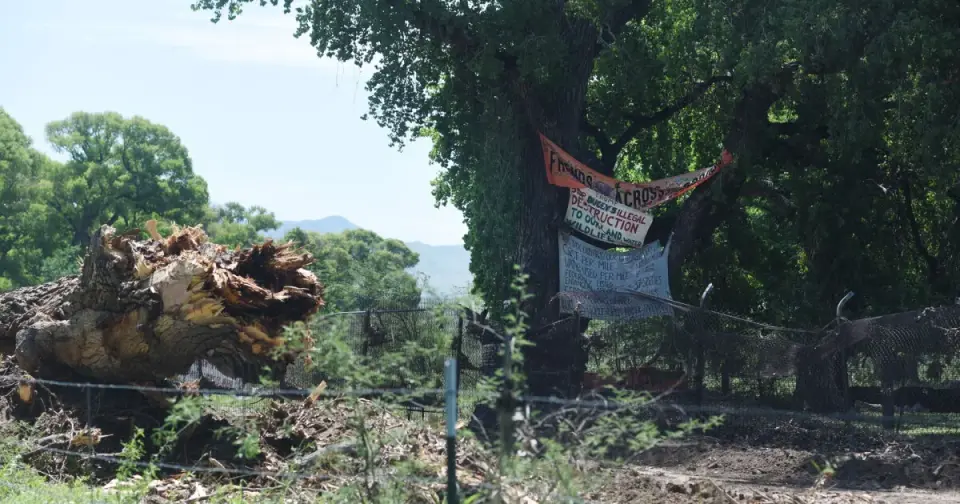
On October 5, 2026, U.S. Customs and Border Protection agents dismantled a 70-day activist encampment in Lochiel, Arizona, and felled a 250-year-old cottonwood tree to clear space for a new border wall. Approximately 200 agents entered the private property, resulting in 10 arrests and 10 citations. Protesters described the operation as violent, while CBP stated environmental monitors were present and that illegal immigration poses its own environmental risks. The tree, known as 'the Grandmother,' was the last of a grove removed for the project.
Key points
- At least 10 activists were arrested and 10 others cited during a Monday morning operation in Lochiel, Arizona, where protesters had camped for 70 days to protect a cottonwood tree.
- The tree, estimated to be up to 250 years old, was the last remaining member of a grove that had been cleared for the construction of two parallel steel bollard walls.
- Protesters reported that approximately 200 Border Patrol agents forcibly entered the camp on private land, with one tree sitter removed by crane, and described the scene as violent and brutal.
- CBP stated that environmental monitors were present before the work began and argued that illegal immigration itself creates significant environmental challenges, though they did not confirm if a warrant was obtained to enter the private property.
- The incident occurred in the San Rafael Valley, a biodiversity hotspot, as part of a broader Trump administration effort to build parallel steel walls across the Arizona-Mexico border despite record-low migrant apprehensions.
Background
This event follows months of escalating tensions regarding border wall construction in Arizona. In August 2026, contractors began work on a 30-foot wall segment despite opposition from the Tohono O'odham Nation, which sued the federal government over trespass on sacred land. By September, the New York Times reported that the proposed wall would cut through 62 miles of the tribe's reservation, threatening ancestral heritage. Additionally, in late September, a federal judge noted that construction would occur within the Roosevelt Reservation buffer zone. The current standoff in Lochiel represents the latest confrontation in this broader conflict between federal border enforcement and local environmental and tribal rights advocates.
Why it matters
The felling of the ancient cottonwood and the subsequent arrests highlight the intensifying physical and legal clashes between federal border infrastructure projects and grassroots resistance. The incident underscores the environmental and cultural costs of the $46.5 billion border wall expansion, particularly in biodiversity hotspots like the San Rafael Valley. It also raises questions about the legality of federal agents entering private property without warrants and the balance between security objectives and environmental protection, as migrant apprehensions remain at record lows.
What to watch
Protesters have stated that resistance to wall construction will continue. The arrested activists face court dates, including one scheduled for January 6, for violating closure orders. CBP is expected to continue construction of the parallel steel walls in the San Rafael Valley, while legal challenges from the Tohono O'odham Nation and other groups may seek to delay or halt further work on sacred and environmentally sensitive lands.
Want the full story? Read the original reporting
Read on KJZZ