
California enacts felony laws to block federal election interference as midterms near
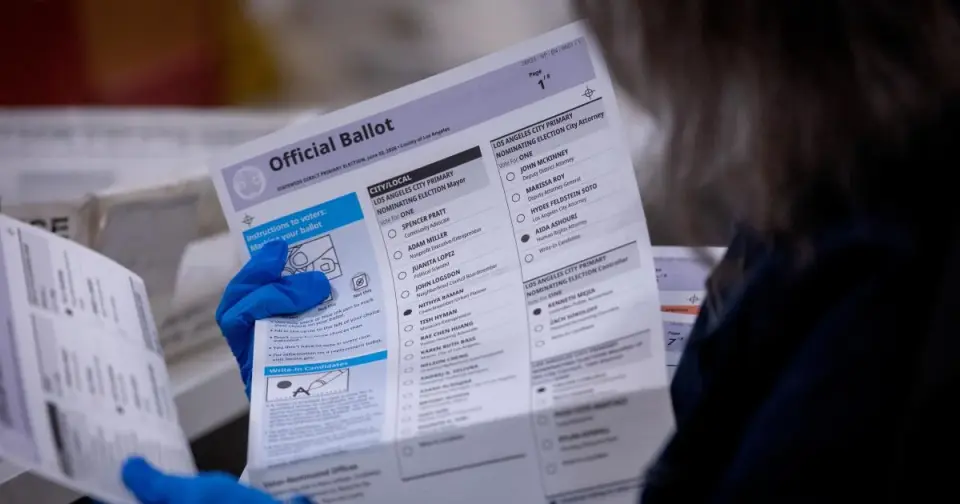
Governor Gavin Newsom signed 13 new bills to protect California’s November elections, including a felony charge for seizing ballots before results are certified. These measures respond to federal actions, such as grand jury subpoenas for voter data and a blocked postal service rule, which California officials describe as attempts to disrupt the vote. While the state strengthens legal shields, federal authorities continue to investigate alleged non-citizen voting, creating a tense standoff ahead of the midterms.
Key points
- Newsom signed 13 bills, including AB 282, which makes it a felony to seize ballots or voting technology before election certification.
- The new laws also require local officials to notify state leaders within one day of any federal warrant or subpoena involving election records.
- Los Angeles County officials are complying with federal grand jury subpoenas for voter data but suspect the information used is inaccurate.
- The U.S. Supreme Court recently blocked a Trump administration plan to use a new postal verification system for mail ballots.
- Homeland Security Secretary Markwayne Mullin claimed 190,832 non-citizens are on California rolls, a figure state officials and experts dispute as unreliable.
Background
This legislative package follows earlier tensions, including a Supreme Court decision blocking mail ballot restrictions and a controversial ballot seizure by a Riverside County sheriff. It also builds on previous federal attempts to implement a postal verification portal, which was blocked by courts but remained under development. The current actions are part of a broader national conflict over election integrity leading up to the November 3 midterms.
How outlets are covering it
The Los Angeles Times highlights the ongoing legal and logistical strain on local election officials, noting that while courts have blocked major federal initiatives, the administration continues to pursue criminal probes and public claims of fraud. KRCR emphasizes the state’s proactive legislative response, framing the new laws as a necessary shield against 'dictatorial control' and highlighting the governor’s strong stance against interference. Democracy Docket focuses on the specific legal mechanisms, such as the felony status of ballot seizures and the requirement for rapid state notification, viewing the laws as a structural defense against the type of seizure seen in Riverside County. While all sources agree on the existence of a conflict, they differ in emphasis: the Times focuses on the operational impact of subpoenas, KRCR on the political rhetoric, and Democracy Docket on the legal safeguards.
Why it matters
The new laws establish a clear legal barrier against federal interference in California’s elections, potentially deterring attempts to seize ballots or disrupt counting. However, the ongoing federal investigations and public claims of fraud may continue to create uncertainty and anxiety among voters. The outcome of this legal and political standoff will likely set a precedent for how states can defend their election processes against federal challenges in future cycles.
What to watch
California will monitor the implementation of the new laws and any further federal actions, such as additional subpoenas or attempts to access voter data. The state may also face legal challenges from the federal government regarding the new felony provisions. Voters and officials will watch for any signs of federal interference as the November 3 midterms approach, with courts likely playing a central role in resolving disputes.
- Despite court wins, California election war with Trump rages on Los Angeles Times
- Newsom Signs Bills Meant to Prevent Trump’s Interference in Midterms The New York Times
- Newsom signs 13 new laws, citing Trump interference in California elections KRCR
- California Governor Gavin Newsom signs election security bills expanding voter access, preventing interference ahead of midterms ABC7 Bay Area
- California enacts new election safeguards against potential Trump interference in midterms Democracy Docket
Want the full story? Read the original reporting
Read on Los Angeles Times