
California’s Billionaire Tax Faces Legal, Political, and Polling Headwinds
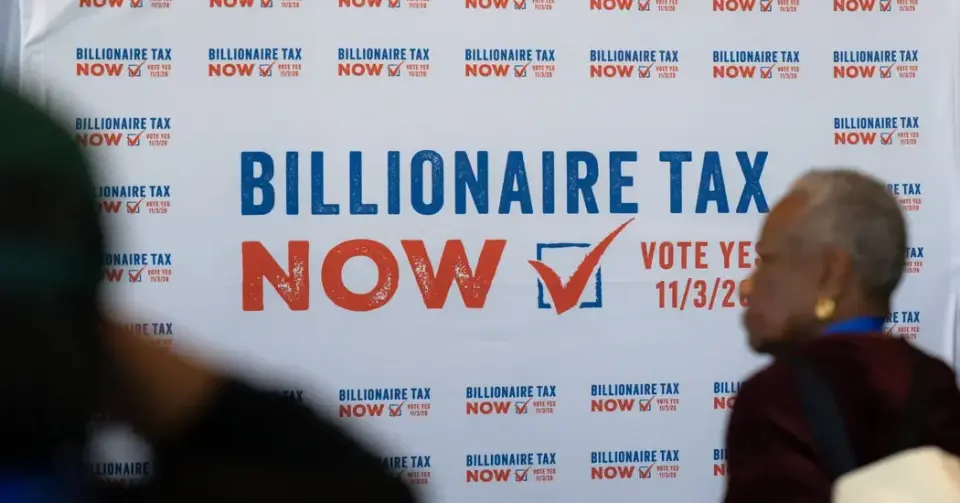
California voters will decide on November 3 whether to pass Proposition 40, a one-time 5% tax on the state's approximately 200 billionaires. Supporters, including United Healthcare Workers West, argue the measure will raise $100 billion over five years to offset federal healthcare cuts from the One Big Beautiful Bill Act. Opponents, including Governor Gavin Newsom and a coalition funded by tech billionaires, argue the tax is economically unsound and poorly targeted. Polls show the measure is currently trailing, and legal experts warn of significant implementation challenges.
Key points
- Proposition 40 proposes a one-time 5% tax on the wealth of California's billionaires, with revenue primarily directed to healthcare, followed by food assistance and education.
- Supporters, including United Healthcare Workers West, estimate the tax will generate $100 billion over five years to counteract $30 billion in annual federal funding cuts projected through 2028.
- Governor Gavin Newsom opposes the measure, arguing it dedicates almost all revenue to healthcare and neglects housing, childcare, and public safety, despite his support for a federal wealth tax.
- Opposition is heavily funded by Building a Better California, which has received over $333 million since January, including $102 million from Google co-founder Sergey Brin.
- A UC Berkeley/Los Angeles Times survey shows 50% of respondents oppose the measure, 42% support it, and 8% are undecided, with the opposition leading by a margin outside the 3% error margin.
- Voters can nullify Proposition 40 by passing Proposition 41 or 42, which would bar the state from establishing new taxes on financial assets or personal property.
Background
This vote is part of a broader national trend in 2026 where states like Colorado and Washington are also debating major tax reforms. California's Proposition 40 specifically aims to address fiscal challenges created by federal policy changes, including the One Big Beautiful Bill Act signed in July 2025, which is projected to reduce federal funding to the state by $30 billion annually through 2028. The measure has been a focal point of the midterm election cycle, with intense advertising campaigns from both supporters and opponents.
How outlets are covering it
The New York Times frames Proposition 40 as a potential stepping stone for a national wealth tax, suggesting that its passage could propel the idea into the mainstream and eventually into federal law, though it notes the path may be circuitous or a dead end. Yahoo, citing The Hill, emphasizes the internal division among California Democrats, highlighting Governor Newsom's opposition and the economic concerns raised by experts like Tracy Gordon of the Urban-Brookings Tax Policy Center. Gordon argues that while the revenue numbers are appealing, the potential for capital flight and the difficulty of measuring wealth make the tax risky. The New York Times focuses on the broader political strategy, while Yahoo details the specific economic and legal uncertainties, including the possibility of legal challenges and the impact of billionaire relocation on state revenues.
Why it matters
The outcome of Proposition 40 will determine whether California becomes the first state to impose a wealth tax, potentially setting a precedent for other states and influencing federal policy. It also has significant implications for the state's budget, particularly in addressing federal funding cuts, and could trigger capital flight if billionaires relocate to avoid the tax. The measure's success or failure will also impact the political landscape for 2028 presidential candidates, including Newsom, and the broader debate on wealth inequality in the United States.
What to watch
Voters will cast their ballots on November 3. If Proposition 40 passes, it will face likely legal challenges, particularly regarding the residency provision and the valuation of wealth. The state will also need to determine how to implement the tax, including how to measure the wealth base of billionaires with corporate shares. If it fails, the state will need to find alternative ways to address the fiscal challenges posed by federal funding cuts. The outcome will also influence the national debate on wealth taxes and potentially impact the 2028 presidential race.
- On the Ballot in California: The Prospects for a National Wealth Tax The New York Times
- Here Are The Billionaires Who Will Pay The Most If California’s Wealth Tax Passes Forbes
- Billionaire tax divides California Democrats, draws myriad questions Yahoo
- Inside the Billionaires’ War Against California’s Proposed Wealth Tax The New York Times
- If California matched Texas on taxing property, it would raise more revenue than the billionaire tax Fortune
Want the full story? Read the original reporting
Read on The New York Times