
Colorado Democrats Achieve Historic Supermajorities, Reshaping State Power Dynamics
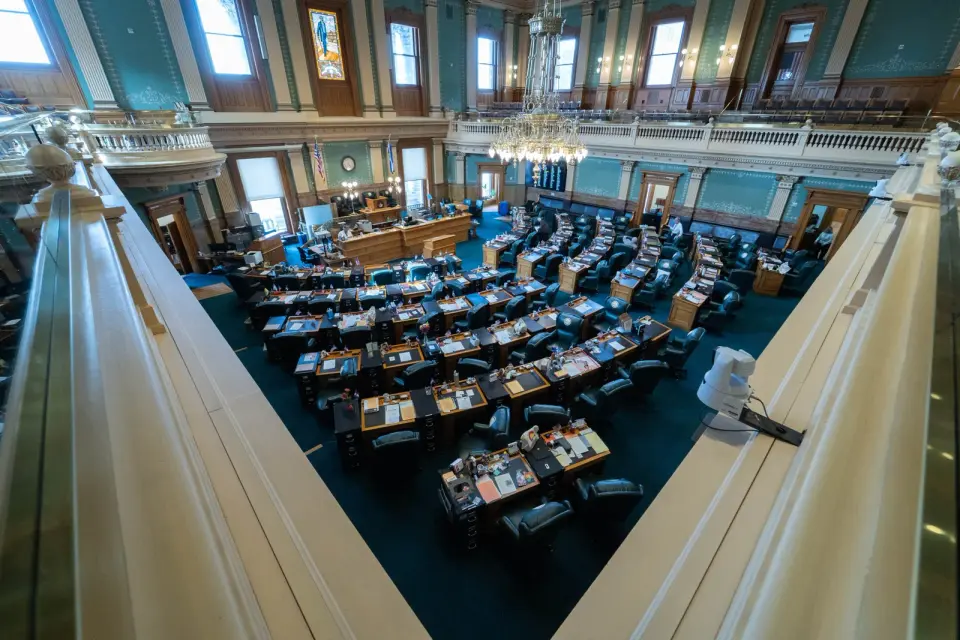
Colorado Democrats secured supermajorities in both state legislative chambers for the first time in the state’s history, flipping four seats despite lower spending than Republicans. This shift allows the legislature to override vetoes from incoming Governor Phil Weiser and place constitutional amendments on the ballot without Republican support. The victory, part of a national 'blue wave,' contrasts with GOP losses in key districts like Highlands Ranch and Colorado Springs, where Democrats won despite significant Republican out-of-pocket spending. While the new majority empowers progressive factions, it creates a potential governance challenge for Weiser, who must navigate a legislature that can bypass his veto power.
Key points
- Democrats achieved supermajorities in the Colorado House and Senate, requiring control of more than two-thirds of seats in both chambers.
- Four legislative seats were flipped by Democrats, exceeding optimistic projections, including Senate District 30 in Highlands Ranch and House District 15 in Colorado Springs.
- Republicans spent significantly more than Democrats in several key races, such as Senate District 30, where GOP groups spent $4.3 million versus $181,000 for Democrats.
- The supermajority allows the legislature to override vetoes from Governor-elect Phil Weiser and refer constitutional amendments to voters without Republican votes.
- Incoming Senate Majority Leader Dylan Roberts pledged to repair rifts between progressive and moderate Democrats, while Weiser acknowledged the challenge of governing with a supermajority.
Background
This development follows a broader national trend in the 2026 midterms, where Democrats secured historic trifectas in states like Arizona and Michigan, ending decades of Republican dominance. Colorado’s shift mirrors these patterns, with voters rejecting Republican candidates despite higher GOP spending. The state’s strict constitutional limits on taxation and previous veto threats by Governor Jared Polis had tempered progressive ambitions, but the new supermajority may force the legislature to address policy questions previously avoided. Polis, who praised the results, noted that the supermajority could undermine a governor’s influence, a dynamic he experienced during his own tenure.
How outlets are covering it
The Colorado Sun emphasizes the historic nature of the supermajority and its implications for Weiser’s governance, noting that the legislature can now override vetoes and push constitutional amendments. KUNC highlights the severity of the GOP’s losses, with strategist Kelly Maher describing the party’s state as 'non-existent' and comparing the situation to a 'nuclear winter.' She noted that Democrats now outnumber Republicans in the state house, even surpassing the number of registered Republicans. Colorado Public Radio focuses on Polis’s perspective, where he acknowledges the challenge for Weiser but frames the supermajority as a check on executive power. Polis also discussed the passage of Prop NN for education funding and the potential impact of a graduated income tax, which he opposed, arguing it could harm jobs. The sources agree on the magnitude of the Democratic victory but differ in emphasis: The Colorado Sun focuses on legislative power, KUNC on GOP decline, and CPR on the balance of power between the governor and legislature.
Why it matters
The supermajority shifts power dynamics in Colorado, allowing the legislature to override vetoes and push constitutional amendments without Republican support. This could lead to significant policy changes, particularly in areas previously blocked by Polis’s vetoes. For Weiser, the challenge lies in navigating a legislature that can bypass his authority, potentially forcing him to compromise or collaborate more closely with progressive factions. The outcome also reflects a broader national trend of Democratic gains, suggesting a shift in voter priorities away from Republican candidates. However, the long-term impact depends on how the new majority addresses policy questions and manages internal divisions between progressives and moderates.
What to watch
The House will elect its leaders on Nov. 6, following the Senate’s selection of Dylan Roberts as majority leader. Weiser will announce his transition team in the coming weeks, with Polis’s administration preparing to collaborate on a smooth handover. The legislature may begin addressing policy questions previously avoided, such as taxation and social policies, leveraging its supermajority power. Voters will also decide on a graduated income tax measure, which could significantly impact state revenue and job markets. The outcome of these measures will shape the state’s fiscal and political landscape in the coming years.
- Colorado Democrats just won supermajorities in both the state House, Senate for the first time ever. Here’s how. The Colorado Sun
- The Colorado Republican caucus is officially the Republican carcass (Opinion) The Denver Post
- Midterm 'blue tsunami' drowns Colorado GOP KUNC
- Polis on Democrats’ big night, CoCo and why he hopes mercy will be his legacy Colorado Public Radio
- Colorado Republicans chairman speaks on GOP losses, rebuilding party 9NEWS
Want the full story? Read the original reporting
Read on The Colorado Sun