
Colorado voters likely approve Amendment 87, ending flat income tax in major policy shift
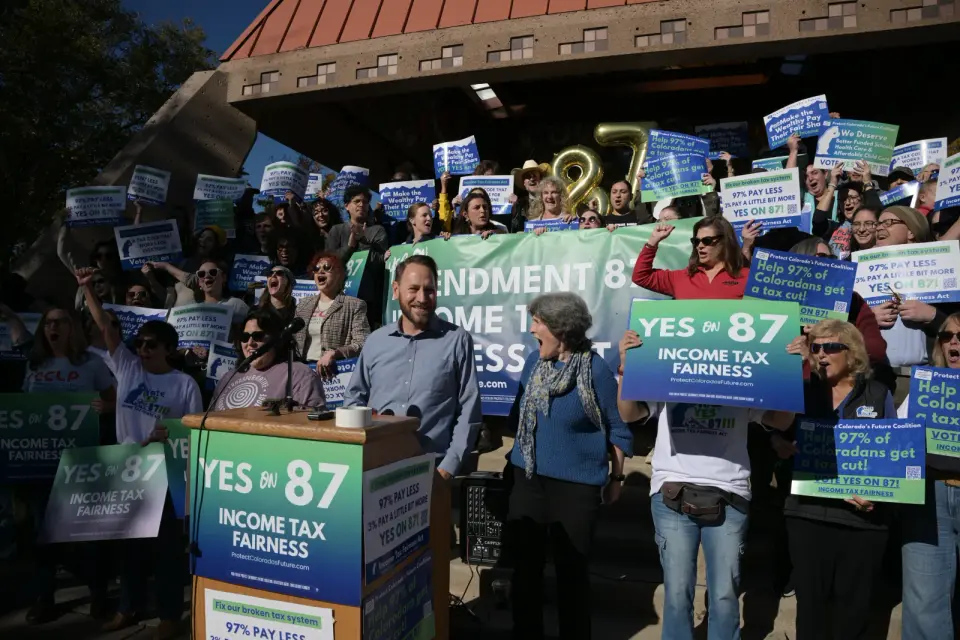
Supporters of Amendment 87 declared victory on November 5, 2026, after vote counts showed the measure leading by approximately 2.4 percentage points. The Associated Press had not yet officially called the race, but the margin expanded as results from left-leaning Denver and Boulder counties were tallied. If passed, the amendment abolishes Colorado’s flat 4.4% income tax, replacing it with a graduated system that raises rates for households and businesses earning over $500,000 annually while lowering taxes for most residents. The measure is projected to generate $2 billion in additional state revenue next year, potentially alleviating recent budget deficits. Opponents, including the Colorado Chamber of Commerce and former Governor Jared Polis, argued the change would harm business competitiveness. A competing measure, Proposition 136, which sought to cap the income tax rate at 4.4%, was trailing by nearly 5.5 percentage points and appeared headed for defeat.
Key points
- Amendment 87 supporters declared victory on November 5, 2026, with support at 51.2% as of 5:35 p.m. MST, a 2.4 percentage point lead over 'no' votes.
- The Associated Press had not officially called the measure’s passage, but the margin widened as results from Denver and Boulder counties, where the measure won by 2-to-1 margins, were counted.
- The amendment repeals the constitutional requirement for a flat income tax, replacing it with a graduated system that increases rates for earners over $500,000 and cuts taxes for the majority of Coloradans.
- Proponents, including the Bell Policy Center, stated the measure would generate $2 billion in new revenue for education, healthcare, and childcare, addressing budget deficits that forced cuts to Medicaid and other services.
- Opponents, including the Colorado Chamber of Commerce and outgoing Governor Jared Polis, warned the tax increases would make Colorado less competitive and force businesses to cut wages or hiring.
- Proposition 136, a competing measure backed by Advance Colorado that would have capped the income tax rate at 4.4%, was trailing by nearly 5.5 percentage points and appeared likely to fail.
Background
Colorado voters faced a pivotal choice in the 2026 midterms regarding the state’s tax structure, as detailed in earlier coverage from October 2026. Amendment 87 proposed replacing the flat 4.4% income tax with a graduated system to address significant budget deficits that had forced cuts to public services. The measure faced opposition from business groups and the governor, who cited concerns over economic impacts and competitiveness. The campaign also involved legal challenges and significant spending by dark-money conservative groups, including Colorado Dawn and Common Sense America, which supported Proposition 136 to block the tax hikes. The outcome of these measures would determine the state’s fiscal direction for the coming decade, potentially interacting with Proposition NN, which allows the state to keep excess tax revenue for K-12 education.
How outlets are covering it
The Denver Post emphasized the political significance of the victory for liberal groups, noting that supporters overcame millions of dollars in conservative spending, court challenges, and opposition from top-ranking Democrats, including outgoing Governor Jared Polis and Gov.-elect Phil Weiser. The outlet highlighted the measure as a 'seismic change' to state fiscal policy, with Bell Policy Center president Chris deGruy Kennedy calling it a signal that Colorado’s economy would support all working people. The Colorado Sun focused on the tactical conflict between Amendment 87 and Proposition 136, noting that while 136 was too close to call late on election night, it was trailing 87. The Sun explained that 136 was designed to block 87 by capping the tax rate at 4.4%, but if both passed, the one with the most votes would take precedence. The Sun also noted that conservative groups spent hundreds of thousands of dollars to get 136 on the ballot, arguing it was necessary to prevent tax hikes, while liberal groups argued 136 was designed to confuse voters. Both outlets agreed that the outcome would significantly alter the state’s budget environment, with the Denver Post highlighting the potential for $2 billion in new revenue and the Colorado Sun noting the conflict between the two measures.
Why it matters
The passage of Amendment 87 would mark the most significant change to Colorado’s income tax policy in over a generation, replacing a flat tax with a graduated system that raises rates for high earners and cuts taxes for most residents. This shift could generate $2 billion in additional revenue, potentially resolving budget deficits that have forced cuts to Medicaid and other public services. The outcome also reflects a broader political realignment in Colorado, as liberal groups overcame opposition from conservative groups and even some Democrats, including the governor and governor-elect. The measure’s success could influence future state budgets and policy decisions, particularly regarding education, healthcare, and childcare. Additionally, the defeat of Proposition 136 would remove a potential cap on income tax rates, allowing the legislature more flexibility to adjust taxes in the future. The result also signals a shift in voter priorities, with a majority supporting increased taxes on high earners to fund public services, despite warnings from business groups about potential economic impacts.
What to watch
The Associated Press is expected to officially call the passage of Amendment 87 as the final votes are counted, particularly from left-leaning Denver and Boulder counties. If passed, the measure will take effect, replacing the flat income tax with a graduated system and generating approximately $2 billion in additional revenue for the next fiscal year. The legislature will then decide how to allocate this revenue, with proponents advocating for spending on education, healthcare, and childcare. Proposition 136 is expected to fail, as it was trailing by nearly 5.5 percentage points. If both measures had passed, courts would have determined which took precedence, but the current results suggest Amendment 87 will prevail. The outcome will also influence the state’s budget environment, potentially alleviating recent deficits and allowing for increased spending on public services. Future debates may focus on the implementation of the new tax brackets and the impact on businesses and high earners.
- Amendment 87 supporters declare victory for major rewrite of Colorado’s tax code, affecting all taxpayers The Denver Post
- Colorado's blue wave delivers historic income tax overhaul, campaign says Axios
- Group behind Colorado graduated income tax ballot measure claims victory Colorado Public Radio
- Election results: Here's how Coloradans voted on dueling income tax measures 9News
- Proposition 136, which would cap Colorado’s income tax rate at 4.4%, is too close to call The Colorado Sun
Want the full story? Read the original reporting
Read on The Denver Post