
Corruption Surges to Second-Place Issue in 2026 Midterms, Harris Poll Finds
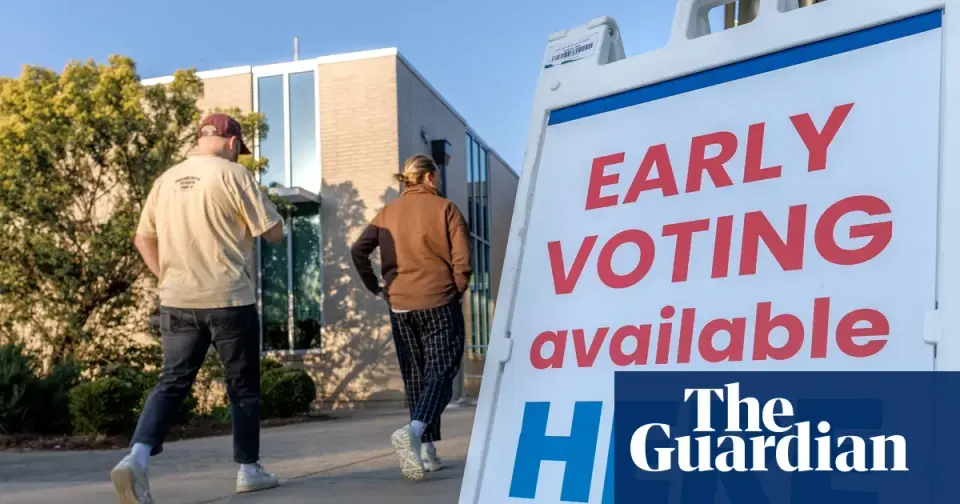
A new Harris Poll indicates that government corruption has become the second most critical issue for US midterm voters, trailing only the cost of living. Nearly 90% of Americans view corruption as a significant problem, with 76% believing officials prioritize personal enrichment over the public good. While economic concerns remain paramount, voters increasingly link affordability issues to perceived ethical failures in Washington. The poll highlights a sharp partisan divide, with 40% of voters attributing greater corruption to Republicans compared to 21% for Democrats. This sentiment is driven by recent high-profile conflicts of interest involving the Trump administration, including private donations for White House renovations and family business ventures. Independents, a key demographic in swing states, are particularly likely to view Republicans as having a larger corruption problem. Despite record-breaking campaign spending by ultra-wealthy donors, voters are demanding policy changes, such as limiting lobbyist influence, to address both corruption and rising prices.
Key points
- The Harris Poll, conducted October 22-24, 2026, found that 89% of Americans consider government corruption a problem, defined as officials prioritizing personal or donor interests over the public.
- Corruption is the second most important voting issue at 12%, behind the cost of living at 36%, but ahead of immigration (9%) and healthcare (7%).
- 76% of voters believe elected officials care more about enriching themselves than improving the economy for ordinary people.
- 40% of voters, including 29% of Republicans, say Republicans have a bigger corruption problem than Democrats; 21% say Democrats have the bigger problem.
- Independents are more likely to blame Republicans for corruption (34%) than Democrats (13%), with 42% saying both parties are equally corrupt.
- 32% of voters support limiting the influence of companies and lobbyists on government decisions as a top policy to address high prices.
Background
Recent polling in late October 2026 has consistently shown that economic anxiety and corruption are the primary drivers of voter discontent ahead of the November 3 midterms. Earlier surveys indicated that while Democrats were gaining ground on specific policy issues, overall trust in both parties remained low, with only 20% of voters feeling the Democratic Party was effectively focused on helping them. In key battleground states like Texas, the corruption narrative has become central to Senate races, with Democrats leveraging allegations of financial scandals against Republican candidates. The current surge in anti-corruption sentiment follows nearly two years of the Trump administration's second term, during which significant federal workforce reductions and controversial private funding for government projects have intensified scrutiny of ethical standards in Washington.
How outlets are covering it
The Guardian’s Harris Poll provides a national quantitative baseline, showing corruption as a top-tier issue alongside cost of living. The Atlantic’s David A. Graham contextualizes this shift, noting that while 'kitchen table' economic issues have dominated the narrative, corruption is now 'vaulting' to the top of voter concerns, challenging the strategy of ignoring Trump’s scandals. The Cook Political Report offers a nuanced view, suggesting that while broad majorities in battleground states like Texas, Ohio, and Iowa rate fighting corruption as extremely important, the definition of corruption varies by political identity. This divergence implies that Democrats may succeed by aligning their anti-corruption messaging with voters' specific definitions of ethical failure, rather than relying on a monolithic narrative. All three sources agree that corruption is no longer a peripheral issue but a central determinant of voter behavior in the 2026 midterms.
Why it matters
The rise of corruption as a top voting issue signals a fundamental shift in how Americans evaluate political leadership, moving beyond policy outcomes to ethical conduct. This trend could reshape congressional dynamics, as voters in swing states may prioritize candidates perceived as less susceptible to donor influence. The poll’s findings suggest that the current administration’s conflicts of interest are having a measurable impact on electoral viability, potentially contributing to Democratic gains in key races. Furthermore, the disconnect between Wall Street’s record highs and everyday Americans’ economic hardship is fueling a demand for structural reforms, such as limiting lobbyist influence, which could influence legislative agendas regardless of which party controls Congress.
What to watch
Voters will cast ballots on November 3, 2026, to determine control of Congress. The outcome will likely hinge on how effectively candidates address the dual concerns of cost of living and corruption. In California, voters will decide on a ballot measure for a one-time 5% wealth tax on billionaires, a test case for broader anti-wealth sentiment. Campaign spending is expected to continue at record levels, with major donors like Michael Bloomberg and Donald Trump’s PACs injecting hundreds of millions into the race. Post-election, the new Congress will face pressure to implement policies that limit corporate influence, as 32% of voters support such measures as a primary solution to high prices.
- Government corruption a top issue for US midterm voters, exclusive poll finds The Guardian
- Corruption Catches Up to MAGA The Atlantic
- Democrats push anti-corruption message in midterm homestretch Yahoo
- How corruption became a top voter issue in the US midterms Financial Times
- Voters Are Furious About Corruption. But What Does ‘Corruption’ Actually Mean to Them? Cook Political Report
Want the full story? Read the original reporting
Read on The Guardian