
Democrats Face Strategic Dilemma: Chase Quick Wins or Secure Long-Term Gains?
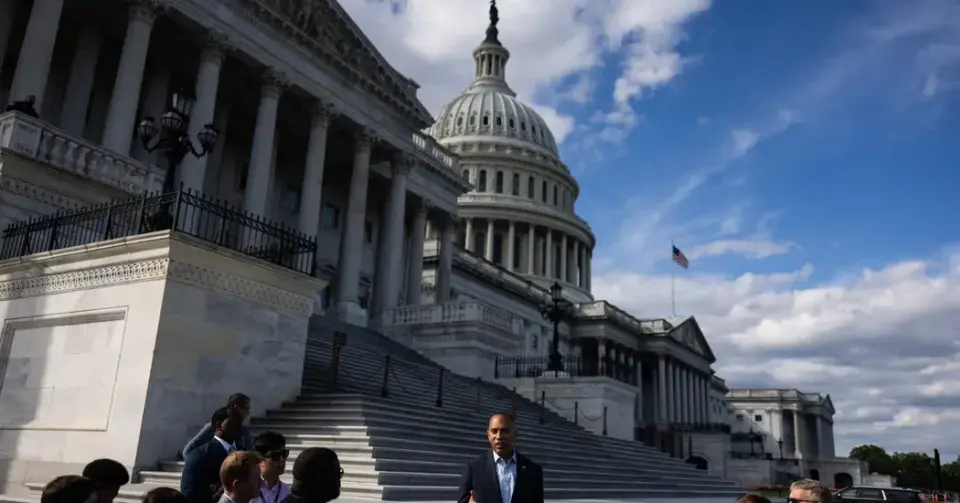
With four weeks left until the 2026 midterms, Democrats are grappling with a severe budget shortfall compared to Republicans, forcing a strategic choice between chasing numerous low-cost wins or investing heavily in a few high-value districts to secure long-term control. The party is making its largest-ever financial commitment to unseat Pennsylvania Representative Brian Fitzpatrick, a rare Republican survivor in a district President Trump lost in 2024. While Democrats currently hold zero seats in districts Trump won by double digits, strategists debate whether to 'rent' seats through cheaper races or 'own' them through expensive, durable victories. This financial imbalance, with Republicans holding a significant cash advantage, complicates the Democratic push to reclaim the House majority, a goal that would empower likely Speaker Hakeem Jeffries to govern the party and potentially investigate the Trump administration.
Key points
- Democrats are facing a critical strategic decision in the final four weeks of the 2026 midterms: whether to allocate limited funds to numerous low-cost races for quick numerical gains or to invest heavily in a few high-cost, high-value districts for long-term control.
- The Democratic Congressional Campaign Committee is making its biggest move in years against Pennsylvania Representative Brian Fitzpatrick, allocating $900,000 to his race and reserving over $6 million in television time through the House Majority PAC, despite the district's high cost and previous difficulty.
- Republicans hold a substantial financial advantage, with national committee cash and MAGA-aligned super PACs totaling significantly more than Democratic resources, limiting Democratic flexibility in targeting multiple battlegrounds.
- Democrats currently hold zero House seats in districts where President Trump won by double digits in 2024, highlighting the challenge of expanding their map in strongly Republican areas.
- Winning the House majority is crucial for Representative Hakeem Jeffries, the likely next Speaker, to effectively govern the party and potentially initiate investigations into the Trump administration, including issues related to ICE tactics and the White House ballroom.
Background
The 2026 midterms are seen as a critical test of President Trump's popularity, with his approval rating dropping to approximately 37% in early October, down from just over 50% at the start of his second term. Previous analyses indicated that Democrats were roughly 6-10 points ahead of their 2024 presidential performance in House races, potentially translating to a majority of 221-214 or 230-205 depending on the national swing. However, the financial gap between the parties, with Republicans holding about $233.4M in national-committee cash versus Democrats' $130.4M, plus significant MAGA Inc. reserves, has constrained Democratic strategy. The party has also faced internal divisions, such as the backlash over Representative Jared Golden's vote with Republicans on a procedural rule, which highlighted tensions over strategic alignment.
How outlets are covering it
The New York Times emphasizes the strategic dilemma Democrats face in allocating limited funds, highlighting the tension between 'renting' seats through cheaper races and 'owning' them through expensive, durable victories. It focuses on the specific case of Pennsylvania's First District as a test of this strategy. The BBC provides a broader overview of the midterms, noting the low approval rating for President Trump and the potential for Democrats to gain control of either chamber, which would allow them to investigate the administration. Vox focuses on the post-election implications, suggesting that Democrats' day-one agenda will focus on affordability, healthcare, and investigations, but that specific details are being kept vague to present a unified front. The sources agree on the financial imbalance but differ in emphasis: NYT on strategic allocation, BBC on the broader political stakes, and Vox on the legislative agenda if Democrats win.
Why it matters
The outcome of the 2026 midterms will determine whether Democrats can check the power of the Trump administration by gaining control of at least one chamber of Congress. A Democratic victory in the House would empower Representative Hakeem Jeffries to govern the party and potentially initiate investigations into the administration, while a Republican hold would allow Trump to continue his domestic agenda with fewer legislative obstacles. The strategic decisions made by Democrats in the final weeks of the campaign will also shape the party's long-term political strategy, influencing which seats they can hold in future elections and their ability to pass legislation in 2028.
What to watch
In the coming weeks, Democrats will continue to make day-by-day and district-by-district decisions on where to allocate their limited funds, balancing the need to win the majority of House seats with the goal of securing durable, long-term control. The outcome of the Pennsylvania First District race will be a key indicator of the effectiveness of their strategy. If Democrats win the House, they will likely focus on affordability, healthcare, and investigations into the Trump administration, while Republicans will work to maintain their control and support Trump's agenda. The results will also influence speculation about the 2028 presidential nomination, as the midterms will serve as a measure of public sentiment toward the current administration.
- Short on Cash, Democrats Weigh Big Bets to Unseat Entrenched Republicans The New York Times
- What are the US midterms? A simple guide BBC
- Democrats are poised to take the House. Then what? Vox
- Midterm Elections: Who Is Winning the Race for Congress? Latest Data The New York Times
- In final weeks, campaign spending ramps up as competitive electoral map comes into focus NPR
Want the full story? Read the original reporting
Read on The New York Times