
DOJ defends Trump's media ban, citing national security threats from ballroom and Iran war coverage
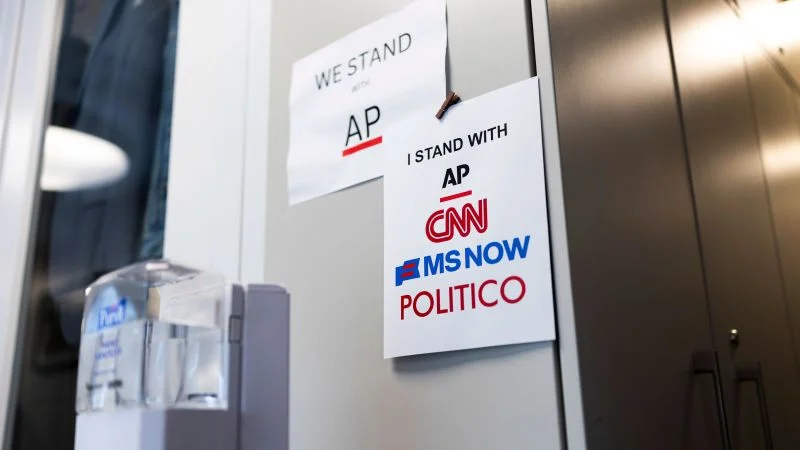
The Justice Department filed a 19-page legal brief on Tuesday defending President Trump's ban on CNN, MS NOW, and Politico from the White House. The filing argues that the outlets violated standards of professionalism by publishing sensitive or classified information, specifically regarding the construction of the White House ballroom and the ongoing Iran war. The DOJ asserts that access to the White House is a privilege, not a right, and that the ban is lawful under the First Amendment. The three outlets sued the administration on Monday, claiming the ban violates their First and Fifth Amendment rights. A hearing on a temporary restraining order is scheduled for Wednesday before U.S. District Judge Timothy Kelly. Major TV networks have suspended pool coverage in solidarity, and the outlets' legal team is citing recent D.C. Circuit rulings on viewpoint neutrality in public forums.
Key points
- The Justice Department argues that CNN, MS NOW, and Politico breached 'standards of professionalism and decorum' by publishing sensitive or classified information.
- The filing specifically cites reporting on the White House ballroom construction and the Iran war as threats to national security.
- The three outlets sued the administration on Monday, alleging violations of the First and Fifth Amendments.
- U.S. District Judge Timothy Kelly has scheduled a hearing on a temporary restraining order for Wednesday afternoon.
- Major television networks, including NBC, ABC, CBS, and Fox, have suspended White House TV pool coverage in solidarity with the banned outlets.
- Secretary of State Marco Rubio defended the ban on 'TODAY,' stating that the outlets are not being closed or arrested, but are simply not allowed to work from the White House workspace.
Background
This dispute follows a broader pattern of tension between the Trump administration and the press, including a 2018 case where the administration revoked the hard pass of CNN correspondent Jim Acosta. The current ban is described by some as the most extreme instance of blocking access for news organizations whose coverage the president dislikes. The outlets' lawsuit argues that the ban retaliates against protected newsgathering and speech, while the administration maintains that the White House is a nonpublic forum where access can be restricted.
How outlets are covering it
The Justice Department and the White House, as reported by CNN, The New York Times, and Deadline, argue that the ban is a lawful exercise of presidential authority to protect national security and maintain decorum. They emphasize that access to the White House is a privilege, not a right, and that the outlets' reporting on the ballroom and Iran war constitutes a threat. In contrast, the three banned outlets, as reported by NBC News and Deadline, argue that the ban is a direct assault on the First Amendment and a violation of due process. They contend that the ban is retaliatory and that the White House grounds constitute a nonpublic forum where speech regulations must be viewpoint neutral. Secretary of State Marco Rubio, as reported by NBC News, downplayed the severity of the ban, stating that the outlets are not being closed or arrested, but are simply not allowed to work from the White House workspace. The outlets' legal team is also highlighting a recent D.C. Circuit decision on access to the Capitol steps, which ruled that speech regulations in nonpublic forums must be viewpoint neutral.
Why it matters
This case sets a significant precedent for the limits of presidential power over press access and the application of the First Amendment in nonpublic forums. The outcome of the temporary restraining order hearing could determine whether the ban is upheld or struck down, potentially affecting the ability of the press to cover the White House and other government activities. The case also highlights the ongoing tensions between the Trump administration and the media, and the potential for further restrictions on press access in the future.
What to watch
The next key step is the hearing on Wednesday afternoon before U.S. District Judge Timothy Kelly, who will decide whether to grant a temporary restraining order to the three outlets. Trump has already signaled that he expects the judge to rule in the networks' favor and plans an appeal. The outcome of the hearing could have significant implications for the press's ability to cover the White House and other government activities, and could set a precedent for future cases involving press access and the First Amendment.
- Defending reporter ban, Justice Department argues stories on Trump’s ballroom project, Iran war threaten national security CNN
- White House Defends Trump’s Ban on CNN, MS NOW and Politico in Court Filing The New York Times
- White House launches 'Trump TV' after ban on major news outlets NPR
- Rubio defends Trump’s banning media organizations, arguing there aren’t ‘soldiers kicking down the doors’ of the outlets NBC News
- Trump Insists White House Ban On CNN, MS Now Is Constitutional Deadline
Want the full story? Read the original reporting
Read on CNN