
DOJ Memo Extends Executive Privilege to Trump's Private Advisers
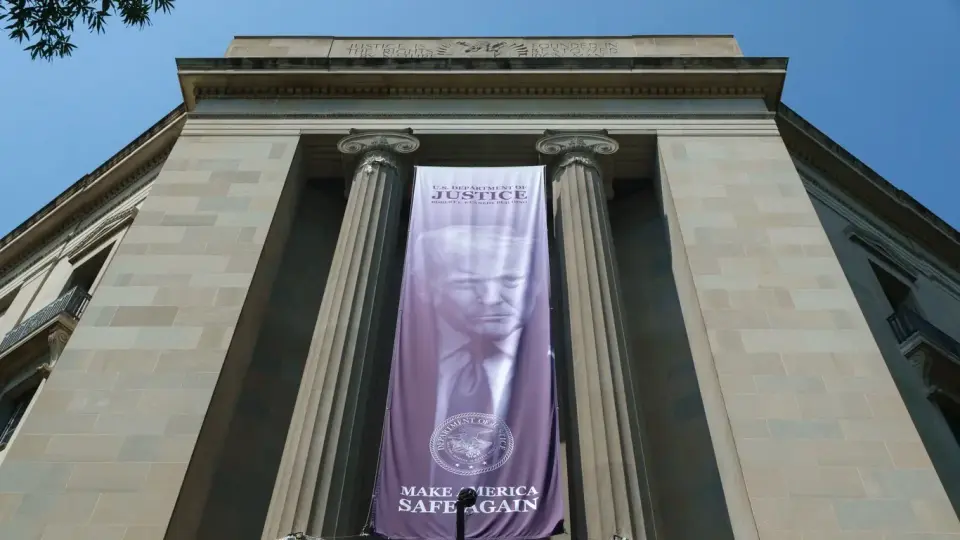
The Department of Justice’s Office of Legal Counsel (OLC) issued a 21-page opinion on Monday, August 11, 2026, asserting that executive privilege protects confidential communications between President Donald Trump and private advisers who are not government employees. The memo, signed by Assistant Attorney General T. Elliot Gaiser, argues that this protection is essential for candid advice and applies when communications relate to official decision-making. This move is seen as a preemptive shield against potential congressional investigations should Democrats win the November midterms. The opinion also directly impacts an ongoing case involving Trump’s personal counsel, Boris Epshteyn, who is fighting a subpoena from the American Bar regarding the administration’s deals with law firms. Legal experts note that while the OLC has historically held broad views on privilege, this specific application to non-governmental figures is unprecedented in formal rulings and may face significant judicial resistance.
Key points
- The OLC concluded that executive privilege extends to private advisers, not just government officials, to ensure the president receives honest advice without fear of public disclosure.
- The privilege applies only if three conditions are met: the communication relates to official presidential decision-making, involves the president or his direct advisers, and remains confidential.
- The memo was released hours after Todd Blanche was sworn in as Attorney General, signaling a shift toward aggressive legal protections for the administration.
- The ruling is currently being applied to shield Boris Epshteyn, Trump’s senior personal counsel, from a subpoena issued by the American Bar Association regarding the administration’s actions against law firms.
- Legal scholars, including Jonathan Shaub, argue that while the OLC has long held this view, courts have never accepted such a broad interpretation, and the memo may not survive judicial scrutiny.
Background
This development follows a series of legal battles involving the Trump administration’s handling of records and subpoenas. In July 2026, an appeals court upheld the contempt conviction of Peter Navarro, rejecting his claim that executive privilege protected him from testifying before the January 6 committee. Additionally, in April 2026, the OLC declared the Presidential Records Act unconstitutional, a stance that was subsequently rejected by a federal judge. The current memo represents a further expansion of the administration’s legal strategy to limit transparency and congressional oversight.
How outlets are covering it
Axios and CNN both highlight the memo’s potential to hinder future Democratic investigations, with Axios emphasizing the 'significant weapon' it provides to deflect probes into private parties. CNN notes that the memo formalizes a stance that previous administrations had not publicly laid out so comprehensively. The New Republic frames the memo as a betrayal of promises made by Attorney General Todd Blanche to GOP senators, arguing it reflects a lack of interest in accountability. CBS News focuses on the technical details of the 21-page opinion and its immediate application to the Epshteyn case. While all sources agree on the memo’s content, they differ in tone: Axios and CNN present it as a legal hurdle, The New Republic criticizes it as a political maneuver, and CBS News reports it as a procedural development. Legal experts cited by Axios and CNN, such as Jonathan Shaub, express skepticism that courts will accept the OLC’s theory, noting that the privilege is limited to official duties and may not cover personal matters like Trump’s cryptocurrency empire.
Why it matters
The memo sets a precedent that could significantly limit the ability of Congress to investigate the president’s interactions with outside entities, potentially shielding a wide network of private advisers from scrutiny. It also provides a legal basis for the administration to resist subpoenas in ongoing cases, such as the American Bar Association’s challenge to the administration’s treatment of law firms. If upheld by courts, this could reshape the balance of power between the executive and legislative branches, particularly if Democrats gain control of Congress in the upcoming midterms.
What to watch
The immediate next step is the outcome of the American Bar Association’s subpoena challenge involving Boris Epshteyn, where the DOJ is using the new privilege arguments to quash the subpoena. Additionally, the memo’s impact will be tested if Democrats win the November midterms and launch investigations into the administration’s actions. Legal experts will watch to see if courts accept the OLC’s broad interpretation of executive privilege or reject it as an overreach. The administration’s legal apparatus is also undergoing changes, with Will Scharf set to take over as White House counsel, which may influence future privilege claims.
- Trump's DOJ lays groundwork for subpoena fights with a Democratic Congress axios.com
- Trump DOJ formally stakes out bold claim that presidential advisers outside government are protected by privilege CNN
- DOJ opinion extends executive privilege to president’s communications with private advisers The Hill
- Surprise! Todd Blanche Immediately Breaks His Promises to GOP Senators The New Republic
- DOJ legal office says Trump's outside advisers can be shielded by executive privilege CBS News
Want the full story? Read the original reporting
Read on axios.com