
DOJ official demands Blumenthal preserve records in White House ballroom probe
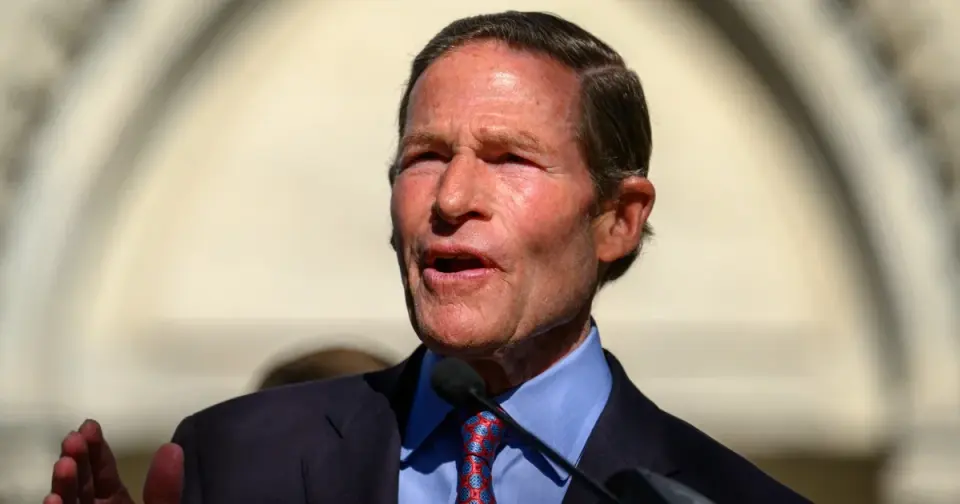
U.S. Attorney Aaron Reitz has formally demanded that Sen. Richard Blumenthal preserve all documents related to his investigation into private donors for the White House ballroom. Reitz alleged that Blumenthal’s inquiry violates federal statutes protecting citizens' rights to associate with the president, threatening 'significant legal consequences' if the senator does not comply by November 18. Blumenthal rejected the demand as an unconstitutional attempt to intimidate Congress, issuing his own preservation order to Reitz. The dispute highlights escalating tensions between the Trump administration and the newly empowered Democratic majority in Congress, which has promised aggressive oversight of executive branch spending and corporate dealings.
Key points
- U.S. Attorney Aaron Reitz sent a letter to Sen. Richard Blumenthal on Wednesday, citing federal conspiracy and deprivation of rights statutes to demand preservation of records related to the ballroom donor inquiry.
- Reitz characterized Blumenthal’s investigation as an 'abuse of power' and a threat to citizens' First Amendment rights, specifically targeting those who donated to the approximately $400 million White House project.
- Blumenthal responded by vowing to 'vigorously pursue' investigations into taxpayer misuse, calling the DOJ action a baseless attempt to weaponize the department against Congress.
- The White House and Acting Deputy Attorney General Trent McCotter defended the move, stating that Congress cannot infringe on the speech and association rights of Americans, including philanthropic activities.
- Reitz gave Blumenthal a deadline of November 18 to confirm compliance, while Blumenthal issued a counter-demand for Reitz to preserve all communications regarding the decision to send the letter.
Background
This conflict arises against the backdrop of a historic Republican midterm defeat, where Democrats secured control of both chambers of Congress. Prior to this escalation, a leaked spreadsheet revealed that tech giants like Microsoft and Amazon had contributed to a $333 million fundraising effort for the ballroom, bypassing standard campaign finance disclosures. President Trump had previously toured the construction site and defended the project despite criticism, while the Supreme Court had ruled in August that the ballroom could proceed indefinitely. The current dispute represents a significant shift in power dynamics, with the new Democratic leadership promising accountability for executive branch actions.
How outlets are covering it
NBC News and Yahoo emphasize the constitutional clash, framing Reitz’s letter as an unprecedented attempt by the Justice Department to target a sitting senator for performing oversight duties. Democracy Docket highlights the broader pattern of threats against Democratic lawmakers, noting that Reitz has previously faced backlash for threatening voters, and frames this as part of a wider effort to suppress oversight. While all sources agree on the core facts of the letter and Blumenthal’s response, they differ in emphasis: NBC and Yahoo focus on the specific legal statutes cited and the immediate back-and-forth, whereas Democracy Docket contextualizes the event within the administration’s broader strategy of intimidating congressional investigators. No source disputes the content of the letters, but they vary in their characterization of the DOJ’s motives, with Blumenthal’s camp viewing it as an attack on transparency and the DOJ viewing it as a defense of First Amendment rights.
Why it matters
This incident signals a potential legal and political confrontation between the executive branch and a newly empowered Congress. If the DOJ pursues legal action against a senator for conducting an oversight inquiry, it could set a precedent for chilling congressional investigations into executive spending and corporate influence. The outcome will test the limits of executive power and the scope of congressional oversight in the second Trump term, potentially influencing how future administrations interact with a hostile Congress.
What to watch
Blumenthal must respond to Reitz’s demand by November 18 to confirm that he has preserved the requested materials. The Justice Department may proceed with further legal actions if Blumenthal does not comply, while Blumenthal’s counter-demand for Reitz to preserve records could lead to a parallel legal dispute. The new Democratic leadership in Congress is expected to continue its oversight agenda, potentially escalating the conflict if the administration continues to threaten legal action against lawmakers.
- U.S. attorney demands Sen. Richard Blumenthal preserve documents from his inquiry into White House ballroom NBC News
- U.S. attorney threatens Democratic senator with prosecution for conducting oversight Democracy Docket
- DOJ says Blumenthal ballroom investigation intimidating Trumpers Washington Examiner
- Sen. Blumenthal asked to preserve documents regarding White House ballroom inquiry Yahoo
Want the full story? Read the original reporting
Read on NBC News