
El-Sayed apologizes for synagogue attack remarks as Michigan Democrats brace for convention
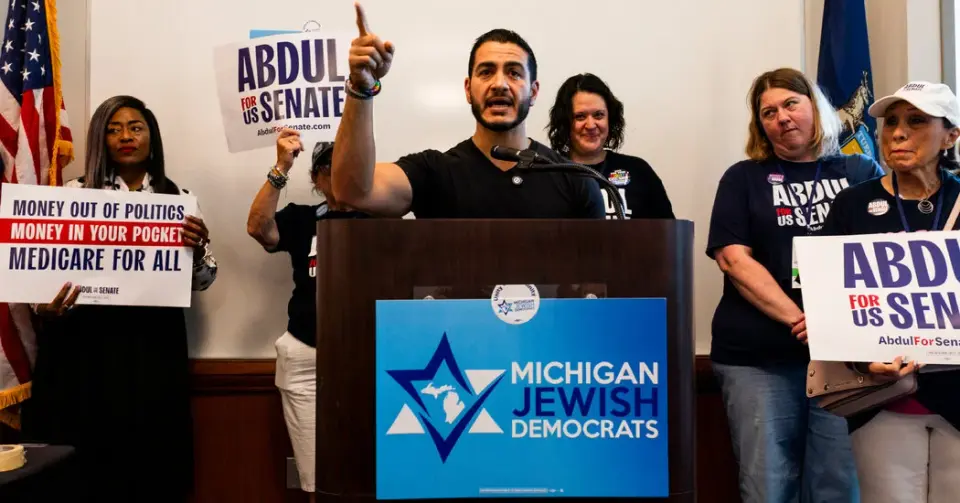
Michigan Democratic Senate nominee Dr. Abdul El-Sayed apologized to Jewish Democrats on August 29 for a March comment describing a synagogue attack as an act by 'hurt people.' The apology follows intense backlash and security concerns that led Attorney General Dana Nessel to skip the state convention. While El-Sayed acknowledged his mistake, critics argue he has not fully withdrawn the statement, fueling fears that he is excusing domestic terrorism. The Michigan Democratic Party has promised strict security and zero tolerance for harassment at the event, though tensions remain high among Jewish voters who are split between supporting El-Sayed and the Republican nominee, Mike Rogers.
Key points
- El-Sayed apologized to the Michigan Democratic Jewish Caucus in Lansing, stating he should have issued a clear condemnation of the March attack on Temple Israel in West Bloomfield Township.
- The original March comment, 'hurt people hurt people,' was made after a man drove a truck into the synagogue, injuring a guard; authorities labeled it a targeted anti-Jewish act.
- Attorney General Dana Nessel, a Jewish Democrat, skipped the convention due to fears of harassment and criticized El-Sayed for not publicly withdrawing his remarks, calling it 'making excuses' for domestic terrorism.
- The Michigan Democratic Party issued a zero-tolerance policy for harassment, promising security and immediate ejection for rule violations, while confirming that five individuals accused of threats against University of Michigan officials would not attend.
- Jewish voters in Michigan are divided, with some supporting El-Sayed for party loyalty and others backing Republican Mike Rogers due to concerns over El-Sayed's stance on Israel and antisemitism.
Background
This controversy follows a series of antisemitic incidents in the U.S., including a hate-crime attack on Central Synagogue in New York in August 2026. El-Sayed's candidacy has been marked by debates over his stance on Israel, with previous archive coverage noting Republican attacks on his religious identity and his own comments on Gaza. The current dispute highlights deepening rifts within the Democratic Party regarding Israel and Jewish safety in Michigan, a state with a significant Arab and Muslim population.
How outlets are covering it
The New York Times focuses on El-Sayed's direct apology and his attempt to reassure Jewish Democrats, framing the incident as a mistake in communication. Fox News emphasizes the broader antisemitic climate, highlighting Nessel's boycott and the growing movement of Jewish Democrats considering the Republican nominee, Mike Rogers. The Jewish Insider centers on Nessel's criticism, arguing that El-Sayed's failure to withdraw his remarks signals a lack of commitment to Jewish safety and potentially excuses terrorism. The Detroit News highlights the party's logistical response, detailing security measures and the zero-tolerance policy, while noting the lower stakes of the convention compared to the chaotic April event. Outlets disagree on whether the apology is sufficient; the NYT presents it as a resolution, while Fox and Jewish Insider view it as inadequate given the ongoing security fears and political fallout.
Why it matters
The Michigan Senate race is a pivotal battleground for the 2026 midterms, with the outcome potentially determining Senate control. El-Sayed's ability to retain Jewish voter support is critical, as the state has a large Jewish population and significant Arab/Muslim communities. The controversy tests the Democratic Party's cohesion on Israel and antisemitism, with potential implications for voter turnout and trust in the party. If El-Sayed cannot unify Jewish Democrats, it may shift the race toward the Republican nominee, altering the national political landscape.
What to watch
El-Sayed will likely continue engaging with Jewish leaders to address concerns, though his refusal to fully withdraw the March comment may limit his appeal. The Michigan Democratic Party will monitor the convention for any security breaches or harassment incidents. Jewish voters may finalize their decisions on whether to support El-Sayed or the Republican nominee, Mike Rogers, in the coming weeks. The broader debate on Israel and antisemitism within the Democratic Party may intensify as the midterm elections approach.
- ‘I Made a Mistake’: El-Sayed Apologizes for Comment About Synagogue Attack The New York Times
- Jewish AG’s convention boycott exposes deepening Israel fault line among Michigan Democrats Fox News
- Michigan AG Dana Nessel concerned El-Sayed ‘making excuses’ for domestic terrorism Jewish Insider
- Michigan Democrats say harassment 'will not be tolerated' at convention The Detroit News
- Michigan Democratic Party seeks to find unity during weekend convention WKAR
Want the full story? Read the original reporting
Read on The New York Times