
El-Sayed rejects Rogers' Muslim Brotherhood claims in Michigan debate
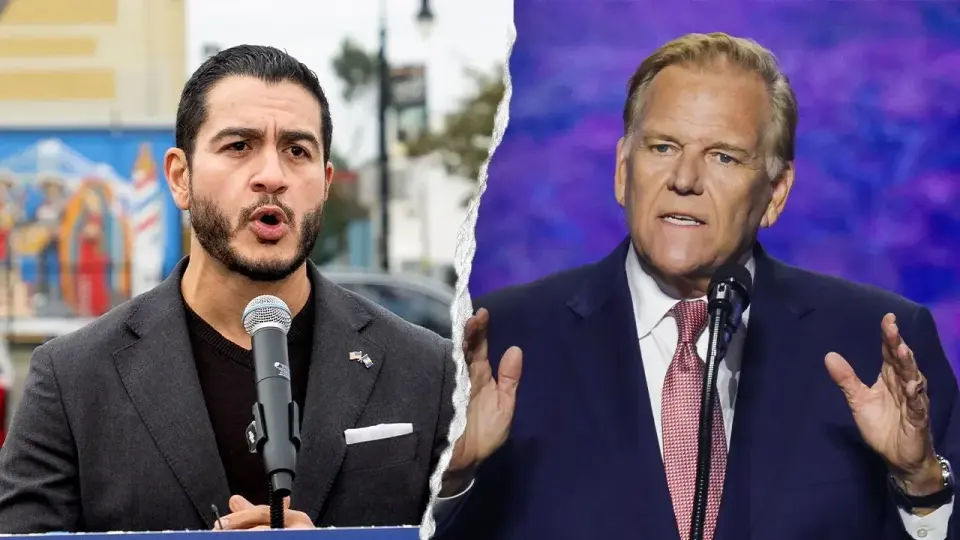
During a Michigan Senate debate, Democratic nominee Abdul El-Sayed firmly denied ties to the Muslim Brotherhood, calling Republican opponent Mike Rogers' questions 'shameful' and 'beneath' him. Rogers cited a 2012 letter El-Sayed signed supporting the defunding of Egypt's police force under President Morsi, as well as social media posts by El-Sayed's half-sister regarding their mother's past activism. El-Sayed emphasized his pride in the US Constitution and noted he was not raised by his biological mother. While Fox News frames the exchange as a defensive rebuttal to baseless accusations, Semafor analyzes the broader context of Republican strategy, noting that while such attacks are now mainstream, they may not sway voters in close races due to shifting media dynamics and El-Sayed's effective counter-narrative.
Key points
- El-Sayed denied Muslim Brotherhood ties during a Michigan Senate debate, calling Rogers' questions 'shameful' and 'beneath' him.
- Rogers cited a 2012 letter El-Sayed signed supporting the defunding of Egypt's police force under President Morsi, a Muslim Brotherhood member.
- El-Sayed noted he was not raised by his biological mother and emphasized his pride in the US Constitution.
- Semafor analyzes the broader context of Republican strategy, noting that while such attacks are now mainstream, they may not sway voters in close races due to shifting media dynamics.
- El-Sayed's effective counter-narrative and the changing media environment may limit the impact of Republican attacks on his faith.
Background
This debate follows a series of contentious exchanges, including a viral town hall confrontation with GOP operative Thomas Teepell, where El-Sayed rejected 'dual loyalty' claims by citing the US Constitution. The controversy has been fueled by resurfaced social media posts from El-Sayed's half-sister alleging their mother's involvement in Muslim Brotherhood activism in the 1970s. El-Sayed has consistently denied personal or family ties to the organization, framing the attacks as Islamophobic. The broader context includes a shift in Republican strategy, with figures like Trump and Vance openly linking El-Sayed to the Muslim Brotherhood, despite no evidence of affiliation.
How outlets are covering it
Fox News portrays El-Sayed as 'incredibly defensive' and 'passionate' in his denial, emphasizing Rogers' argument that El-Sayed's 2012 letter and his half-sister's posts suggest ideological ties to the Muslim Brotherhood. In contrast, Semafor frames the debate as part of a broader Republican strategy to demonize 'the other,' noting that while such attacks are now mainstream, they may not sway voters in close races due to shifting media dynamics and El-Sayed's effective counter-narrative. Semafor also highlights the changing media environment, where topics once considered forbidden or offensive by media gatekeepers can now win elections, but notes that the Trump administration's border closure and shutdown of most asylum claims have made 'immigration' less critical to most voters, limiting the effectiveness of such attacks.
Why it matters
The debate highlights the intensifying political and cultural divide in the 2026 midterm elections, particularly in swing states like Michigan. El-Sayed's ability to counter Islamophobic attacks and frame them as unconstitutional could influence voter sentiment and the broader narrative of the race. The controversy also reflects a shift in Republican strategy, with figures like Trump and Vance openly linking El-Sayed to the Muslim Brotherhood, despite no evidence of affiliation. This could have implications for the party's margins with non-white voters and first-generation Americans, which improved in 2024 but may face a harder look if Republicans lose big in the midterms.
What to watch
The Michigan Senate race is expected to be closely watched, with El-Sayed's ability to counter Islamophobic attacks and frame them as unconstitutional likely to influence voter sentiment. The broader context of Republican strategy and the changing media environment will also be key factors in determining the outcome of the race. If Republicans lose big in the midterms, there will likely be a brawl to assign blame, with consultants and ads being scrutinized for their effectiveness. The party's margins with non-white voters and first-generation Americans will also be closely examined, as the impact of aggressive anti-Muslim rhetoric on voter sentiment becomes clearer.
- El-Sayed erupts at GOP rival over Muslim Brotherhood accusations in fiery Senate debate Fox News
- How an Abdul El-Sayed Opponent Handed Him a Campaign Highlight WSJ
- View / What the GOP activist who confronted El-Sayed really got wrong Semafor
- Abdul El-Sayed Confronts Attacks on His Faith and Family Ties The New York Times
- Opinion | Is it finally unacceptable to question Muslim politicians’ loyalties? Star Tribune
Want the full story? Read the original reporting
Read on Fox News