
FEC filings link Michigan town hall heckler to $250,000 anti-El-Sayed campaign
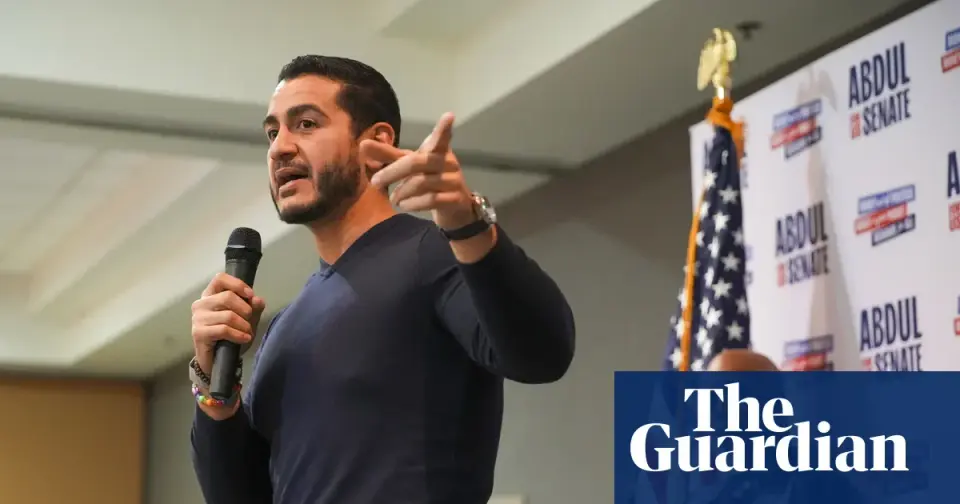
The man who challenged Democratic Senate candidate Abdul El-Sayed at a Michigan town hall is the son of a political strategist whose firm received $250,000 for 'influencer marketing' against El-Sayed. FEC filings show the payment came from America Next, a nonprofit linked to former Louisiana governor Bobby Jindal. The viral exchange, which drew over 50 million views, saw El-Sayed reject the premise of 'dual loyalty' by citing the U.S. Constitution. While Republicans continue to attack El-Sayed’s faith, no evidence links his opponent Mike Rogers’ campaign to the heckler or the funding source.
Key points
- Thomas 'Tommy' Teepell, the heckler, is the son of Timothy 'Timmy' Teepell, a longtime strategist for Senator Josh Hawley and former Louisiana governor Bobby Jindal.
- Timmy Teepell’s firm, Breakthrough LLC, received $250,000 on September 29 from America Next for 'canvassing and influencer marketing' against El-Sayed, per FEC filings.
- The viral town hall exchange in Caro, Michigan, accumulated over 50 million views across social media platforms.
- El-Sayed responded to the heckler by affirming his allegiance to the Constitution and comparing the 'dual loyalty' attack to historical scrutiny of Catholic and Muslim candidates.
- No FEC records or filings link the heckler or the funding source to Republican opponent Mike Rogers’ campaign.
- America Next, founded by Jindal, has received millions from dark-money groups and has funded Republican Super PACs since 2018.
Background
This incident follows a broader pattern of attacks on El-Sayed’s religious background in the Michigan Senate race. Earlier coverage noted that Trump and other Republicans have amplified unsubstantiated claims linking El-Sayed to the Muslim Brotherhood. The race remains competitive, with El-Sayed and Rogers within the margin of error. The viral clip has become a central campaign asset for El-Sayed, contrasting with the lack of evidence supporting the Republican narrative.
How outlets are covering it
The Guardian emphasizes the financial and organizational connections between the heckler’s father, Breakthrough LLC, and America Next, highlighting the role of outside money in shaping 'organic' opposition. CNN focuses on the broader political strategy of tying El-Sayed to the Muslim Brotherhood, noting Trump’s false claims and Rogers’ defense of his attacks. MS NOW frames the exchange as a defense of religious freedom, praising El-Sayed’s constitutional rebuttal and criticizing Christian nationalism. The outlets differ in emphasis: The Guardian and CNN focus on the political machinery and funding, while MS NOW centers on the principle of religious liberty. All agree that the heckler’s actions were part of a coordinated effort, but only The Guardian provides specific details on the $250,000 payment and the America Next connection.
Why it matters
The incident reveals how outside money and political operatives can shape public perception through viral moments, even without direct campaign involvement. It underscores the role of religious identity in U.S. elections and the potential for 'dual loyalty' attacks to influence voter sentiment. The lack of evidence linking the heckler to the official campaign raises questions about the boundaries of independent expenditures and the influence of dark-money groups in shaping electoral narratives.
What to watch
El-Sayed’s campaign is likely to continue leveraging the viral clip to counter Republican attacks. The FEC filings may prompt further scrutiny of America Next’s activities and its connections to other Republican groups. The race will likely see continued focus on religious identity, with both sides attempting to frame the narrative around faith and loyalty. The outcome of the Michigan Senate race will be a key indicator of the effectiveness of these strategies in the 2026 midterms.
- Michigan heckler the son of Republican adviser paid for ‘influencer marketing’ against El-Sayed The Guardian
- GOP attacks on El-Sayed’s Muslim faith come to a head in heated town hall exchange CNN
- El-Sayed Turns Muslim Question Into Viral Moment Newser
- Opinion | Abdul El-Sayed had an easy response to 'Tommy's' viral gotcha moment: the U.S. Constitution MS NOW
- El-Sayed, Vance pressed on religion, loyalty and immigration Religion News Service
Want the full story? Read the original reporting
Read on The Guardian