
Federal Charges Against 28 Californians Spark Legal and Political Clash Over Voter Data
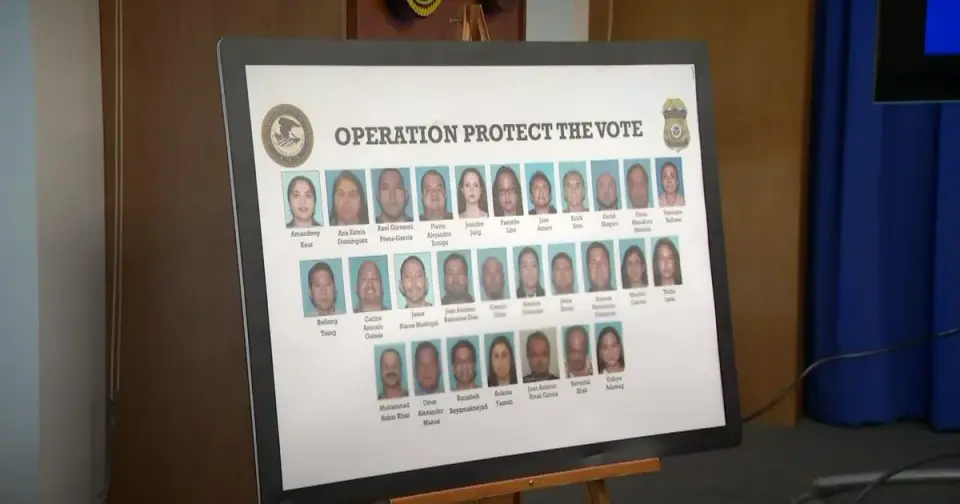
The U.S. Department of Justice has charged 28 lawful permanent residents in California with federal crimes related to voter registration and voting, marking a significant escalation in the Trump administration's efforts to challenge noncitizen voting ahead of the November 3 midterms. While the DOJ asserts these cases prove widespread fraud, critics and election experts argue the incidents are rare and that the federal government's data is flawed, potentially disenfranchising legitimate citizens. The charges come days after the DOJ sued California to block the counting of ballots for approximately 20,000 individuals flagged as potential noncitizens, a move state officials have condemned as legally baseless and politically motivated.
Key points
- The DOJ charged 28 green card holders in California, including residents of Sacramento and Vacaville, with illegal voting and registration.
- Acting Deputy Attorney General Trent McCotter stated the department will not look the other way while non-citizens vote in federal elections.
- The Justice Department sued California after state officials refused to set aside vote-by-mail ballots for a list of 20,000 suspected noncitizens.
- Los Angeles officials claim a high percentage of people on the federal list were born in the United States, questioning the data's accuracy.
- California Attorney General Rob Bonta called the 28 charges a 'drop in the bucket' compared to the state's 23 million registered voters.
Background
This crackdown follows a series of federal actions in 2026, including charges in Texas and multi-state operations targeting alleged noncitizen voting. In September, the DOJ filed 16 charges across seven states, and DHS intensified enforcement with deportation threats. These actions align with a broader federal push to investigate noncitizen voting ahead of the November 3 midterms, despite previous instances where flagged voters were confirmed as citizens.
How outlets are covering it
The DOJ, led by Acting Deputy Attorney General Trent McCotter, views the charges as proof of widespread voter fraud and asserts that California's refusal to cooperate constitutes 'willful blindness.' In contrast, California officials and advocacy groups like NorCal Resist argue the federal list is inaccurate and that the aggressive arrests constitute voter intimidation. Los Angeles election officials highlighted that 38.9% of a sample from the federal list were born in the U.S., while the DOJ maintains that listing a U.S. birthplace does not automatically confer citizenship. Senator Alex Padilla and Representative Joseph Morelle have demanded information on whether the White House directed the lawsuit, alleging 'political weaponization' of the DOJ. Meanwhile, defense attorneys for the accused, such as Megan McLoughlin, described the arrests as 'traumatizing' and questioned the validity of the charges, noting that some defendants have no memory of registering to vote.
Why it matters
The outcome of these cases and the ongoing lawsuit could set a precedent for federal-state relations regarding election integrity. If the federal government successfully blocks the counting of ballots for the 20,000 flagged individuals, it could disenfranchise thousands of eligible voters. Conversely, if the charges are dropped due to data errors, it may undermine the credibility of the federal voter fraud initiative. The tension highlights the deepening political divide over election security and the rights of lawful permanent residents in the lead-up to the midterms.
What to watch
The 28 defendants are scheduled for preliminary hearings on November 9. The DOJ has given California a deadline of November 2 to respond to requests for information regarding the methodology used to create the noncitizen list. The federal lawsuit seeking to prevent the counting of flagged ballots will proceed through the courts, potentially impacting the November 3 election. California officials continue to monitor the cases, expecting that some charges may be dropped if the federal government cannot prove willful violations of federal law.
- Vacaville, Sacramento residents among 28 charged in California voter fraud crackdown CBS News
- DoJ’s suspected non-citizens list includes ‘high percentage’ of those born in US, LA officials say The Guardian
- California gives DOJ a deadline for info on noncitizen voting claims USA Today
- DOJ charges 28 in California with voting crimes as election tensions escalate NPR
- California residents accused by feds of voter fraud react with shock, confusion and anger Los Angeles Times
Want the full story? Read the original reporting
Read on CBS News