
Federal Judge Weighs Emergency Injunction as Virginia, D.C. Sue to Halt Trump Arch Construction
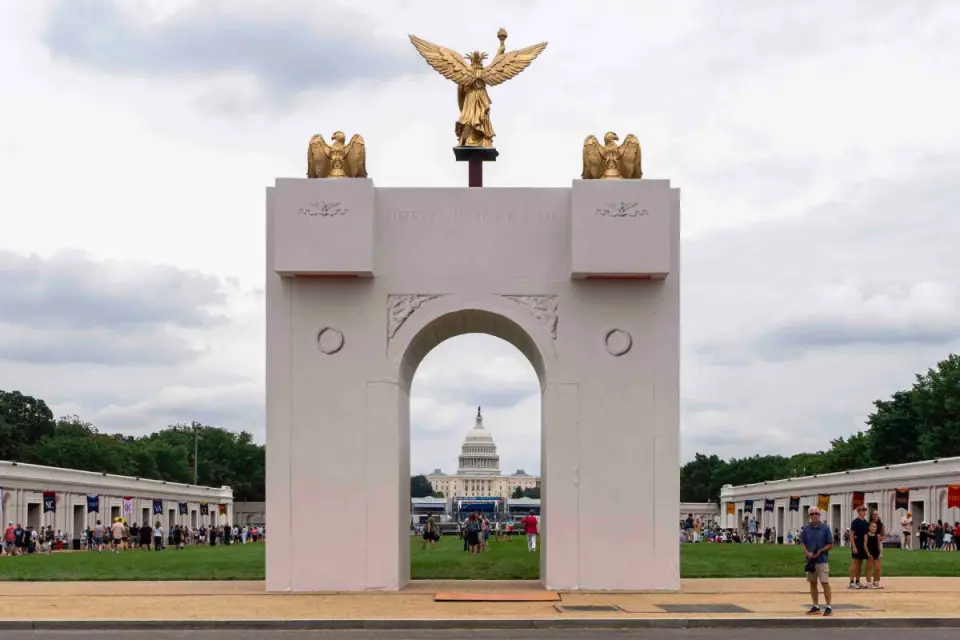
Virginia and the District of Columbia have joined Vietnam War veterans in suing to halt construction of President Trump’s proposed 250-foot triumphal arch in Washington, D.C. The administration plans to begin work as early as November 5, coinciding with a National Capital Planning Commission vote. While the White House frames the structure as a historic monument and a 'generational national defense opportunity' for drone and sniper operations, critics argue it violates multiple federal laws and will cause irreparable harm to local infrastructure and historic views. Judge Tanya Chutkan has consolidated the cases and expressed skepticism regarding the administration’s urgency, questioning the validity of the national security justifications.
Key points
- Virginia and D.C. attorneys general filed a lawsuit on October 31, 2026, seeking a temporary restraining order to stop construction of the arch, which is slated to begin as early as November 5.
- The administration argues the 250-foot structure serves a dual purpose as a national monument and a military hub for counter-drone operations and sniper support, a claim defended by Defense Secretary Pete Hegseth and Homeland Security Secretary Markwayne Mullin.
- Critics allege the project violates the Commemorative Works Act, Height of Buildings Act, National Environmental Policy Act, and National Historic Preservation Act, while also threatening to obstruct the sightline to Arlington National Cemetery.
- Judge Tanya Chutkan consolidated the new lawsuits with an existing case brought by veterans and an architectural historian, questioning the government’s need to rush construction before final planning commission approval.
- The administration submitted a 106-page plan detailing the arch’s features, including an observation deck, a bronze statue of Lady Liberty, and a fire command center, while claiming the structure will mitigate security threats.
Background
The legal battle over the arch follows a broader pattern of judicial scrutiny regarding Trump administration projects in Washington, D.C. Recent disputes include challenges to the White House ballroom and the East Potomac Golf Links renovation. In the golf case, Judge Ana Reyes opened a formal inquiry into potential ethical violations by federal attorneys. Similarly, the Kennedy Center renovation faces legal hurdles over executive privilege and the removal of Trump’s name from the venue. These cases highlight ongoing tensions between the administration’s rapid construction agenda and legal safeguards for historic preservation and environmental protection.
How outlets are covering it
The White House and Cabinet officials, including Defense Secretary Pete Hegseth and Homeland Security Secretary Markwayne Mullin, emphasize the arch’s strategic value, describing it as a 'generational national defense opportunity' essential for countering drone threats and enhancing security for senior officials. In contrast, Virginia and D.C. attorneys general, along with Vietnam War veterans, argue the project is an illegal 'vanity project' that will cause irreparable harm to traffic, emergency services, and the sanctity of Arlington National Cemetery. Judge Tanya Chutkan has expressed skepticism toward the administration’s urgency, questioning the practicality of using a 250-foot arch to deter assassination attempts and noting that the military justifications were not included in earlier planning documents. While the administration claims the project is a high priority, critics argue the government is attempting to create a fait accompli by rushing construction before final approval.
Why it matters
The outcome of this legal battle will set a precedent for the administration’s ability to bypass standard planning and environmental review processes for major construction projects in the nation’s capital. If the court grants an injunction, it could delay or halt the arch’s construction, potentially impacting the administration’s broader agenda to reshape Washington’s landscape. The case also highlights the tension between national security claims and local interests, as the arch’s location near Arlington National Cemetery and the Potomac River raises concerns about environmental impact, traffic congestion, and the preservation of historic views. The ruling may influence future challenges to other Trump administration projects, including the White House ballroom and the East Potomac Golf Links renovation.
What to watch
Judge Tanya Chutkan is expected to issue a ruling on the consolidated lawsuits in the coming weeks, potentially granting a preliminary injunction to halt construction. The National Capital Planning Commission is scheduled to vote on final plans for the arch on November 5, a date the administration hopes to use to begin construction. If the court does not intervene, the administration may proceed with groundbreaking, potentially triggering further legal challenges. The case will also influence ongoing disputes over other Trump administration projects, including the Kennedy Center renovation and the East Potomac Golf Links, as courts continue to scrutinize the administration’s adherence to federal laws and ethical standards.
- Virginia and DC sue over Trump's arch, adding to legal challenges as government wants work to begin AP News
- D.C. and Virginia sue to block Trump’s proposed triumphal arch The Washington Post
- Virginia and D.C. sue to stop proposed Trump arch NBC News
- Trump’s triumphal arch faces more opposition, with judge asking if desire is to ‘bedazzle’ DC CNN
- Hegseth, Mullin rebrand triumphal arch as ‘generational national defense opportunity’ Politico
Want the full story? Read the original reporting
Read on AP News