
Federal prosecutor threatens Sen. Blumenthal with prosecution over White House ballroom donor probe
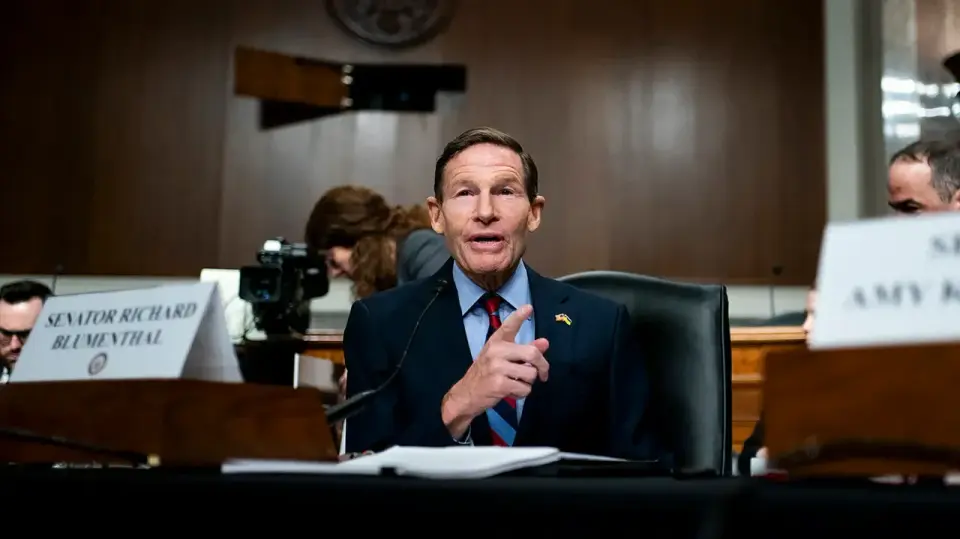
U.S. Attorney Aaron Reitz has formally demanded that Sen. Richard Blumenthal preserve all records related to his investigation into donors for the White House ballroom, warning of 'significant legal consequences' for non-compliance. Reitz alleges the senator’s inquiry violates federal statutes protecting citizens' First Amendment rights to associate with the president. Blumenthal rejected the demand as an unconstitutional attempt to intimidate Congress, issuing his own preservation order to Reitz. The dispute highlights escalating tensions between the Trump administration and the newly empowered Democratic majority in Congress, which has promised aggressive oversight of executive branch spending and corporate dealings.
Key points
- U.S. Attorney Aaron Reitz sent a letter to Sen. Richard Blumenthal on Nov. 11, demanding he preserve all documents related to his investigation into donors for the White House ballroom.
- Reitz alleged that Blumenthal’s inquiry violates federal statutes (18 U.S.C. 241 and 242) by threatening citizens' First Amendment rights to associate with the president and other public officials.
- Blumenthal responded by calling the threat 'baseless' and an attempt to intimidate Congress for engaging in constitutionally protected activity. He issued his own preservation order to Reitz, demanding records of the decision to send the letter.
- The White House ballroom project, which cost approximately $400 million, has faced legal hurdles, but the Supreme Court ruled in August that it could proceed indefinitely.
- The dispute follows a series of threats from the White House and DOJ against Democratic lawmakers for planning oversight investigations into the Trump administration's spending and corporate dealings.
Background
This dispute is part of a broader pattern of escalating tensions between the Trump administration and the newly empowered Democratic majority in Congress. In late October, leaked records revealed major corporate donors to the White House ballroom, including Apple, Microsoft, and Palantir, raising questions about conflicts of interest. In early November, White House counsel Will Scharf warned incoming House Oversight Chair Robert Garcia that planned Democratic investigations could constitute 'blatant criminality.' The current confrontation with Blumenthal, a ranking member of the Senate Permanent Subcommittee on Investigations, represents a significant escalation in these threats, with the DOJ now directly targeting a sitting senator for conducting oversight.
How outlets are covering it
The Hill and NBC News frame the dispute as a direct confrontation between the executive and legislative branches, with the DOJ weaponizing its authority to intimidate Congress. Democracy Docket emphasizes the threat to democratic oversight, noting that Reitz’s letter marks a significant escalation in the White House's strategy to prosecute those who speak out or plan to follow through with constitutionally protected duties. WTNH.com focuses on Blumenthal’s response, highlighting his refusal to be intimidated and his commitment to investigating the administration's 'misuse of taxpayer dollars.' All sources agree that the core issue is the administration's attempt to use the DOJ to suppress congressional oversight, but they differ in emphasis: The Hill and NBC News focus on the legal and constitutional implications, Democracy Docket on the broader threat to democracy, and WTNH on Blumenthal's personal stance.
Why it matters
This incident signals a potential shift in the balance of power between the executive and legislative branches, with the administration using the DOJ to directly target members of Congress for exercising their oversight powers. If successful, it could set a precedent for chilling congressional investigations into executive branch spending and corporate dealings, undermining the system of checks and balances. The outcome of this dispute will likely influence the scope and intensity of Democratic oversight in the new congressional session.
What to watch
Blumenthal has until Nov. 18 to respond to Reitz’s demand and prove he has taken steps to preserve the materials. The DOJ may proceed with an investigation if Blumenthal does not comply, though such an action against a sitting member of Congress would likely face significant legal and political challenges. The new Democratic-controlled Congress, which begins its session in January, is expected to continue its oversight investigations, potentially leading to further confrontations with the administration.
- US attorney threatens Blumenthal with ‘significant legal consequences’ over ballroom probe The Hill
- U.S. attorney demands Sen. Richard Blumenthal preserve documents from his inquiry into White House ballroom NBC News
- U.S. attorney threatens Democratic senator with prosecution for conducting oversight Democracy Docket
- Sen. Blumenthal asked to preserve documents regarding White House ballroom inquiry WTNH.com
- Federal prosecutor issues unusual warning to Democratic senator over ballroom inquiry MS NOW
Want the full story? Read the original reporting
Read on The Hill