
California Lawmakers Face Final Month of High-Stakes Negotiations
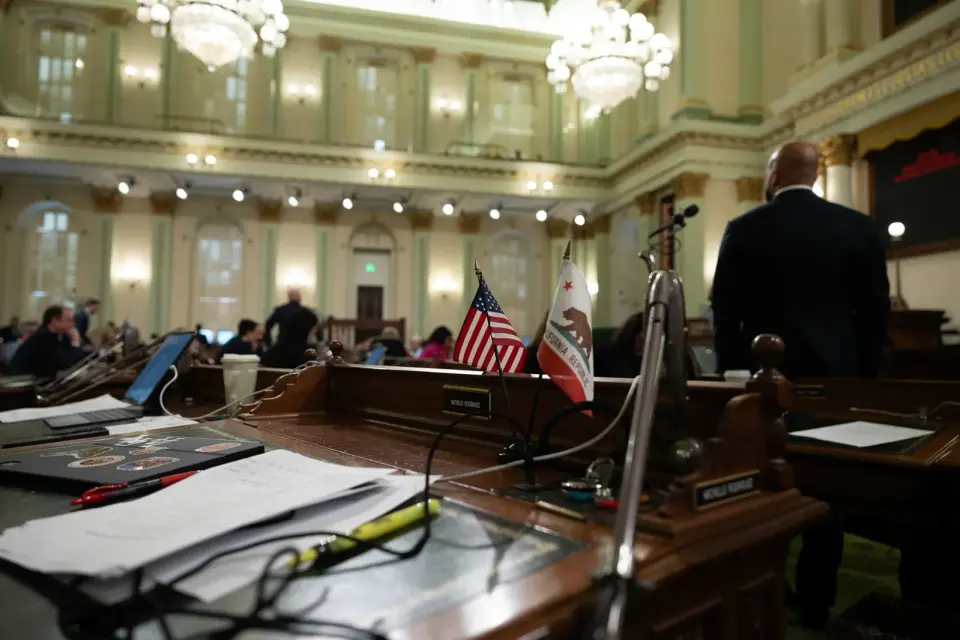
California legislators returned to Sacramento on August 3, 2026, to finalize five major policy areas before the August 31 adjournment. Key negotiations include the allocation of the Greenhouse Gas Reduction Fund, environmental waivers for the Solano County 'California Forever' development, wildfire liability reforms, the COMPETE Act antitrust bill, and limits on child abuse lawsuits. The session concludes with a record $128.1 billion education budget already signed, but several school finance and safety bills remain pending.
Key points
- The Greenhouse Gas Reduction Fund, estimated at $4 billion annually, faces potential cuts due to new climate rules, threatening funding for high-speed rail, housing, and transit.
- The 'California Forever' group seeks environmental waivers for a Solano County shipyard, blaming the lack of legislation for Saronics Technologies choosing Texas over California.
- The COMPETE Act (AB 1776) allows private lawsuits for monopolistic practices, drawing strong opposition from the California Chamber of Commerce and support from major labor unions.
- Lawmakers are negotiating limits on child abuse lawsuits following a 2019 law that extended the statute of limitations to age 40, which has cost counties billions in settlements.
- Newsom’s wildfire proposals aim to reduce utility liability, a move opposed by survivors and consumer advocates who fear increased costs for policyholders.
Background
This session follows a contentious 2025-2026 cycle where climate and energy policy dominated end-of-session negotiations. The current disputes over the carbon market and Proposition 4 bond funds stem from unresolved disagreements from the previous year. Additionally, the 2019 expansion of the statute of limitations for child abuse claims has led to a surge in litigation, prompting current efforts to limit financial liability for public employers.
How outlets are covering it
CalMatters highlights the tension between Governor Newsom and legislative Democrats over climate fund allocations, noting that Senate Democrats threatened to block funding proposals. KCRA emphasizes the procedural deadlines, noting the August 14 Appropriations Committee deadline and the August 31 final vote. OCDE Newsroom focuses on the education sector, detailing the record $128.1 billion budget and pending bills on substitute teachers and early math screening. BikinginLA provides a critical perspective on transportation, noting that while bills like AB 1421 (road usage charges) and SB 569 (bike lane protections) are alive, the federal America Bikes Act lacks legislative support, and local advocacy groups are frustrated by the lack of action on pedestrian safety.
Why it matters
These decisions will shape California’s environmental, economic, and legal landscape for years. The outcome of the climate fund negotiations determines the viability of major infrastructure projects like high-speed rail. The antitrust and wildfire bills will significantly impact business liability and insurance costs. Furthermore, the resolution of child abuse litigation will affect the financial stability of counties and school districts, potentially influencing public employee compensation and service delivery.
What to watch
Lawmakers must pass bills out of Appropriations Committee by August 14, with floor votes concluding by August 31. Governor Newsom has until September 30 to sign or veto any passed legislation. The fate of the COMPETE Act will be determined after a Senate Appropriations hearing on August 10. Negotiations on the climate fund and wildfire liability are expected to continue behind closed doors through the end of the month.
- Five things to watch in the California Legislature as lawmakers return CalMatters
- California lawmakers return to Capitol to review hundreds of bills KCRA
- Capitol Briefs: On your mark, get set…. Capitol Weekly
- Transportation bills still alive in CA legislature, no action on America Bikes Act, and "old coots" ignore real problem BikinginLA
- California lawmakers return today with key education bills still in play OCDE Newsroom
Want the full story? Read the original reporting
Read on CalMatters