
Georgia Election Board Director’s Rogue Letter to DOJ Sparks Internal Chaos Ahead of Midterms
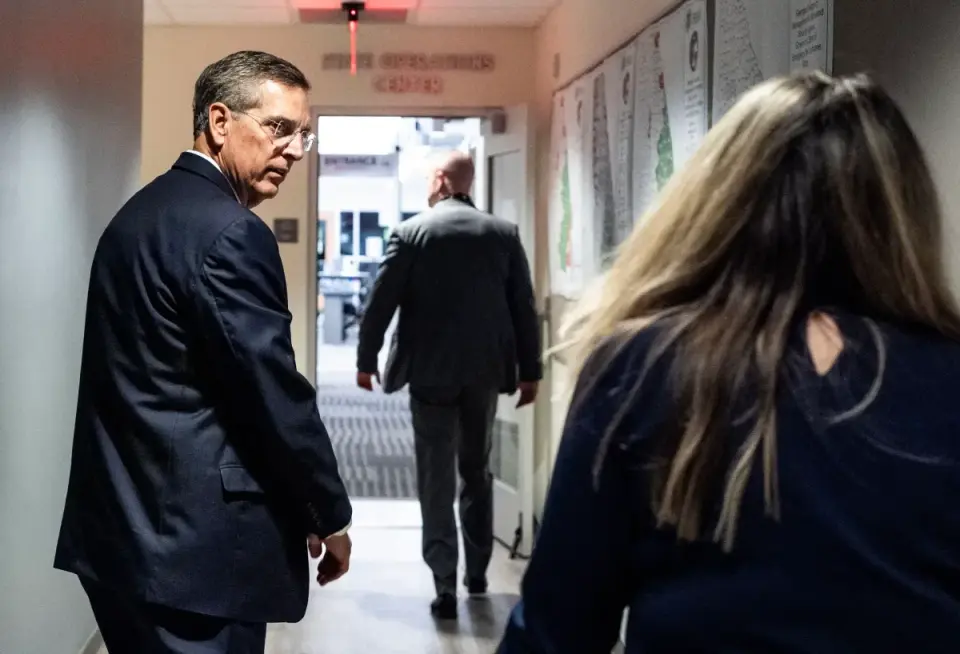
James Mills, executive director of the Georgia State Election Board, sent a letter to Attorney General Todd Blanche requesting federal intervention in the 2026 midterms, including a ban on QR-code ballot tabulation. Board members, including Chair John Fervier, denied authorizing the letter, calling it an unauthorized act of chaos. Secretary of State Brad Raffensperger’s office condemned the move, while the DOJ has not yet publicly responded.
Key points
- Mills requested the DOJ and DHS oversee Georgia’s election and impose a six-month deadline to eliminate QR-code vote counting.
- The letter was addressed to AG Todd Blanche and cc’d Assistant AG Harmeet Dhillon and DHS Secretary Markwayne Mullin.
- Board Chair John Fervier and member Salleigh Grubbs stated they did not review or authorize the letter, which exceeded a prior board resolution.
- Raffensperger’s office called the letter an attempt to inject chaos, noting that late software changes could break systems before early voting begins on Oct. 13.
- The dispute follows a Princeton researcher’s finding that AI could link voters to secret ballots using Georgia’s public records, a flaw Raffensperger’s office has sought funding to fix for three years.
Background
The Georgia State Election Board was restructured in 2023 to give Republicans a majority, leading to ongoing tensions between the board and Secretary of State Brad Raffensperger, who refused Trump’s 2020 election fraud claims. The board has previously ordered its own investigation into the 2020 election, mirroring the DOJ’s later probe. This latest conflict occurs amid a broader pattern of federal attempts to influence state election procedures, as noted by TPM and MS NOW.
How outlets are covering it
TPM and Votebeat emphasize the unauthorized nature of Mills’ letter, with board members describing it as 'freelancing' and a breach of protocol. MS NOW frames the letter as a potential step for Blanche to become an active participant in election interference, contrasting with his prior role as a legal defender of Trump. The Atlanta Journal-Constitution focuses on the technical demands of the letter, such as banning QR codes, and the logistical impossibility of implementing such changes before early voting. The Guardian highlights the underlying AI vulnerability that prompted the board’s emergency meeting, noting that Raffensperger’s proposed fix of redacting ID numbers may violate transparency laws, while alternative proposals like ballot shuffling face practical concerns from county officials.
Why it matters
The incident tests the boundaries of federal-state election relations and could provide the DOJ with material to fuel narratives of fraud, as TPM notes. It also highlights the fragility of ballot secrecy in the age of AI, with a Princeton researcher demonstrating that 98.9% of in-person ballots in 114 Georgia counties could be linked to voters using public data. The outcome may influence public confidence in the 2026 midterms and set a precedent for federal intervention in state election administration.
What to watch
The DOJ and DHS have not yet publicly responded to Mills’ letter. Georgia’s early in-person voting begins on Oct. 13, and the state must decide whether to implement any changes to its voting systems before then. The board may revisit the AI vulnerability issue, but any major software updates or process changes face significant logistical and legal hurdles. Blanche’s decision on whether to engage with the letter will determine if the federal government becomes directly involved in Georgia’s election administration.
- Things Get Messy in Georgia After Election Board Director Writes Letter to Todd Blanche Talking Points Memo
- Opinion | Todd Blanche has an important choice to make ms.now
- Georgia board asks Trump administration to investigate voting machines ajc.com
- Georgia holds emergency meeting on AI exposing voters’ secret ballots The Guardian
- Georgia’s GOP-controlled election board wants DOJ to investigate nonpartisan voter roll maintenance program Democracy Docket
Want the full story? Read the original reporting
Read on Talking Points Memo