
Georgia election software flaw risks voter ballot secrecy
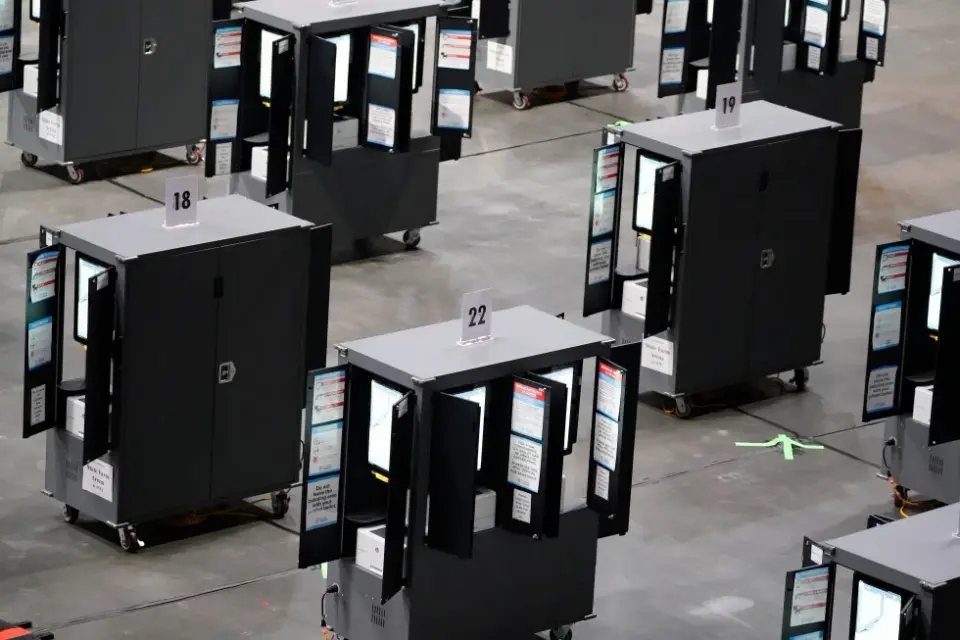
A software flaw in Georgia's voting systems could allow voters' choices to be linked to their identities, threatening ballot secrecy. Researchers found that AI tools can reverse the randomization of electronic ballot records, potentially matching names to votes. While officials are restricting public access to sensitive records, critics argue the only proper fix is to stop recording traceable data. The state election board rejected a proposal to force a software update, citing funding and certification issues, leaving the vulnerability unresolved before the November midterms.
Key points
- Georgia's touchscreen voting machines print paper ballots, but a software flaw allows electronic records to be de-randomized, potentially linking voters to their choices.
- Princeton researcher Max Springer demonstrated that AI tools can use public records to match voters to ballots, raising concerns about vote-buying and coercion.
- Georgia's secretary of state's office is restricting public access to certain records and scrambling data, but critics argue this is insufficient and the software update should be applied.
- The state election board rejected a proposal to force the software update, citing lack of certification, funding, and time before the November midterms.
- Georgia law requires absolute secrecy in voting, and revealing how someone voted is a felony, but the physical possibility of tracing ballots remains a concern.
Background
This issue follows broader concerns about election security and transparency, as seen in recent debates over court appointment systems and kernel vulnerabilities. It also echoes warnings about security flaws in consumer devices, such as GPS watches, where shared backends expose millions of users. The current dispute highlights tensions between election officials and transparency advocates over how to handle sensitive data and software updates before critical elections.
Why it matters
The flaw undermines the principle of secret ballots, which is essential for preventing coercion and vote-buying. If voters' choices can be traced, it could influence their decisions and compromise the integrity of the election. The debate over how to address the issue—through software updates, record restrictions, or other measures—reflects broader challenges in balancing transparency, security, and practical constraints in election administration.
What to watch
Georgia officials are working with vendors to scramble ballot images and cast-vote records before public release, but the software update remains unapplied. The state election board has rejected a proposal to force the update, and the November midterms are approaching. Critics are pushing for interim solutions, such as collecting ballots in locked boxes and shuffling them at central tabulating centers, to ensure voter privacy.
Want the full story? Read the original reporting
Read on AP News