
Hegseth to Announce 20% Cut in Senior Military Ranks at Quantico
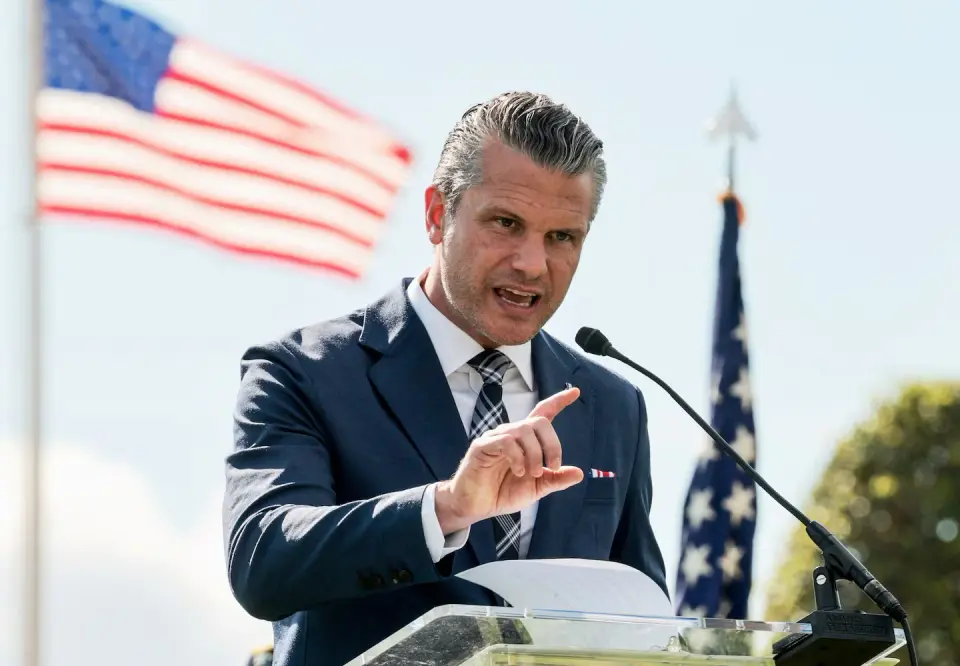
Defense Secretary Pete Hegseth is set to announce a 20% reduction in general and flag officer positions, doubling the previous year's cuts. The move, expected to be unveiled at a gathering in Quantico, Virginia, aims to streamline the military's leadership structure. Critics argue the reductions are politically motivated and threaten military readiness, while supporters view them as necessary for operational efficiency. The announcement follows a year of significant personnel changes and firings within the Pentagon.
Key points
- Hegseth plans to cut general and flag officer positions by up to 20%, doubling the 10% reduction from last year.
- The announcement is expected at a 'State of the Force' address in Quantico, Virginia, on Wednesday.
- The cuts will affect approximately 850 senior officers, less than 1% of the total military force.
- Critics, including Senator Jack Reed, argue the moves are politically motivated and lack transparency.
- Hegseth has already purged over two dozen top officials and blocked promotions for roughly 80 officers since taking office.
Background
This development follows a series of leadership changes under Hegseth, including the resignation of Army Secretary Dan Driscoll in September 2026 and the targeting of seven more Army officers. These actions have been part of a broader effort to reshape the military's senior ranks, which Hegseth has described as necessary for improving operational effectiveness. The previous year's 10% reduction in general and flag officer positions was met with mixed reactions, with some critics expressing concern over the pace and transparency of the changes.
How outlets are covering it
The Washington Post emphasizes the potential impact on hundreds of current and rising military leaders, highlighting concerns from former defense officials and congressional Democrats about the political motivations behind the cuts. The New York Post frames the reductions as part of an 'anti-bureaucracy push' and notes Hegseth's previous arguments for streamlining the military. War on the Rocks focuses on the broader implications for civil-military relations, questioning whether the military can maintain its nonpartisan ethos under such significant leadership changes. While all sources agree on the scale of the cuts, they differ in their interpretation of the underlying motivations and potential consequences for the military's effectiveness and professionalism.
Why it matters
The proposed cuts could significantly alter the leadership structure of the U.S. military, potentially affecting its readiness and operational capabilities. The move also raises questions about the balance between civilian oversight and military professionalism, as well as the potential for increased politicization within the armed forces. The outcome of these changes could have lasting implications for the military's ability to adapt to modern warfare and maintain public trust.
What to watch
Hegseth is expected to outline the details of the cuts during his 'State of the Force' address in Quantico, Virginia, on Wednesday. The military is expected to complete the reductions by January 1, 2027. Congressional leaders, particularly Senator Jack Reed, are likely to demand further explanations and consultations before any additional reductions are pursued. The response from the military audience at the Quantico event will be closely watched as an indicator of the force's adherence to nonpartisan norms.
- Hegseth to cut more generals, admirals in bid to remake military’s top ranks The Washington Post
- Hegseth to slash 20% of general and admiral roles in Pentagon’s anti-bureacracy push New York Post
- Hegseth to Announce 20% Cut to Senior Officer Ranks During Speech to Servicemembers WSJ
- Pentagon chief set to announce additional cuts in senior officer positions Reuters
- What Will Hegseth’s “State of the Force” Reprise Reveal? War on the Rocks
Want the full story? Read the original reporting
Read on The Washington Post