
Hegseth unveils drone command, base plans, and 20% officer cuts in 'State of the Force' address
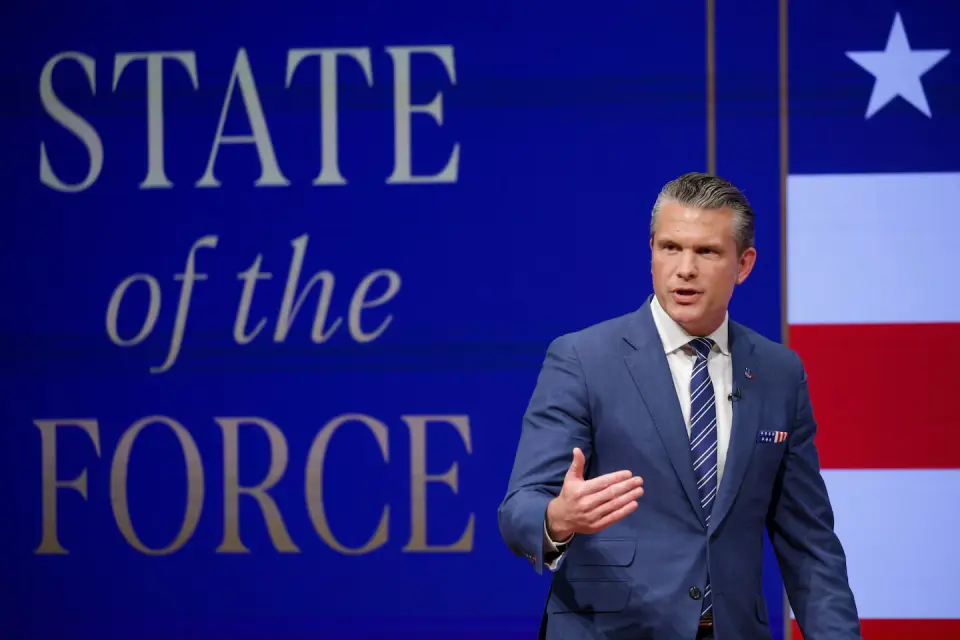
Defense Secretary Pete Hegseth announced six new military initiatives at Marine Corps Base Quantico, including a new drone warfare command, a domestic base construction plan, and a 20% reduction in general and admiral ranks. He criticized the previous administration's diversity efforts and accused the media of treason regarding the ongoing Iran conflict. The address, titled 'State of the Force,' emphasized lethality and recruitment of tech leaders like Elon Musk and Palmer Luckey for future weapons development, while facing scrutiny over the war's cost and troop morale.
Key points
- Hegseth announced the creation of the Autonomous Warfare Command, a new headquarters for drone warfare led by Owen West, with a target launch date of October 2027.
- The defense secretary confirmed a 20% reduction in the number of generals and admirals, building on previous cuts, affecting a force of approximately 850 senior leaders.
- Hegseth launched Project Meridian, recruiting Elon Musk, Palmer Luckey, and Newt Gingrich to develop next-generation weapons, despite potential conflicts of interest regarding government contracts.
- A new initiative called FORTRESS America aims to fortify domestic supply chains, ensure base energy independence, and build strategic reserves of munitions and medical supplies.
- The 'America's Corps of Cadets' program will expand officer training at five universities, including Louisiana State University, Mississippi State University, Liberty University, Tuskegee University, and Hillsdale College.
- Hegseth announced plans to build a new, highly hardened joint military installation in the United States, inviting governors to propose locations for 15,000 to 25,000 troops.
Background
This address follows Hegseth's previous 'State of the Force' speech a year ago, which targeted senior military leaders. The current speech occurs amid the ongoing Iran war, which began in February 2026 and has resulted in over 800 wounded and 19 dead US troops. The administration has faced criticism for the war's cost and the extended deployment of the USS Abraham Lincoln, which was at sea for 286 days. Hegseth's initiatives reflect a broader Trump administration push to rebrand the military as the 'War Department' and emphasize combat readiness over diversity and inclusion programs.
How outlets are covering it
The Washington Post highlights the partisan nature of Hegseth's speech, noting his use of profanity and criticism of the media, while emphasizing the military's professional response. The Guardian focuses on the anti-diversity rhetoric and the 20% cut in senior officers, questioning the morale claims amidst reports of suicide attempts on the USS Abraham Lincoln. AP News provides a neutral overview of the new drone command and officer cuts, noting the lack of clarity on funding for the new base and the potential conflicts of interest in Project Meridian. All sources agree on the core initiatives but differ in their emphasis on the political and ethical implications of Hegseth's rhetoric and policies.
Why it matters
Hegseth's initiatives signal a significant shift in US military strategy, prioritizing drone warfare, domestic supply chain resilience, and a reduction in senior leadership. The 20% cut in generals and admirals could impact military command structures, while the recruitment of tech leaders like Musk and Luckey raises questions about conflicts of interest in defense procurement. The new base and cadet programs aim to strengthen the military's domestic presence and officer pipeline, but their funding and feasibility remain uncertain. The speech also reflects the administration's broader effort to rebrand the military and distance it from previous diversity initiatives, potentially affecting recruitment and retention.
What to watch
The Pentagon will collaborate with Congress to secure legislation for the Autonomous Warfare Command, with an aspirational launch date of October 2027. A nationwide evaluation for the new military base location will follow, with governors invited to propose sites. The FORTRESS America initiative will begin implementing supply chain and energy independence measures. The 'America's Corps of Cadets' program will expand at the five selected universities. The administration will continue to push for the 20% reduction in senior officers, potentially affecting military leadership and readiness. The Iran war will remain a focal point, with ongoing concerns about troop morale and the war's long-term implications.
- Hegseth details new initiatives in partisan address to troops The Washington Post
- In Speech, Hegseth Targets Diversity, Transgender People, Reporters and Iran The New York Times
- Hegseth confirms plan to cut 20% of US top military brass and rails at ‘beardos, weirdos and wimps’ theguardian.com
- 7 takeaways from Hegseth’s address to officers: Warfare’s future, faith and a new base The Hill
- Hegseth announces a new drone command and cuts to 20% of generals in 'State of the Force' speech AP News
Want the full story? Read the original reporting
Read on The Washington Post