
Hegseth's 'State of the Force' Speech Ignores Iran War to Focus on Culture Wars
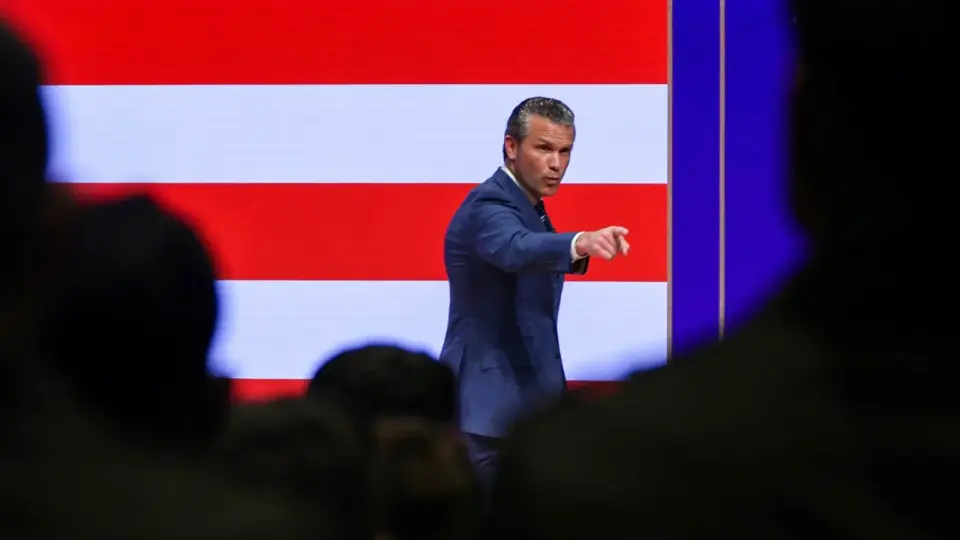
Defense Secretary Pete Hegseth delivered a 'State of the Force' address at Marine Corps Base Quantico on September 30, 2026, focusing on eliminating 'woke' culture and promoting a 'warrior ethos' rather than addressing the ongoing war with Iran. The speech, which included calls for daily physical training and the exclusion of diverse groups, was criticized for ignoring 19 U.S. service member deaths and over 850 injuries in the Iran conflict. Hegseth announced 'Project Meridian,' a military tech initiative led by Elon Musk and others, while facing growing political backlash, including an impeachment resolution from Republican congressman Thomas Massie. The address occurred as the U.S. formally withdrew from Iraq, ending a 23-year presence, and amid stalled defense budget negotiations in Congress.
Key points
- Hegseth emphasized 'lethality' and 'warfighter' culture, rejecting diversity quotas and identity-based policies in favor of a unified, Christian-nationalist military ethos.
- The speech omitted any mention of 19 U.S. service member deaths and over 850 injuries in the ongoing Iran war, which critics noted as a deliberate avoidance of accountability.
- Hegseth announced 'Project Meridian,' a tech incubator for military contractors led by Elon Musk, Palmer Luckey, and Newt Gingrich, aimed at accelerating weapons development with reduced oversight.
- The address followed the U.S. formal withdrawal from Iraq, ending a 23-year, $1.7-trillion military presence, and coincided with stalled congressional approval of a $67 billion emergency spending request for the Iran war.
- Republican congressman Thomas Massie filed articles of impeachment against Hegseth, but Speaker Mike Johnson cancelled House business to avoid a vote, signaling GOP concern over the Defense Secretary's unpopularity.
Background
Hegseth has previously faced controversy for his wife's influential role at the Pentagon and for halting civilian tenure at military academies to prioritize 'warfighting' curricula. These actions align with his broader campaign to purge 'woke' elements from the military, including the expulsion of transgender service members and the firing of 10% of senior officers, with plans to dismiss 20% more. The current speech builds on these efforts, reflecting a shift toward a more politicized and ideologically driven military structure.
How outlets are covering it
Rolling Stone argues that Hegseth's focus on 'lethality' is a marketing tactic for a broader cultural and political shift, aiming to create a homogeneous military that aligns with his Christian-nationalist views and facilitates easier redistribution of funds to favored contractors. MS NOW criticizes Hegseth for using authoritarian propaganda techniques, including attacks on the press and 'purification rhetoric,' while ignoring the human cost of the Iran war, which it attributes to his failures in force protection. The New Yorker highlights the political ill-timing of the speech, noting that Hegseth declared victory in a 'culture war' while the Iran conflict caused economic turmoil and depleted U.S. munitions, and points to growing bipartisan disgust with his leadership, including stalled defense budgets and impeachment threats. The outlets differ in emphasis: Rolling Stone focuses on the cultural and economic implications, MS NOW on the authoritarian and propaganda aspects, and The New Yorker on the political and strategic consequences, but all agree that Hegseth's speech prioritizes domestic culture wars over actual military operations and accountability.
Why it matters
Hegseth's speech signals a fundamental shift in U.S. military policy, prioritizing ideological conformity and cultural purity over operational effectiveness and accountability. This could weaken the military's nonpartisan role, exacerbate tensions with Congress, and impact the outcome of the 2026 midterm elections, where the Iran war's unpopularity is a key issue. The announcement of 'Project Meridian' and the stalled defense budget raise concerns about reduced oversight and potential misallocation of resources, while the impeachment threat underscores the growing political risk for Hegseth and the Trump administration.
What to watch
Congress is expected to continue stalling the $1.5-trillion defense budget and $67 billion emergency spending request for the Iran war, with Democrats likely targeting Hegseth for impeachment or investigations after the midterms. The Trump administration may face pressure to replace Hegseth if the war's unpopularity and economic consequences worsen, while the military may see further purges of senior officers and continued erosion of diversity and inclusion policies. The outcome of the 2026 midterms will likely determine the extent of Hegseth's power and the direction of U.S. military and foreign policy.
- Pete Hegseth’s ‘Warfighter’ Crusade Isn’t About Killing rollingstone.com
- Pete Hegseth, Idea Guy The Atlantic
- Opinion | It’s time to stop laughing at Pete Hegseth’s ridiculous rhetoric MS NOW
- Pete Hegseth Just Declared Victory in the Wrong War The New Yorker
- Senators give cold shoulder to Hegseth plan to cut admirals, generals The Hill
Want the full story? Read the original reporting
Read on rollingstone.com