Prince William has released a 300-page guest-edited issue of Country Life, featuring personal insights, Prince George’s artwork, and a call for better protection of women in the British armed forces.
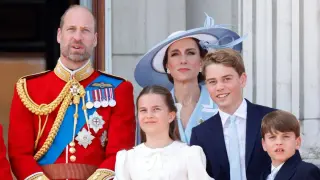
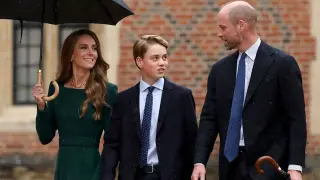
Prince William has released a 300-page guest-edited issue of Country Life magazine, featuring a drawing of a kingfisher by his 13-year-old son, Prince George. The publication, which William spent six months curating, also includes an interview with Princess Catherine and a major campaign for improved safety and respect for women in the British armed forces. While the issue showcases the royal family’s personal interests, including William’s support for Aston Villa and family walks with their dogs, it centers on advocacy for military culture and environmental stewardship. Prince George’s artwork, created earlier this spring, is highlighted as part of a broader family tradition of artistic expression, following previous public displays of the children’s drawing skills.
Prince William has released his largest guest-edited issue of Country Life to date, a 300-page publication featuring his son Prince George’s artwork and a campaign for better treatment of women in the British armed forces. The Prince of Wales collaborated closely with the magazine’s editors over six months, reviewing proofs in detail at Windsor Castle. The issue also includes an interview with Princess Catherine and highlights William’s personal interests, including his support for Aston Villa and his family’s connection to nature. Prince George, who began boarding at Eton College in September, contributed a drawing of a kingfisher created earlier this spring. The publication marks a significant public engagement for the royal family, blending personal anecdotes with advocacy for social causes.
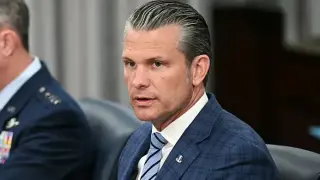
Defense Secretary Pete Hegseth announced 33 new directives to overhaul military education at the Naval War College, emphasizing combat readiness over theoretical research. This move coincides with renewed impeachment efforts by Republicans in Congress, though Hegseth remains defiant. The changes follow a broader pattern of personnel purges and ideological shifts within the Pentagon.
Ukraine launched its largest strike on Russian digital and energy infrastructure in St. Petersburg since 2022, damaging a VK data center and oil terminal. Simultaneously, Russia escalated kinetic actions in Europe, including drone incursions in Romania and arson attempts in Lithuania, while Ukrainian access to Starshield satellite technology for drone interception remains unresolved.
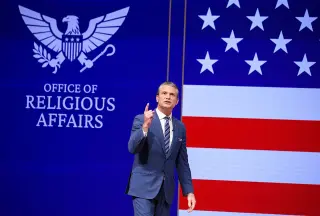
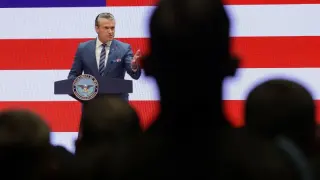
Defense Secretary Pete Hegseth has intensified his restructuring of the U.S. military by launching a new Office of Religious Affairs and demanding a 20% reduction in senior leadership. In a September 30 speech at Marine Corps Base Quantico, Hegseth declared that the military should exclude 'fatties,' 'beardos,' and 'weirdos,' while also implementing testosterone testing. Critics argue these measures target women, LGBTQ+ individuals, and non-Christian faiths, aiming to enforce a specific white evangelical ideology. The move follows a narrowing of recognized religious categories from over 200 to 31, with 22 being Christian. Hegseth has also launched a recruitment tour targeting evangelical communities, despite facing criticism for contradicting his own rhetoric by associating with figures he previously mocked.
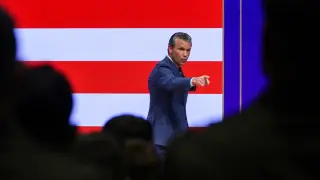
Defense Secretary Pete Hegseth delivered a 'State of the Force' address at Marine Corps Base Quantico on September 30, 2026, focusing on eliminating 'woke' culture and promoting a 'warrior ethos' rather than addressing the ongoing war with Iran. The speech, which included calls for daily physical training and the exclusion of diverse groups, was criticized for ignoring 19 U.S. service member deaths and over 850 injuries in the Iran conflict. Hegseth announced 'Project Meridian,' a military tech initiative led by Elon Musk and others, while facing growing political backlash, including an impeachment resolution from Republican congressman Thomas Massie. The address occurred as the U.S. formally withdrew from Iraq, ending a 23-year presence, and amid stalled defense budget negotiations in Congress.
Secretary of Defense Pete Hegseth announced the creation of a new Autonomous Warfare Command and doubled the target for cutting senior military ranks to 20% during a speech at Marine Corps Base Quantico. The new command, led by a four-star general, aims to integrate AI robotics and autonomous weapons into military doctrine, with operations set to begin in October 2027. Hegseth also launched Project Agincourt to overhaul drone acquisition and testing processes. The speech, delivered to junior officers and noncommissioned officers, included strong rhetoric against 'woke' culture and media coverage, while also highlighting initiatives to modernize bases and strengthen defense supply chains.
Defense Secretary Pete Hegseth is set to announce a 20% reduction in general and admiral positions at a 'State of the Force' address in Quantico, Virginia, on September 30. This move doubles the 10% cut ordered in 2025 and must be completed by January 1, 2027. The reductions target administrative bloat, while critics warn of a purge of experienced leaders. The event marks a shift from addressing senior brass to rank-and-file troops, raising concerns about military professionalism and nonpartisan norms.
Defense Secretary Pete Hegseth is set to announce a 20% reduction in general and admiral billets at a Quantico address on September 30. The move, which doubles previous cuts, aims to streamline command structures by January 1, 2027, though critics warn it could undermine military readiness and bypass congressional oversight.
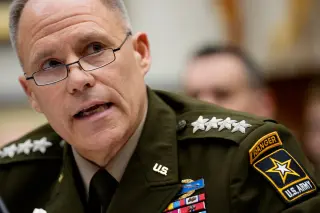
The US Army is disbanding the Unmanned Assault Battalion, a unit in Europe created to study drone warfare lessons from Ukraine. The decision follows internal leadership conflicts and a strategic pivot toward traditional infantry skills, despite recent conflicts highlighting the critical role of drones.
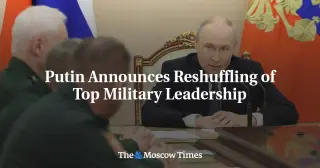
President Vladimir Putin announced a major reshuffle of Russia’s top military leadership on Wednesday, appointing new commanders for the 'Center' and 'East' force groupings in Ukraine, a unified logistics chief, and a head for the newly established Unmanned Systems Forces. The changes follow a significant slowdown in Russian territorial gains and a widening manpower deficit, with Moscow struggling to replace casualties faster than they are incurred. Putin emphasized the need to refine the Defense Ministry’s structure to match the operational realities of the ongoing conflict, particularly the critical objective of capturing the entire Donetsk region.
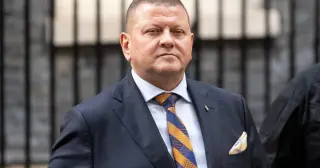
Former Ukrainian commander Valerii Zaluzhnyi stated that Kyiv will never join NATO because the alliance relies on World War II-era doctrines that lag behind Ukraine’s modernized forces. He argued that while Ukraine needs NATO technologies, its military capabilities now exceed the alliance’s standards, making integration impossible. Instead, Zaluzhnyi suggested Ukraine should align with emerging European security blocs, such as the Joint Expeditionary Force, to address current threats.
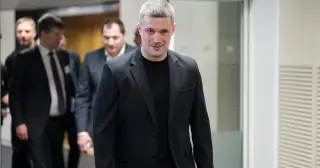
Former Ukrainian defence minister Mykhailo Fedorov has stated that his dismissal was primarily caused by his efforts to overhaul military procurement systems, which provoked opposition from entrenched interests. In his first detailed interview, Fedorov rejected alternative government roles, insisting he would only return to the defence ministry. This statement comes amid ongoing protests and a broader cabinet reshuffle that replaced both Fedorov and the army commander-in-chief.
President Zelenskyy removed defense minister Mykhailo Fedorov amid a government reshuffle, citing conflicts with army command and mobilization reform; Fedorov had driven tech-focused upgrades and drone capabilities but clashed with top generals, setting the stage for a new defense minister as the cabinet reshuffle unfolds.