
Jeffries outlines bold healthcare agenda for new Democratic majority
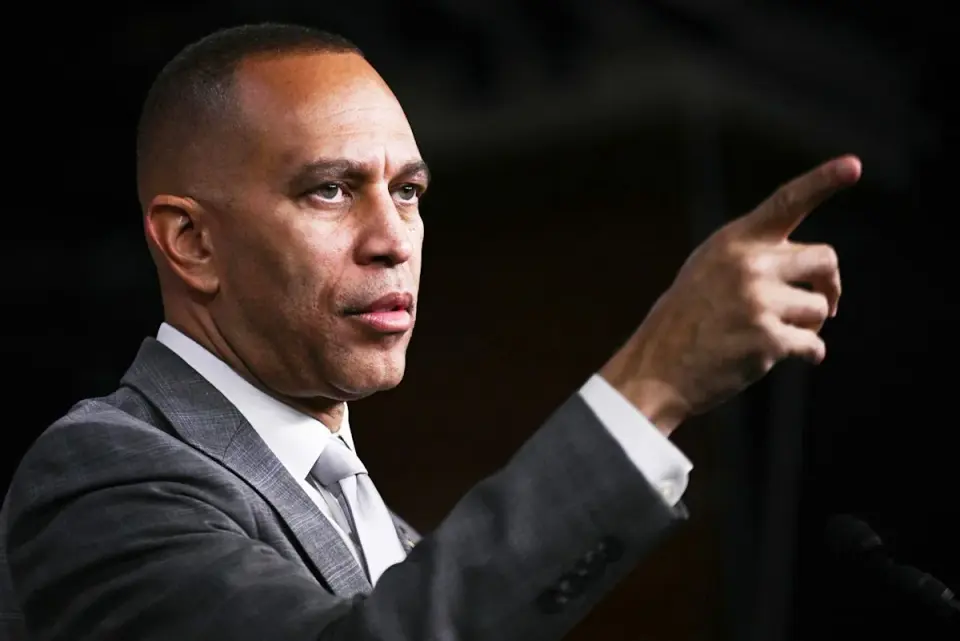
Hakeem Jeffries, the likely next House Speaker, has called for lowering the Medicare eligibility age, expanding benefits to include dental, vision, and hearing, and providing universal coverage for children. He framed these moves as essential steps toward universal healthcare, moving beyond his previous focus on reversing Medicaid cuts. Jeffries kept the door open for using a reconciliation bill to bypass the Senate filibuster, potentially forcing President Trump to sign or veto the measure. Senator Bernie Sanders praised the proposal as a significant step toward his Medicare for All vision, which includes a lower eligibility age and expanded benefits.
Key points
- Jeffries called for lowering the Medicare eligibility age, though he did not specify the exact age.
- He advocated for expanding Medicare benefits to include dental, vision, and hearing coverage.
- Jeffries supported universal health coverage for all children in the United States.
- He suggested using a reconciliation bill to bypass the Senate filibuster and force a presidential decision.
- Bernie Sanders described Jeffries' proposal as the first year of his Medicare for All transition plan.
Background
Jeffries previously focused on undoing President Trump's Medicaid spending cuts and restoring expired Affordable Care Act tax credits. His new agenda marks a significant shift toward more aggressive expansion of healthcare coverage. The proposal comes as Democrats are on pace to secure majorities in both the House and Senate, with 259 House seats and 56 Senate seats projected. The broader political landscape includes ongoing debates over healthcare funding, with Republicans criticizing such expansions for increasing national debt and inflation, while progressives view them as critical steps toward comprehensive coverage.
Why it matters
Jeffries' agenda signals a potential shift in Democratic healthcare policy, moving from defensive measures to proactive expansion. The use of reconciliation could bypass Republican opposition, forcing President Trump to make a public decision on universal healthcare measures. This could set the stage for broader debates on healthcare funding and the feasibility of universal coverage in the United States.
What to watch
Democrats will likely negotiate the specifics of the healthcare bill, including the exact Medicare eligibility age and the scope of expanded benefits. The use of reconciliation could lead to a direct confrontation with President Trump, who may face pressure to sign or veto the measure. The outcome of these negotiations will shape the future of healthcare policy in the United States.
Want the full story? Read the original reporting
Read on Yahoo