
Judge Halts DC Golf Course Tree Removals After 430 Felled in Weekend Blitz
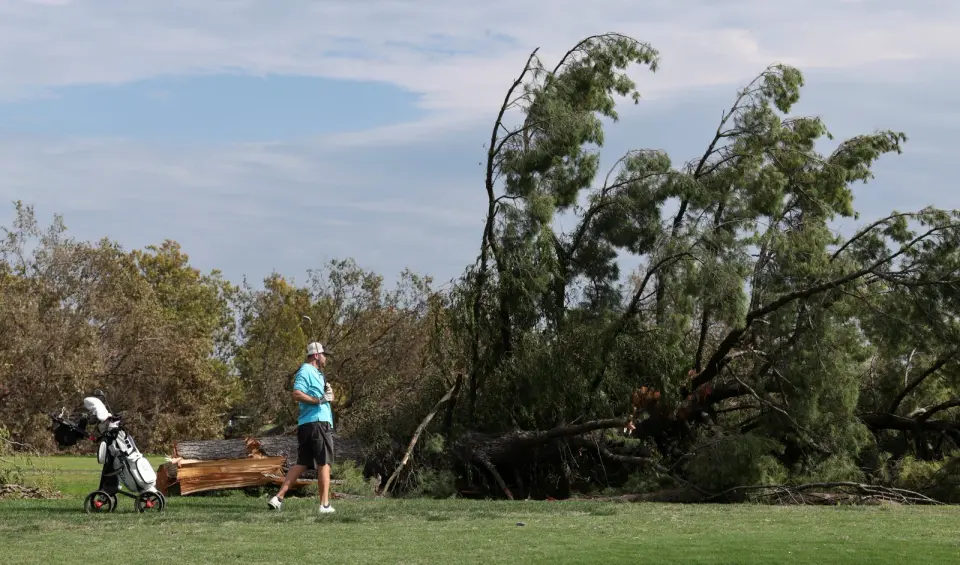
A federal judge has issued a temporary restraining order halting further tree removals at the East Potomac Golf Links in Washington, D.C., after the Trump administration felled approximately 430 trees over a weekend. Judge Ana Reyes expressed fury at the government for breaching prior court orders and providing minimal notice, citing evidence that the rapid action was driven by presidential demands to transform the public course into a championship venue. Satellite imagery confirms widespread deforestation, while the administration claims the removals were part of a 2019 maintenance plan to clear hazardous vegetation. The case, brought by the DC Preservation League, highlights tensions between executive renovation projects and environmental protections in the capital.
Key points
- Judge Ana Reyes issued a temporary restraining order on October 13, 2026, barring further tree removals at East Potomac Golf Links until at least October 26.
- Approximately 430 trees were felled between October 10 and October 12, despite a prior court order requiring notice for the removal of more than 10 trees.
- The administration notified the court of the planned removals at 4:55 p.m. on October 9, just before the weekend work began, which Judge Reyes described as an attempt to evade oversight.
- Satellite imagery from Planet Labs shows large barren sections in the southern and western parts of the course, confirming the scale of the deforestation.
- The DC Preservation League sued the government in February 2026, arguing the project violates environmental laws and destroys a public recreation space.
- The administration claims the tree removals were part of a 2019 plan to remove dead and hazardous trees, not a new initiative for Trump’s championship course redesign.
Background
The dispute over the East Potomac Golf Links is part of a broader pattern of executive branch actions in Washington, D.C., that have faced judicial scrutiny. In October 2025, demolition began on the East Wing of the White House for a new ballroom, and Trump proposed a 250-foot-tall Triumphal Arch near Arlington National Cemetery. The current case follows a February 2026 lawsuit by the DC Preservation League, which argued that Trump’s efforts to convert the public golf course into a championship venue violated environmental laws. The administration’s actions at the golf course have drawn comparisons to other landscaping projects, such as the replacement of willows at the Kennedy Center and the renovation of the South Lawn after a UFC event, which have also faced criticism for their scale and timing.
How outlets are covering it
Bellingcat emphasizes the visual evidence of deforestation, using satellite imagery to highlight the extent of the tree removals and the lack of transparency from the administration. ABC News focuses on the judicial response, detailing Judge Reyes’s frustration with the government’s breach of trust and the potential for contempt proceedings. The Washington Post provides a broader cultural context, linking the tree removals to Trump’s interest in landscaping as a form of political power and referencing Dr. Seuss’s 'The Lorax' to underscore the environmental impact. The administration, through National Park Service officials, argues that the removals were part of a pre-existing 2019 plan to address hazardous trees, while the DC Preservation League contends that the project is an unauthorized attempt to convert a public space into an exclusive venue. The sources differ in their emphasis: Bellingcat and ABC News focus on the legal and environmental violations, while The Washington Post contextualizes the issue within Trump’s broader approach to public space and power.
Why it matters
The case underscores the tension between executive authority and judicial oversight in environmental and public space matters. The rapid removal of 430 trees, despite court orders, raises questions about the administration’s commitment to transparency and environmental protection. The outcome of the case could set a precedent for how future renovation projects in Washington, D.C., are handled, particularly those involving public spaces and environmental regulations. The dispute also highlights the role of advocacy groups like the DC Preservation League in challenging executive actions and the importance of judicial intervention in protecting public lands.
What to watch
Judge Ana Reyes is expected to hear testimony from Interior Department official Gregory Wischer and acting National Park Service director Jessica Bowron on October 19, 2026, to determine who authorized the tree removals and whether the government intentionally evaded court orders. Reyes has also ordered written briefs from both the DC Preservation League and the government on whether to grant a more extensive preliminary injunction that would block further renovations. The administration’s response to the judge’s findings and the potential for contempt proceedings will be key in determining the next steps in the case. The outcome of the case could influence future projects in Washington, D.C., and set a precedent for how environmental and public space disputes are handled in the capital.
- Satellite Images Show Extent of Trump Admin’s Tree-Felling at DC Golf Course Bellingcat
- Judge Orders Trump Administration to Answer for Tree Removals at D.C. Golf Course The New York Times
- 'Furious' judge extends order barring Trump administration from removing more trees from DC public golf course ABC News - Breaking News, Latest News and Videos
- Donald Trump vs. the Lorax The Washington Post
- Trump’s Tree Removal Plans At D.C. Golf Course Blocked 2 More Weeks—After Abruptly Downing Hundreds Forbes
Want the full story? Read the original reporting
Read on Bellingcat