
Maddow urges Democrats to pursue Electoral College bypass via interstate compact
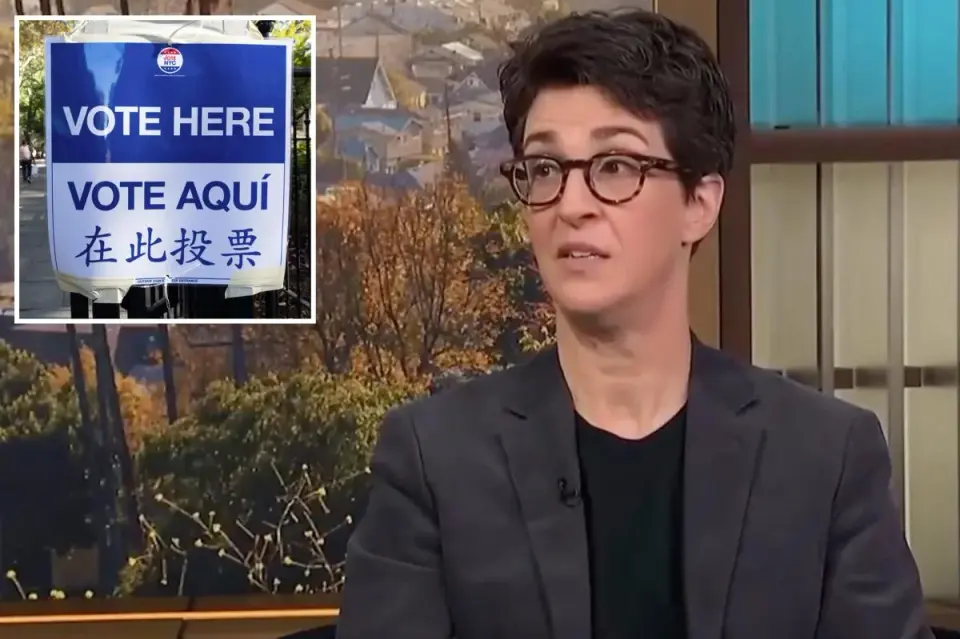
Rachel Maddow has argued that Democrats can effectively abolish the Electoral College by joining the National Popular Vote Interstate Compact (NPVIC), a move she described as 'doable' following the 2026 midterm elections. The compact, which would award electoral votes to the national popular vote winner, currently holds 222 of the 270 votes needed to take effect. Democratic trifectas in five key states could push the total to 283, but legal experts warn of constitutional challenges and political risks.
Key points
- Rachel Maddow stated on MS NOW that Democrats could 'swing for the fences' to eliminate the Electoral College by joining the NPVIC, citing a conversation with advocate Ben Wikler.
- The NPVIC currently has 18 state signatories plus D.C., totaling 222 electoral votes; it requires 270 to activate.
- Democrats now control the governorship and both legislative chambers in Arizona, Michigan, Nevada, Pennsylvania, and Wisconsin, which collectively hold 61 electoral votes.
- If all five states join, the compact would reach 283 votes, exceeding the 270 threshold needed for activation before the 2028 presidential election.
- Legal scholars debate whether the compact requires congressional approval under Article I, Section 10 of the Constitution, with some arguing it would be struck down by the Supreme Court.
- Critics argue that pursuing the compact could undermine federalism and state-based checks on presidential power, while proponents view it as a necessary democratic reform.
Background
The Electoral College has been a subject of debate since the 2000 and 2016 presidential elections, where the winner of the popular vote did not win the presidency. The NPVIC was drafted in 2006 as a workaround to a constitutional amendment, which has stalled in Congress. Previous attempts to pass the compact in states like Michigan and Nevada failed due to legislative opposition or gubernatorial vetoes. The 2026 midterms shifted control of five key states to Democrats, reviving interest in the compact. Kamala Harris also called for institutional changes, including Electoral College reform, in October 2026.
How outlets are covering it
Proponents, including Rachel Maddow and Patrick Rosenstiel of National Popular Vote, argue the NPVIC is a viable and democratic path to ensure the popular vote winner becomes president. They emphasize that Democratic trifectas in swing states create a realistic opportunity to activate the compact before 2028. Critics, such as Noah Feldman of Harvard Law School and Brian Gaines of the University of Illinois, warn that the compact faces significant constitutional hurdles, particularly regarding congressional consent, and could undermine state-based federalism. The New Republic argues that pursuing the compact would be a 'catastrophic mistake' that ignores the political gains Democrats have made through traditional campaigning. Akhil Amar, a co-inventor of the NPVIC, has expressed reservations about its current form, urging a 'national conversation' rather than rapid adoption.
Why it matters
The potential activation of the NPVIC would fundamentally alter how U.S. presidents are elected, shifting from a state-by-state system to a national popular vote. This change could reshape campaign strategies, voter engagement, and the balance of power between states. However, the move risks legal challenges and political instability, as Republicans could potentially withdraw from the compact if they regain control of signatory states. The debate highlights broader tensions between democratic equality and federalism in American governance.
What to watch
Democratic leaders in the five key states will decide whether to join the NPVIC in the coming months. If they do, the compact could activate before the 2028 presidential election. Legal challenges are expected if the compact takes effect, with the Supreme Court likely to rule on its constitutionality. Advocates will continue to push for state-level adoption, while critics will argue for alternative reforms, such as expanding the House of Representatives.
- Rachel Maddow argues abolishing Electoral College is ‘doable,’ urges Dems to ‘swing for the fences’ New York Post
- Democrats have a path away from the Electoral College. Should they take it? MS NOW
- Opinion | Goodbye, Electoral College The New York Times
- This Is Not the Way to Abolish the Electoral College The New Republic
- Fix the Electoral College, but not like this The Seattle Times
Want the full story? Read the original reporting
Read on New York Post