
Maine Senate Race Hinges on Collins' Federal Funds vs. Jackson's Anti-Trump Stance
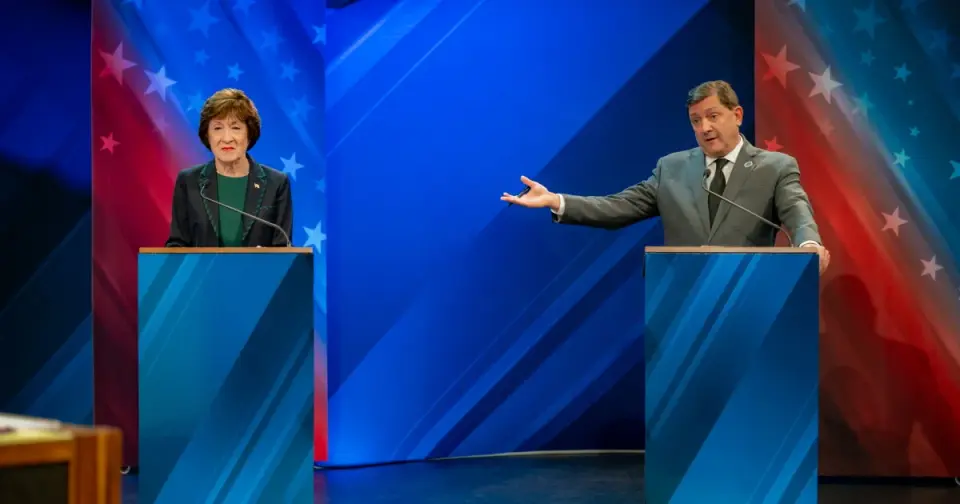
Maine voters face a decisive choice on November 3 between Republican incumbent Susan Collins and Democrat Troy Jackson in a race that could shift US Senate control. The contest, the most expensive per capita in the nation, centers on whether Collins' ability to secure federal funding for the state outweighs her perceived alignment with President Trump. While Collins emphasizes her seniority and bipartisan record, Jackson argues she fails to leverage her influence to block Trump’s policies, including tariffs and military actions. With Trump’s approval rating low in Maine and economic costs rising, the race has become a referendum on the president’s second term rather than just a local contest.
Key points
- Collins seeks a sixth term, leveraging her role as Senate Appropriations Chair to secure federal earmarks for Maine, including fire stations and library funding.
- Jackson, a former logger and state legislator, frames Collins as an enabler of Trump, arguing she refuses to use her power to stop tariffs and the Iran war.
- The race has cost over $200 million, with heavy spending from both parties and notable figures like Elon Musk, making it the costliest per capita in the US.
- Collins’ support among Democratic voters has collapsed to 5%, and her traditional moderate base is eroding due to frustration with her perceived alignment with the White House.
- Economic pressures, including record-high heating oil prices and lobster industry costs, are driving voter dissatisfaction, with many undecided voters viewing the race as a rejection of Trump.
- Jackson’s campaign has struggled to replace the charisma of former nominee Graham Platner, relying on high-profile surrogates like Alexandria Ocasio-Cortez to boost his profile.
Background
The 2026 Maine Senate race has been a 15-month odyssey, initially disrupted when progressive nominee Graham Platner withdrew amid scandal. Jackson was hastily drafted in late July, inheriting a populist platform focused on working-class issues. Previous coverage highlighted a viral debate moment regarding 'road salt' that contrasted Collins' traditional style with Jackson's authenticity. Recent polls show the race tied at 49%, with Collins leading among rural voters but facing a significant deficit among college-educated and suburban voters. The collapse of a bribery probe against Collins and her low approval ratings among Democrats have intensified the narrative that she is no longer an independent voice in the Senate.
How outlets are covering it
Maine Public emphasizes the structural contrast between the candidates: Collins’ hyperlocal focus on federal dollars versus Jackson’s nationalized critique of Trump’s influence. The outlet highlights Collins’ recent successes, such as securing heating oil reserves, as evidence of her power, while noting Jackson’s argument that these concessions prove her subservience to the White House. The Guardian focuses more on the economic pain driving voter sentiment, citing specific examples like lobster fishermen doubling fuel costs and heating oil prices hitting record highs. It notes that many voters, including former Collins supporters, are now motivated by anti-Trump sentiment rather than enthusiasm for Jackson. The Guardian also highlights the vulnerability of Collins’ 'independence' narrative, citing a New York Times analysis showing her party defections rarely slowed Trump’s agenda. Both outlets agree that the race is less about Jackson’s personal appeal and more about a broader rejection of the current administration, but they differ in emphasis: Maine Public focuses on the strategic divergence in campaign tactics, while The Guardian centers on the tangible economic impacts on Mainers.
Why it matters
The outcome of the Maine Senate race could determine whether Democrats regain control of the US Senate, altering the balance of power in Congress and potentially impacting President Trump’s final two years in office. As the only Republican senator in New England, Collins’ defeat would signal a significant shift in the political landscape, particularly in a state where Trump lost by seven points in 2024. The race also serves as a bellwether for national sentiment on economic policy, with voters weighing the trade-off between local federal benefits and opposition to Trump’s national agenda. The high cost of the campaign and the involvement of major political figures underscore the national significance of this local contest.
What to watch
Maine voters will cast their ballots on November 3, with the result likely hinging on turnout among moderate and independent voters who have traditionally supported Collins. If Jackson wins, he will face a steep climb in directing federal resources to the state, particularly if Democrats remain in the minority in the Senate. If Collins wins, she will secure a historic sixth term, but her political capital may be diminished by the narrow margin and the erosion of her bipartisan reputation. The outcome will also influence the trajectory of the 2028 presidential cycle, as it will signal the viability of progressive candidates in swing states and the resilience of centrist Republicans in blue-leaning areas.
- In Maine's Senate race, voters weigh opposing views of Susan Collins' power and influence Maine Public
- ‘The status quo sucks’: affordability and Trump loom over final stretch of Maine’s tight Senate race The Guardian
- Opinion | Collins is the clear choice for Maine. Will it matter? The Washington Post
- What the latest CNN poll revealed about Maine’s races before Election Day Portland Press Herald - Maine Sunday Telegram
- Susan Collins Tries to Outrun Trump’s Shadow in Bid for Sixth Senate Term WSJ
Want the full story? Read the original reporting
Read on Maine Public