
Michigan Senate Debate: El-Sayed and Rogers Clash on Policy and Personal Attacks
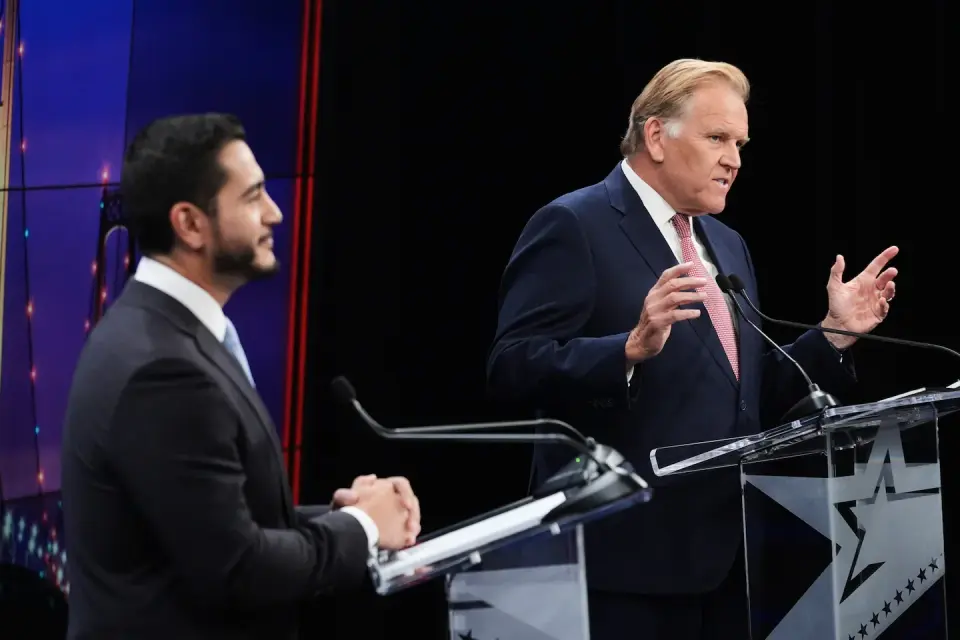
The first debate between Michigan Senate candidates Abdul El-Sayed and Mike Rogers was marked by intense personal attacks and sharp policy disagreements. The race remains too close to call, with both candidates attempting to poach voters from the opposing party's traditional base. Key issues included health care, foreign aid, and the candidates' relationship with President Trump.
Key points
- The debate, hosted by NewsNation, featured frequent interruptions and personal jabs, including accusations regarding real estate holdings and family members.
- El-Sayed advocated for universal public health care and taxing billionaires, while Rogers proposed price caps for gas and reduced red tape for housing construction.
- Rogers distanced himself from President Trump by reversing his stance on tariffs against Canada and criticizing ICE enforcement in Minneapolis.
- El-Sayed maintained his position that Israel is not a reliable ally and that the US should cut military aid to foreign nations, a stance that has alienated some Jewish and moderate voters.
- Polls since Labor Day show the race is a dead heat, with El-Sayed leading within the margin of error.
Background
This contest is pivotal for determining control of the US Senate. Prior coverage from October 8 highlighted El-Sayed's confidence in a wide victory, which contrasted with internal Democratic concerns about his ability to retain support among Black and Jewish voters. Earlier debates in September saw Rogers skip a Fox News event, while El-Sayed addressed issues like Medicare for All and local Detroit concerns. The current race is characterized by a tight poll and significant outside spending from both sides.
How outlets are covering it
The Washington Post portrayed the debate as a combative exchange where both candidates attacked each other's character and policy positions, noting that the race's closeness stems from fundamentally different visions for the state. In contrast, The Detroit News argued that El-Sayed performed poorly on defense, dodging specific questions about Israel and failing to reassure hesitant Jewish voters. The Detroit News characterized El-Sayed as smug and evasive, while crediting Rogers with presenting a more mature and substantive case, despite Rogers's initial stumble. The Post emphasized the mutual attempts to cross over into the opponent's base, while The Detroit News focused on El-Sayed's inability to consolidate support among key demographics.
Why it matters
The outcome of this race will likely determine which party controls the US Senate in the next Congress. The debate highlighted deep divisions within the Democratic coalition, particularly regarding foreign policy and Israel, while also showing the Republican candidate's efforts to distance himself from a unpopular president. The personal nature of the attacks suggests a high level of polarization that may influence voter turnout and engagement in the final weeks of the campaign.
What to watch
Both campaigns will continue to target voters in the opponent's traditional base. El-Sayed is expected to campaign with former President Barack Obama and other Democratic leaders, while Rogers will likely seek support from President Trump if he chooses to campaign in Michigan. Further debates and ad campaigns will focus on the candidates' policy differences and personal credibility.
- Takeaways from Michigan Senate debate between Abdul El-Sayed, Mike Rogers The Washington Post
- Michigan Senate debate goes off the rails: 4 takeaways The Hill
- Katie Zacharia Brands Abdul El-Sayed ‘Radical’ As He Gets Boost In New Poll Newsweek
- 5 Key Moments From Hostile Michigan Senate Debate Between El-Sayed and Rogers The New York Times
- Finley: Abdul says Israel not a U.S. ally; how will Jewish voters react? The Detroit News
Want the full story? Read the original reporting
Read on The Washington Post