The Trump administration is pushing to shape the UN secretary-general selection, with five of eight nominees being women, while seeking reforms and budget cuts at the world body that align with U.S. priorities; the outcome will hinge on Security Council votes and potential vetoes from permanent members.
The United Arab Emirates said it would suspend all trade and financial transactions with Iran in response to regional escalations after the UAE alleged Iran fired two ballistic missiles toward the Gulf state; Iran denied the missile attack, while the UAE said the move aims to pressure Tehran amid rising tensions.
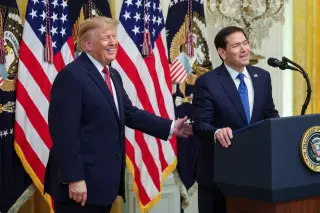
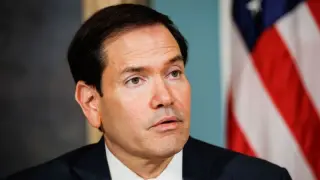
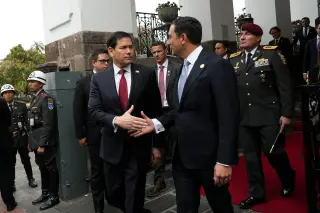
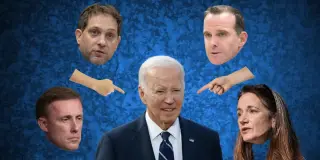
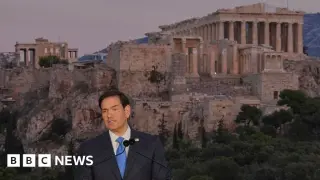
The article contends that Secretary of State Marco Rubio has stepped back from leading on Iran, Gaza, and Ukraine-Russia crises, instead prioritizing Latin America (Cuba and Venezuela). It cites concerns from former officials about a dysfunctional decision-making structure and notes that private envoys like Jared Kushner have taken the lead on major issues, potentially weakening long-term U.S. diplomacy.
South Korea's leader reaffirmed the importance of the U.S.–South Korea alliance and pledged to maintain joint drills and defense cooperation despite Trump’s order to reduce exercises, underscoring continued commitment to regional security amid North Korea tensions.
President Trump says Kim Jong-un has responded to his overtures about scaling back joint US-South Korea exercises, but offered no further details; the live feed also covers other Trump administration news, including comments on the USS Abraham Lincoln, tensions with Iran, and related foreign policy developments.
Iran and Oman are nearing a bilateral deal to govern traffic through the Strait of Hormuz, including a proposed “shipping map” to manage routes and sovereignty, with details like fees and security to be discussed in a later phase. The move comes as attacks in Hormuz persist and U.S. pressure on Iran intensifies, pushing oil markets higher. Mediation continues via Qatar and Pakistan, while Iran says reopening the strait would be a separate issue from any deal, not a concession tied to the arrangement.
Former PM Paul Keating privately advised Anthony Albanese to move beyond a stabilizing stance and pursue engagement with China, including greater Chinese investment and climate-energy cooperation, while urging not to automatically align with the U.S. in a hypothetical Taiwan crisis, as Albanese prepared meetings with Xi and Trump.
Six months into the Iran conflict, the Trump administration is pursuing a restrained, economically focused strategy—avoiding broad strikes or a ground operation—while leaning on long‑range weapons and pressuring Tehran with sanctions. White House officials say the risk to Iran from inflation and shortages outweighs potential midterm political costs, but analysts warn there is no clear exit path and a protracted campaign could exhaust weapons stocks and raise prices. The war has already claimed 18 U.S. service members and left hundreds wounded, highlighting a ongoing debate between pressuring Iran and avoiding escalation, framed by a “low-key” approach led by Treasury and diplomacy rather than a major new military push.
Trump once seen as a political savant faces a difficult midterm moment as costly Middle East engagements, rising living costs, and self-promotional projects dominate headlines. With his approval sinking in polls and GOP fears rising about losing the House (and risking the Senate), critics say the administration’s wars and spending are hurting the party. Meanwhile, Trump’s personal wealth from business interests provides a counterpoint to the political headwinds, even as insiders warn his focus on monuments and branding could undermine his party’s messaging.
Bloomberg reports the US will soon announce unprecedented economic measures against Iran, led by Treasury Secretary Scott Bessent, as part of a two‑pronged strategy that includes maritime port blockades to pressure Tehran amid ongoing Strait of Hormuz tensions and a strained oil market.
The Washington Post reports that President Trump flew secretly from Turkey on a covert military aircraft because of an Iranian assassination threat, while the White House said he was aboard Air Force One; a decoy plane and tightened security concealed the travel from journalists and some staff, highlighting security risks amid Iran tensions.
A Salon op-ed argues Trump’s self-styled dealmaking was a fiction sold by a ghostwriter; Schwartz describes him as pathologically dishonest with a shallow grasp of policy, and recent reporting shows the world no longer respects the United States, leaving diplomacy unstable, threats empty, and long-term damage to America’s international standing.
Ukraine could not shoot down a fresh Russian missile barrage over Kyiv and the surrounding region, with Kyiv saying U.S.-made interceptors are exhausted or unavailable after partner delays. Seventeen Ukrainians died overnight, and a warehouse in Brovary was destroyed, affecting Rozetka’s logistics. Zelensky urged allies to bolster sanctions on Russia to deter further attacks.
The Trump administration revoked Brazil’s ambassador to Washington’s visa in a reciprocal move after Brazil did not approve President Trump’s nominee to Brasília, underscoring growing tensions in U.S.–Brazil diplomacy.
Trump says Iran talks are ongoing while Iran denies direct negotiations, leaving the war status in limbo as regional powers watch the Strait of Hormuz and broader Middle East dynamics.